
Fight IQ — Pro Wrestling Glossary
A shoot in pro wrestling is the moment when the script stops and something real takes over — a genuine fight, an unscripted promo, or a real injury. It’s the thing fans obsess over more than almost any other topic.
This guide covers every type: the true shoot, the shoot promo, the worked shoot, shoot-style wrestling, and hardway incidents — plus how to tell them apart and why they matter.
In This Shoot in Pro Wrestling Guide
A shoot in pro wrestling is exactly what it sounds like: the moment when the script stops, and things get real. The performance collapses, the characters disappear, and two people who may genuinely despise each other start settling it for themselves. It’s the thing wrestling fans obsess over more than almost any other topic — and for good reason. Shoots are the moments when the theatrical and the authentic collide, producing some of the most electrifying moments the business has ever seen.
But here’s what most explainers miss: a shoot in pro wrestling isn’t a single thing. It’s a spectrum. There are real shoots, worked shoots, shoot-style matches, shoot promos, and hardway incidents — and understanding the differences is what separates a genuine fan from someone who still thinks everything is either “real” or “fake.” Professional wrestling has never been that simple, and the concept of the shoot is the clearest proof.
This is part of the language of professional wrestling — a vocabulary built over a century in carnival tents and territorial arenas, designed specifically to communicate about a business that lives in the space between sport and theatre.
Origins and Etymology: Where Did “Shoot” Come From?
The word “shoot” didn’t come from wrestling. It came from the carnival circuit. In 19th-century travelling fairs, “straight shooting” described a target game with unaltered sights — an honest attraction where you actually won if you were skilled enough. This was contrasted with rigged games designed to take money from marks. Carnival workers developed an entire internal language to describe their world — who was in on the secret, who wasn’t, what was real, and what was theatre — and professional wrestling inherited all of it.
Wrestling grew directly out of those carnival sideshows. Strong men would challenge audiences for money, sometimes working predetermined outcomes for maximum drama and minimum injury risk, sometimes going legitimately when the money or ego was right. “Shoot” became the word for anything legitimate — a real contest, real anger, real stakes. Its opposite was the work, the prearranged performance designed to entertain without genuine competition.

This distinction goes back further than most fans realise. The legitimate grappling tradition that preceded modern professional wrestling — catch-as-catch-can wrestling — operated in exactly this grey zone, with competitors who could genuinely fight choosing when to perform and when to compete. Understanding that history explains why the shoot/work tension has always been central to the business, and why a shoot in pro wrestling still carries so much weight today.
What Actually Happens During a Shoot?
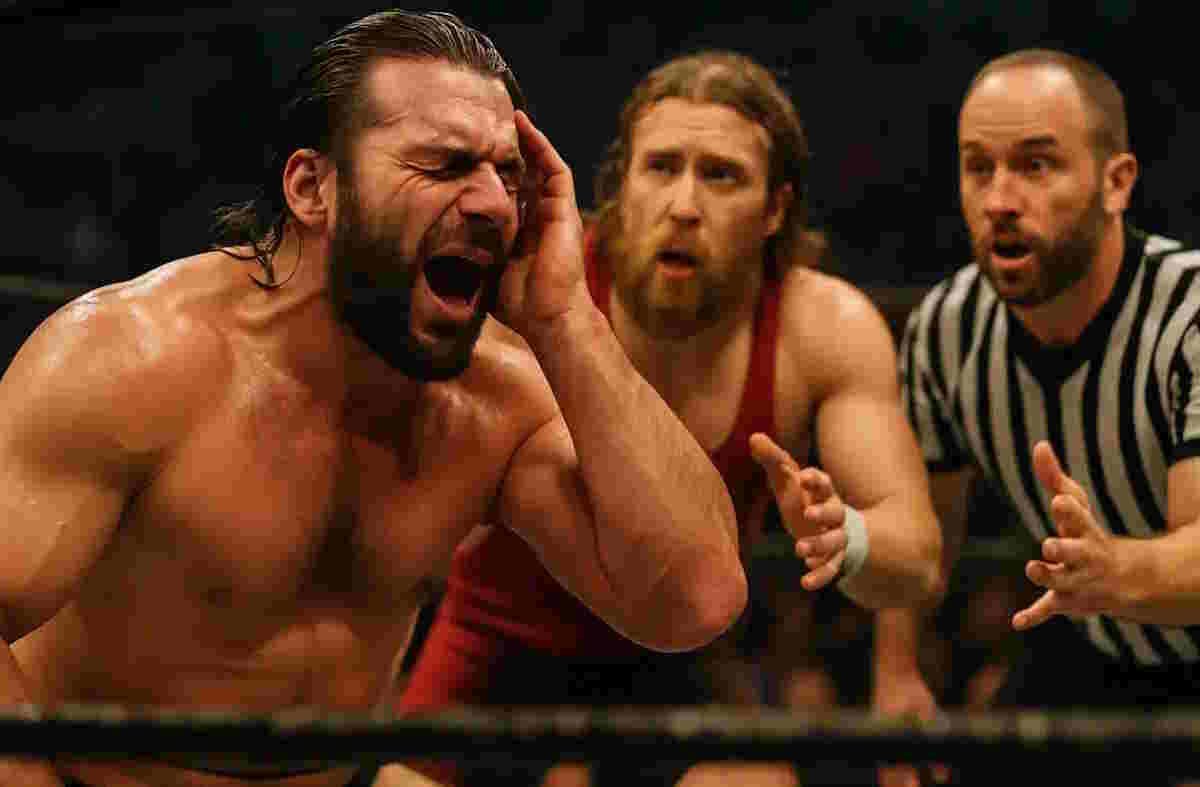
When a genuine shoot breaks out in pro wrestling, the atmosphere changes immediately and unmistakably. The cooperative rhythm of a worked match disappears. Wrestlers stop selling moves in the theatrical sense and start actually defending themselves. Sequences become unpredictable. Referees look confused. Agents at ringside start moving.
The specific markers fans and insiders look for include stiff strikes landing harder than worked punches ever would, the sudden absence of theatrical selling, wrestlers physically repositioning in ways that suggest genuine grappling rather than cooperative sequences, and a palpable shift in energy that cameras often capture even when commentary pretends nothing unusual is happening.
What makes shoots so fascinating is that they expose the real athletic ability underneath the performance. Most professional wrestlers are genuine athletes — many come from amateur wrestling, legitimate martial arts backgrounds, or both. A shoot in pro wrestling reveals who can actually handle themselves when the agreement breaks down. It’s a glimpse behind kayfabe that no storyline can manufacture.
The consequences are also real: genuine injuries, damaged professional relationships, contract terminations, and in serious cases, legal action. Shoots don’t exist in a vacuum. They have an aftermath.
The Different Types of Shoots (And Why the Differences Matter)
This is where most fans get confused, because the word “shoot” gets used loosely to describe several related but meaningfully different situations. Each type of shoot in pro wrestling works differently — and understanding them separately is the only way to follow the most interesting conversations in wrestling.
The True Shoot
A true shoot is an entirely unplanned, unscripted confrontation in which wrestlers abandon predetermined outcomes and engage in genuine competition or conflict. This can happen because of real personal animosity that boils over, a dispute over how a match should end, a new wrestler trying to prove something by “stretching” an opponent — applying legitimate painful holds to test or punish them — or a performer deciding mid-match to change the planned outcome. These are relatively rare in major promotions precisely because they’re so disruptive and dangerous. True shoots tend to end careers, relationships, or both.
The Shoot Promo
A shoot promo is when a performer steps onto the microphone and delivers genuine, unscripted grievances — talking about real backstage politics, real contract disputes, real personal conflicts — rather than staying within their character. Some of the most memorable moments in wrestling history have been shoot promos or things strongly suspected to be them. The authenticity cuts through the performance in a way scripted promos rarely achieve. Understanding what cutting a promo normally involves makes the departure of a shoot promo that much more striking.
The Worked Shoot
This is the most sophisticated and interesting category. A worked shoot in pro wrestling is a prearranged performance deliberately crafted to appear unplanned — using real grievances, real names, real situations as material for scripted entertainment. The outcome remains predetermined, but the content feels authentic enough that fans cannot be entirely sure. CM Punk’s “Pipe Bomb” promo in 2011 is the defining example of this era: real criticisms of WWE delivered within a carefully managed promotional context. Was it fully scripted? Partially? Were portions genuinely unscripted? The uncertainty was the point. That’s the work shoot working at its highest level.
Shoot-Style Wrestling
This is an entire sub-genre of professional wrestling — particularly developed in Japan — where matches are worked (predetermined) but designed to look as much like legitimate grappling competition as possible. Minimal theatrics, no theatrical selling, tight submission attempts, emphasis on realistic technique over spectacular spots. Early Pancrase, portions of UWF-I and RINGS, and elements of NJPW Strong Style all draw from this tradition. This is where shoot in pro wrestling and MMA submission technique most visibly overlap.
Hardway Incidents
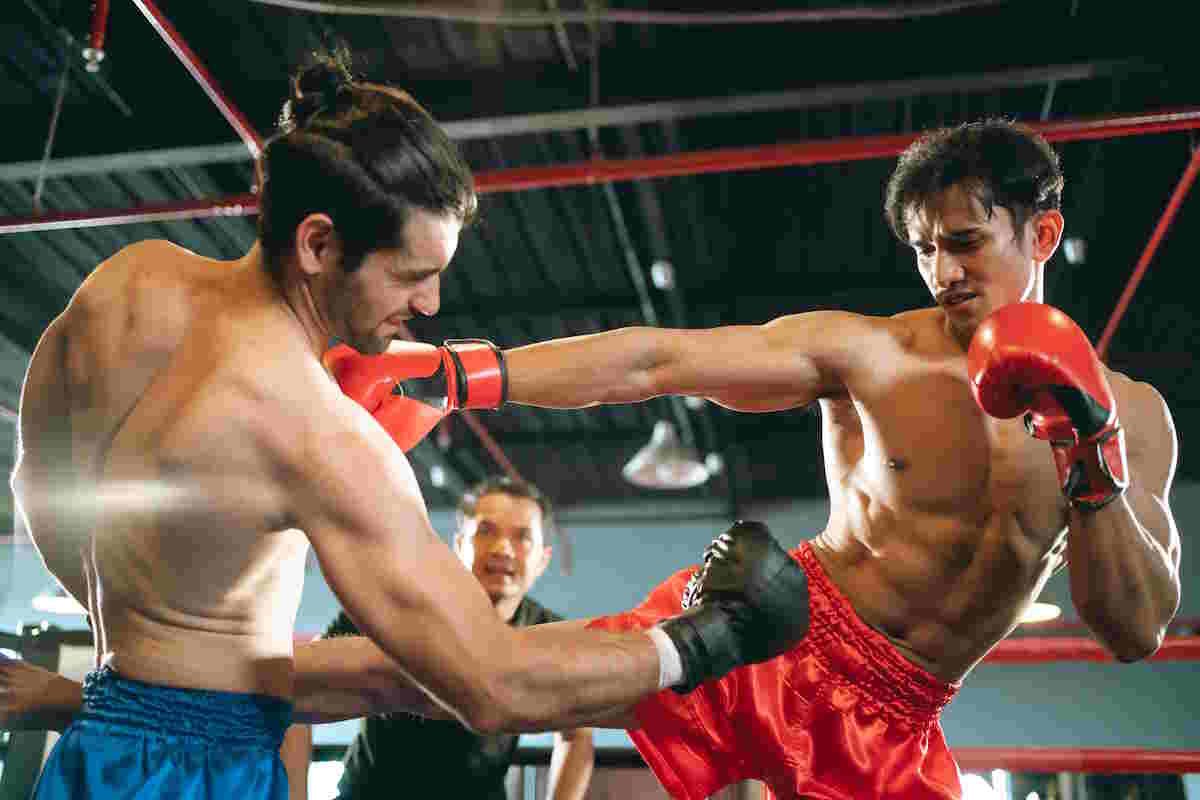
A hardway is when a performer legitimately bleeds or is injured through a real strike rather than theatrical means. Professional wrestling has long used controlled blading — intentional cutting — for dramatic effect, but hardways are unplanned. A genuinely stiff punch that opens a cut. A legitimate head collision. A move that connects harder than planned. These often signal that something real is happening, though they can also be accidents within an otherwise fully worked match.
How to Tell a Shoot From a Work: The Fan’s Guide
This is the eternal question, and the honest answer is: you often can’t tell in real time. That ambiguity is sometimes deliberate — promoters and performers have learned that the appearance of a shoot in pro wrestling can generate more publicity and engagement than a confirmed scripted angle. But there are signals worth watching for.
Watch the referee. A referee who looks genuinely confused, who moves toward the action in an uncertain way, or who makes eye contact with ringside personnel in a way that suggests seeking guidance — that’s often a sign something unplanned is happening. A referee in a fully worked match always knows where to stand and what to do.
Watch the pacing. Worked matches have rhythm — built-in beats, escalation patterns, ring psychology that creates narrative momentum. A shoot in pro wrestling tends to collapse that rhythm. The match suddenly becomes formless, without the normal structure of a heel building heat, then a babyface comeback.
Watch the selling. In a worked match, wrestlers sell their opponent’s offence to tell the story. In a shoot, selling becomes unpredictable — a performer might absorb something that would normally drop them, or react in ways that feel genuinely involuntary rather than performed.
Watch the aftermath. True shoots have real consequences that emerge in the days and weeks after: suspensions, contract modifications, talent quietly removed from booking, or public statements suggesting something went wrong. If everything is business as usual the next night on television, there’s a good chance whatever you saw was a work — or at minimum, a worked shoot that was brought back under control quickly.
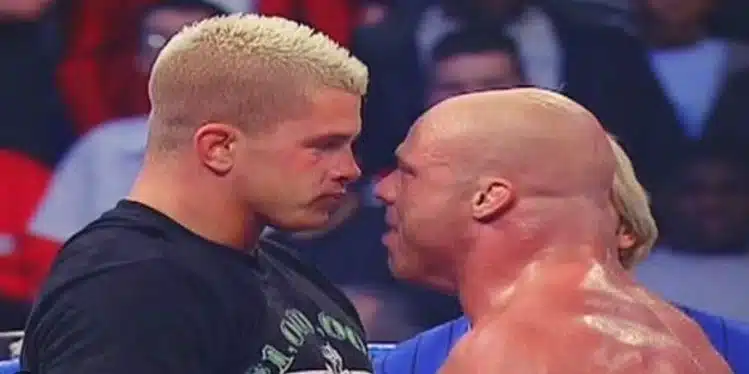
The Puder/Angle Tough Enough incident is a perfect case study of a shoot in pro wrestling that was verifiably genuine. In 2004, Daniel Puder — an MMA fighter competing on WWE’s Tough Enough reality show — caught Kurt Angle in what appeared to be a legitimate kimura armlock during a competitive segment. Angle, a real Olympic gold medallist in freestyle wrestling, was in genuine danger of tapping or having his arm broken on live television. Referees counted Puder’s shoulders to the mat rapidly, and Angle escaped via the cover. Everything about it was immediately recognisable as real by anyone who knew what to look for: the body position, the urgency, the way Angle moved to protect himself. It became famous because it was verifiably genuine — and because it demonstrated that, whether it works or not, the underlying athleticism in professional wrestling is always real.
Famous Shoot Moments in Wrestling History
A few incidents stand out as the most significant and well-documented shoots or suspected shoots in modern wrestling history.
The Montreal Screwjob (1997) — Shawn Michaels, Vince McMahon, and referee Earl Hebner conspired to have Bret Hart submitted via his own Sharpshooter against his will, with Hart genuinely unaware the finish had been changed. Hart’s rage afterward — spitting on McMahon, then punching him backstage — was entirely real. The Montreal Screwjob is the most consequential shoot in pro wrestling history because it permanently reshaped how talent and promoters interact regarding finish control.
CM Punk’s Pipe Bomb (2011) — The defining worked shoot of the modern era. Punk sat cross-legged at the stage, microphone in hand, and delivered a promo referencing Vince McMahon by name, discussing his contract situation, criticising WWE’s creative direction, and name-dropping Ring of Honor and New Japan. The microphone was cut partway through. Punk was genuinely leaving WWE at the time. How much was scripted, how much was sanctioned, how much was Punk taking the wheel himself — nobody fully agrees. That uncertainty is exactly what made it iconic as a shoot in pro wrestling’s recent history.
The Brawl for All (1998) — WWE ran an actual, legitimate fighting tournament among roster members, with real punches and real judging criteria. It was supposed to establish Dr. Death Steve Williams as a credible tough guy. Instead, Bart Gunn legitimately knocked out most of the field, won the tournament, and was subsequently squashed at WrestleMania XV by Butterbean — widely interpreted as punishment for embarrassing the planned winner. The entire thing is a masterclass in what happens when promoters underestimate genuine athletic variables.
Brian Pillman’s “Loose Cannon” Period (1996) — Pillman convinced both WCW and ECW that he had genuinely gone off-script, creating a period where nobody — including colleagues and promoters — knew how much was real. He negotiated his release from WCW by convincing Eric Bischoff that the behaviour was genuine, then used that freedom to build one of the most unsettling and authentic characters of the era. The worked shoot as a long-term career play, executed brilliantly.
Why Shoots Matter: Industry Impact and Career Consequences
The shoot’s enduring power in professional wrestling comes from what it reveals: that underneath the performance, there are real athletes capable of legitimate force, and that the consent that makes the performance safe can be withdrawn at any moment. That underlying reality is what gives works their weight. If wrestling were purely theatre with no genuine athletic stakes, it would lose something essential — and a shoot in pro wrestling, by rupturing the performance, reminds everyone watching that the athletes in the ring are genuinely capable of what they’re simulating.
For performers, shoots represent both opportunity and risk. A legitimate tough-guy reputation — established through a known shoot in pro wrestling or a credible shoot-style background — provides a form of protection in the locker room and a layer of authenticity that pure performance workers sometimes lack. At the same time, being the person who shoots is almost always professionally damaging. Promoters don’t trust performers who’ve broken the cooperative agreement, even if the grievance was justified. Blacklisting is real.
The industry has adapted by incorporating the aesthetic of the shoot into mainstream programming through worked shoots — allowing the energy of authentic grievance to be harvested without the chaos of genuine unpredictability. This is sophisticated storytelling that depends entirely on the audience’s awareness of what a real shoot looks like. The more wrestling-literate the audience becomes, the more effective worked shoots can be — and the harder they are to execute convincingly.
The booking decisions around worked shoots are some of the most delicate in the business. Get it right, and you create something that feels genuinely electric — that rare moment where fiction and reality seem to fuse. Get it wrong, and you have a confused audience, a performer who has gone further than sanctioned, and a mess to clean up on the next broadcast. The most famous moments in wrestling history walk this line — and many of them involve shoots, real or worked.
Level Up Your Fight IQ
The shoot only makes sense alongside the terms that define wrestling’s full vocabulary:
Frequently Asked Questions
What is a shoot in pro wrestling, in simple terms?
A shoot in pro wrestling is any moment where scripted, predetermined action breaks down, and something genuine and unplanned takes over. This can be a real fight between wrestlers, a performer going off-script on the microphone, or a genuine injury from a real strike. The word comes from carnival culture, where “straight shooting” meant an honest game versus a rigged one, and wrestling inherited the entire vocabulary of that world.
What is the difference between a shoot and a work?
A work is professional wrestling’s standard mode: predetermined outcomes, cooperative execution, and theatrical performance designed to entertain. A shoot in pro wrestling is the opposite — unscripted, unplanned, and genuine. A worked shoot blends both: a prearranged performance crafted to appear unscripted, using real grievances and real situations as material while keeping the outcome predetermined. CM Punk’s 2011 Pipe Bomb is the most famous worked shoot in modern history.
How do wrestling fans identify if an incident is a shoot?
Look at the referee — confusion or unusual urgency is a tell. Watch the match pacing — a shoot in pro wrestling collapses the normal rhythm of heat sequences and babyface comebacks. Watch how wrestlers sell — genuine involuntary reactions look different from theatrical selling. And watch the aftermath — real shoots have real consequences: suspensions, schedule changes, or talent disappearing from programming. If everything is normal the next night on television, it was probably a work.
What consequences do wrestlers face for shooting?
Real shoots typically result in severe professional consequences: contract termination, reduced bookings, industry blacklisting, and damage to working relationships that can take years to repair. If real injuries occur, a civil action for battery or negligence may be possible. Athletic commissions can impose fines, suspensions, or licence revocations. The long-term reputational damage is often the most lasting consequence — promoters stop trusting performers who have broken the cooperative agreement, and that loss of trust is very difficult to recover.
Are shoots more common in certain wrestling promotions?
Genuine shoots are rare in major North American promotions like WWE, which have strict policies and significant financial incentives to keep everyone cooperative. Japan has a longer tradition of shoot-style wrestling — worked matches designed to look legitimate — particularly in promotions like early Pancrase and UWF-I. Independent promotions tend to be more tolerant of unscripted moments. Specialised shoot wrestling organisations intentionally feature genuine competition within a professional wrestling framework.
What is a shoot promo?
A shoot promo is when a wrestler delivers genuine, unscripted grievances on the microphone rather than staying within their character — calling out real backstage issues, real contract disputes, or real personal conflicts. The most famous example is CM Punk’s 2011 Pipe Bomb, though how much was genuinely unscripted versus a sanctioned worked shoot remains debated. Shoot promos are memorable precisely because they break the fourth wall in a way no scripted promo can replicate — the authenticity is immediately recognisable.
What is shoot-style wrestling?
Shoot-style wrestling is a genre of professional wrestling — particularly prominent in Japan — where matches are worked (predetermined) but designed to resemble legitimate grappling competition as closely as possible. Minimal theatrical selling, realistic submission attempts, and technique-focused sequences replace the spectacle of mainstream wrestling. It bridges the gap between a shoot in pro wrestling and legitimate combat sports, and directly influenced the early development of mixed martial arts organisations, including early UFC and Pride FC.