
These seven essential 10th Planet no-gi drills cover every phase of the system — from Rubber Guard flow to Lockdown sweeps to guard retention — and build the foundation of a complete no-gi game.
The 10th Planet Jiu-Jitsu system is built around a specific philosophy: use structural control and body-based mechanics to dominate a no-gi and MMA environment where traditional grips don’t exist. Understanding that philosophy is one thing. Having it in your body — available under pressure, in the middle of a live roll, when you’re tired — requires deliberate, consistent drilling. This guide gives you the seven drills that matter most, with clear instructions on how to execute each one and why each belongs in your regular rotation.
In This Article
Key Takeaways
- Drill systems, not just moves. Progress in the 10th Planet system comes from drilling its interconnected systems — the Rubber Guard, the Lockdown, the Truck — not isolated techniques in isolation.
- The guard is an offensive platform. Most of these drills are designed to make the bottom position dangerous, not just survivable. Control leads to sweeps and submissions.
- Transitions are the skill. The drills below deliberately connect positions — from guard to pass, from takedown to top control, from half guard to back take. Learning the transitions is learning the system.
- Consistency beats intensity. Fifteen focused minutes of drilling before every session beats one long drilling day per week. Mat mastery is built through repetition over time, not through volume spikes.
1. The Rubber Guard Flow
The Rubber Guard is not a single position — it is an entire control system built around breaking your opponent’s posture with your leg. The Rubber Guard Flow drill forces you to treat it that way, cycling through the system’s primary checkpoints rather than sitting in any one position.
What it is: A continuous movement drill where you enter the Rubber Guard, break your opponent’s posture, and cycle through Mission Control, Chill Dog, Zombie, and New York while maintaining control throughout each transition.
How to drill it: Start in closed guard with a cooperative partner. Clear one of their arms, bring your same-side leg high over their back into Mission Control, and break their posture. From there, flow between positions in sequence — Chill Dog to adjust your hip angle, back into Mission Control, then over the arm into New York. Your partner provides light, consistent posture pressure throughout. The goal is smooth transitions without losing the posture break at any point. Drill for two to three-minute rounds, switching roles.

Why it’s essential: This drill builds the hip flexibility and muscle memory required to stay active from the bottom rather than stalling. It trains your body to treat each position as a checkpoint on the way to an attack — Omoplata from New York, Triangle from Mission Control — rather than a destination. Grapplers who only ever hold Mission Control without transitioning are predictable and easy to defend. Grapplers who flow through the system are not.
2. The Lockdown and Electric Chair Sweep
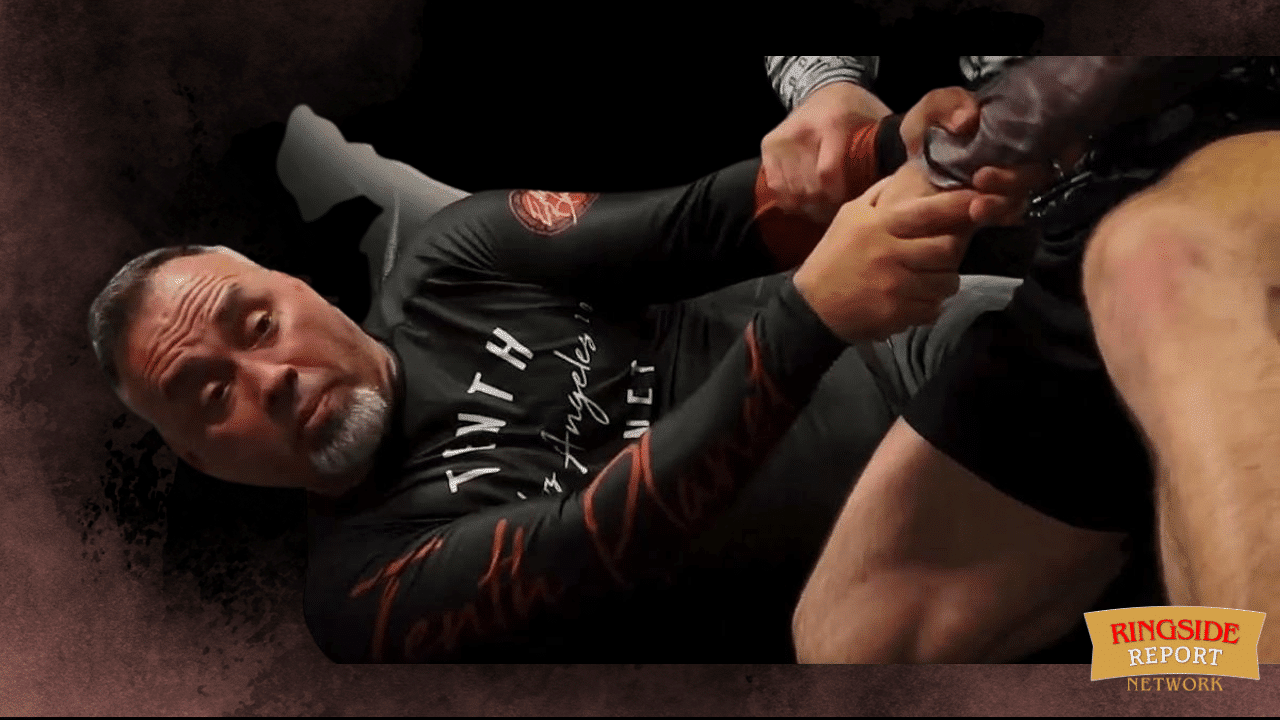
The Lockdown is the cornerstone of the 10th Planet half guard. Where a standard half guard is primarily defensive, the Lockdown is immediately offensive — it immobilizes your opponent’s trapped leg and creates the leverage needed to drag them down and sweep.
What it is: A drill focused on securing the Lockdown from half guard and executing the Whip Down to set up the Electric Chair sweep.
How to drill it: From half guard, hook your legs into the Lockdown — your bottom foot threads under their ankle and your top leg clamps over their calf, lacing your feet together to trap the leg completely. Your partner posts up and tries to flatten you. Fight for the deep underhook on their near-side arm. Once you have the underhook, whip their upper body toward the mat to break their base, then elevate their trapped leg with the Lockdown to finish the Electric Chair sweep. Drill the whip-down and elevation separately before combining them, then drill the full sequence at increasing resistance.
Why it’s essential: The Lockdown teaches you to dominate the half guard rather than survive it. Without a strong Lockdown game, opponents with a good base and pressure will flatten you and pass. With it, your half guard becomes a constant threat, forcing your opponent to defend your sweep rather than advance their position.
3. The Truck Entry and Twister Setup
The Twister is one of the most distinctive submissions in the 10th Planet arsenal — a full spinal rotation choke that is essentially unique to Eddie Bravo’s system. But the Twister itself is not what you drill. You drill the entry to The Truck, the control position that makes it possible.
What it is: A transitional drill where you enter The Truck from half guard, Z-guard, or a turtle position, securing your leg triangle around both of your opponent’s legs.
How to drill it: Start with your partner in a turtle or half guard position. Roll through to secure The Truck, threading your legs to create a leg triangle that controls both of their legs simultaneously. The goal is the entry — getting your body positioned correctly with your legs in control and your upper body free to work. Once you can enter consistently, practice holding the position as your partner attempts to escape, then add the rotation that leads to the Twister finish.
Why it’s essential: The Truck is the gateway to the Twister, the Banana Split, and a range of back-takes and leg attacks that are signature to the 10th Planet system. Without a reliable entry, none of those finishes are available. This drill also reinforces the 10th Planet principle of creating unusual leg entanglements that opponents with conventional grappling training don’t encounter often enough to defend instinctually.
4. The M1 Guard Pass Chain
No-gi guard passing requires timing, pressure, and the ability to chain techniques together fluidly when an initial attempt is blocked. The M1 Pass is a foundational 10th Planet passing concept that pairs naturally with a knee slice when the first option is defended.
What it is: A chain drill combining the M1 pass with a knee-slice pass — two techniques that flow logically from the same underhook and shoulder pressure position.
How to drill it: Your partner starts in half guard. Initiate the M1 by securing a deep underhook and applying shoulder pressure to drive through. As they defend by framing or retaining the hook, your momentum and angle already position you for the knee slice on the same side — use it without pausing or resetting. The drill should feel like one continuous action, not two separate attempts. Work both sides and have your partner vary the timing and type of their defense to make the chain feel reactive rather than mechanical.
Why it’s essential: A single-pass game is predictable. Opponents at any decent level will recognize your setup and defend it. The M1-to-knee-slice chain teaches you to convert your opponent’s defense into your next attack automatically, which is how high-level passers operate. This drill also builds the mental habit of flowing forward rather than resetting when your first option fails.
5. Half Butterfly Guard Sweeps
The Half Butterfly guard layers a butterfly hook into the standard half guard, creating a dynamic off-balancing tool that makes it consistently difficult for your opponent to settle their weight and advance their position.
What it is: A drill focused on inserting the butterfly hook from half guard and using it in combination with an underhook to elevate and sweep your opponent.
How to drill it: From half guard, insert your inside foot as a butterfly hook against your opponent’s thigh. Fight for the underhook on their near-side arm simultaneously. Once you have both, practice using the hook to lift their base while your underhook drives them over. Drill the lift and sweep separately at first — isolate the hook mechanics, then the underhook angle, then combine both at timing-based resistance. The critical skill here is triggering the sweep at the moment your opponent shifts weight, not against a stable, prepared base.
Why it’s essential: In no-gi, where collar ties and sleeve grips don’t exist, the butterfly hook is one of the most reliable ways to create elevating leverage from the bottom. This guard disrupts the heavy, flat pressure that passing-focused opponents rely on and forces them to post repeatedly, which creates scramble opportunities even when the clean sweep isn’t available.
6. Defensive Guard Retention
Your offensive system is only as effective as your ability to maintain the position that makes it possible. Guard retention — recovering your guard when your opponent is actively passing — is arguably the most important survival skill in grappling, and it is consistently undertrained relative to submission attempts.
What it is: A continuous movement drill focused on hip escapes (shrimping), leg pummeling, and framing to recover to any guard position from side control or knee-on-belly.
How to drill it: Your partner starts in side control or knee-on-belly with controlled but consistent pressure. Your only goal is to recover to any form of guard — closed, half, butterfly, or open. Use forearm frames to create initial space, move your hips sharply away, and bring your knees back between you and your opponent. Your partner should follow your movement with steady pressure but not actively try to submit you — this is a movement drill, not sparring. Progress to your partner applying light pass attempts once your movement becomes automatic.
Why it’s essential: Without reliable guard retention, you’ll spend entire rolls fighting from your back in side control or mount, unable to access any of the offensive tools the other six drills develop. A strong offense is built on a defense that cannot be bypassed. This drill is the foundation on which everything else rests.
7. Standing to Ground Transitions
The fight starts on the feet. A grappler who lands a takedown cleanly and then pauses to organize themselves has given away a significant portion of the advantage they just earned. The goal of this drill is to eliminate that pause entirely.
What it is: A chain drill that connects a standing takedown directly into a guard pass or dominant ground position — training wrestling and jiu-jitsu as a single continuous sequence rather than two separate skills.
How to drill it: Start standing. Initiate a single-leg or double-leg takedown to bring your partner to the mat. The moment you hit the ground, your partner begins working to establish a guard. Your job is to begin your guard pass — M1, knee slice, leg weave — without any pause between the takedown finish and the pass initiation. The transition must be seamless. Progress from cooperative resistance to active resistance as the movement becomes more automatic. This drill works equally well starting from a standing clinch or a snap-down to turtle.
Why it’s essential: This closes the gap between wrestling and jiu-jitsu, leaving many grapplers vulnerable after their takedowns. A clean double-leg that dumps your opponent but gives them three seconds to establish full guard hasn’t achieved much. A takedown that flows directly into a pass attempt keeps the pressure continuous and forces your opponent to react rather than organize.
Building a Drilling Routine
These seven 10th Planet no-gi drills cover four distinct phases of grappling: guard offense (Drills 1, 2, 5), positional transitions and back takes (Drills 3, 7), guard passing (Drill 4), and defensive survival (Drill 6). You do not need to drill all seven in a single session. Instead, rotate through phases across your training week.
A simple structure: dedicate 15 minutes before each rolling session to two or three drills from different phases. Spend 2 to 3 minutes per drill, per side. If you train three times per week, you will hit each drill multiple times over a two-week cycle without any single session feeling overcrowded. For a full breakdown of how this connects to your overall 10th Planet belt progression, see the belt system guide, and to find a school that teaches these systems with qualified instruction, see the ranked list of top 10th Planet gyms in North America.
Frequently Asked Questions
How often should I practice these drills?
Aim for 15 to 20 minutes of focused drilling before or after every rolling session. Consistency matters more than volume — drilling three times a week consistently will produce better results than one long drilling day per week with nothing in between.
Can I practice these drills alone?
Guard retention hip escapes and shrimping patterns can be drilled solo. Most of the other drills — particularly the Rubber Guard Flow, Lockdown sequence, and Truck entry — require a partner to provide realistic posture pressure and base. The movement without resistance builds some muscle memory, but you need a partner to develop timing and feel under real conditions.
What’s the most important drill for a beginner?
Defensive guard retention (Drill 6) is the highest priority for newer students. Building the ability to recover your guard under pressure is the foundation of the entire offensive system. If you can’t retain your guard, you won’t be in a position to use the Rubber Guard, Lockdown, or anything else.
How can I practice grappling movements alone?
Solo drilling options include bridging, hip escapes, shoulder rolls, technical stand-ups, and balance-based leg exercises that improve hip and leg agility. These are useful warm-up movements and flexibility builders, but they don’t replace partner drilling for the 10th Planet system specifically.
Why does the 10th Planet system focus so heavily on the guard?
The 10th Planet system was built specifically for no-gi and MMA environments, where traditional guard grips — collar ties, sleeve control — don’t exist. Eddie Bravo’s solution was to develop a guard system based on body mechanics and structural control rather than cloth grips. That required reinventing the guard as an offensive position rather than a defensive one, which is why guard work is so central to the system’s philosophy.