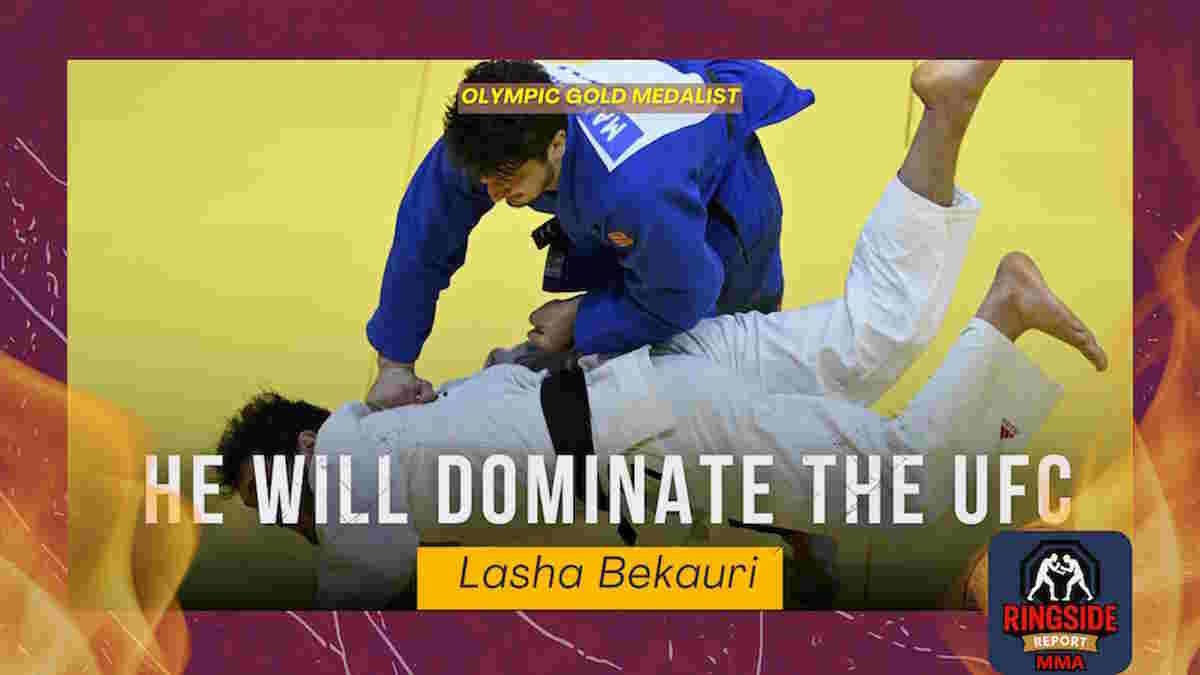

Lasha Bekauri isn’t just another Olympic gold medalist making headlines. The Georgian judoka’s recent comments about Georgian judo MMA applications reveal something crucial that most combat sports analysts are missing: we’re watching the technical blueprint for the next generation of MMA grapplers, and it’s hiding in plain sight on judo mats across Eastern Europe.
Here’s what matters. Bekauri’s explanation of the Georgian grip—that high, collar-dominant control that’s become synonymous with Georgian judo excellence—isn’t just about throwing opponents in competition. It’s about dictating engagement from the first moment of contact. That’s the same fundamental problem every MMA fighter faces when the cage door closes: who controls the terms of engagement?
The Georgian Grip Isn’t What You Think It Is
Most people see Georgian judokas like Bekauri dominating with high grips and think it’s just about throws. That’s surface-level analysis. The reality is more sophisticated and more applicable to MMA than anyone is discussing.
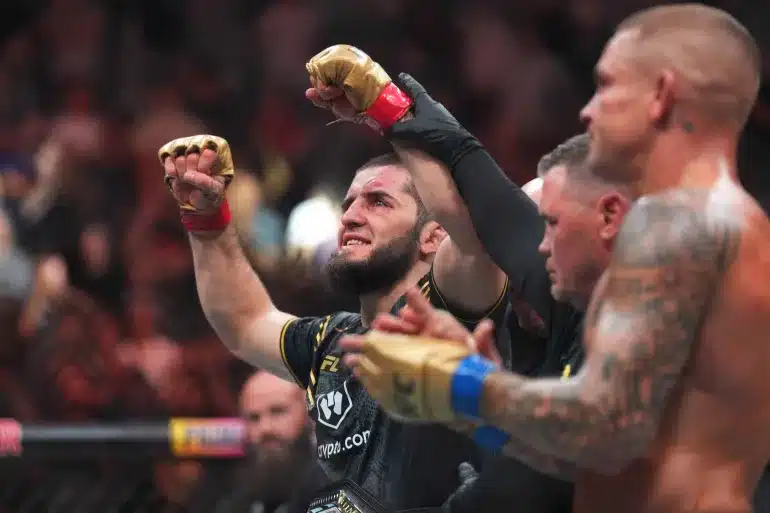
The Georgian style emphasizes immediate collar control—getting your hands high on your opponent’s gi before they can establish their preferred grips. In judo competition, this creates an instant hierarchy. You’re fighting from an advantage while your opponent scrambles to neutralize your position. Sound familiar? That’s precisely what elite MMA grapplers like Khabib Nurmagomedov and Islam Makhachev do with cage control and clinch positioning.
What’s often overlooked is how this translates when you remove the gi. The Georgian grip philosophy isn’t about fabric—it’s about controlling posture and limiting your opponent’s offensive options. Bekauri and his compatriots are training a systematic approach to physical dominance that works with or without a uniform.
The Posture Control Problem in Modern MMA
Watch any high-level MMA grappling exchange, and you’ll see fighters constantly battling for head control, underhooks, and collar ties. That’s the no-gi version of what Bekauri’s describing. Georgian judokas are spending thousands of hours perfecting the timing, leverage, and chain-gripping sequences that MMA fighters are trying to figure out through trial and error.
The technical advantage is real. When a Georgian judoka establishes that high grip, they’re not just holding fabric—they’re breaking down posture, creating angles for attacks, and making their opponent carry weight they can’t effectively distribute. Those same principles apply when you’re controlling someone’s head in the clinch or maintaining top position in MMA.
Why This Matters More Than Sambo or Wrestling
Here’s where I might be wrong, but I’m making this prediction anyway: the next wave of dominant MMA grapplers won’t come from wrestling or sambo backgrounds primarily—they’ll come from judo programs that emphasize Georgian-style grip fighting.
Wrestling gives you incredible conditioning, explosive takedowns, and positional control. Sambo adds submissions and a more well-rounded grappling game. But neither discipline emphasizes the kind of systematic, standing control that Georgian judo has perfected. And in modern MMA, where fighters are increasingly competent at defending takedowns, the ability to control and break down opponents while standing becomes the difference-maker.
Look at the trajectory of fighters like Ronda Rousey—her judo background gave her throwing ability, sure, but more importantly, it gave her clinch control that opponents couldn’t match. Now imagine that same advantage, but with the technical sophistication of Georgian grip fighting and modern MMA training to complement it.
The Historical Precedent Nobody’s Connecting
This isn’t speculation without evidence. Georgian wrestlers and judokas have been quietly influencing MMA grappling for years. The problem is that most of them competed before the sport’s technical analysis caught up to what they were doing. Fighters were winning with “good judo” or “strong clinch work” without anyone breaking down the systematic approach behind it.
Bekauri’s generation is different. They’re competing in an era where every technique gets analyzed, broken down, and adapted. When someone with his level of grip-fighting expertise decides to transition to MMA—and someone will—they’ll have access to striking coaches, strength programs, and strategic planning that earlier judo crossovers never had.
The Bold Prediction: Georgia’s Next Export
Here’s my specific call: within the next three years, we’ll see a Georgian judoka with elite grip-fighting skills make a successful UFC debut and immediately establish themselves as a contender in their division through clinch and cage control that current fighters can’t match. Not through spectacular throws—through systematic positional dominance that frustrates and exhausts opponents.
The fighter who makes this transition won’t necessarily be Bekauri himself, though his technical understanding suggests he could. More likely, it’ll be someone from the same training ecosystem who’s younger and has been watching MMA’s evolution while perfecting Georgian judo principles.
Where This Could Go Wrong
I’ll acknowledge the obvious counterargument: judo specialists have tried MMA before with mixed results. The sport’s striking element and the cage environment create problems that pure judo doesn’t prepare you for. Rousey’s career ended with brutal knockout losses. Other Olympic-level judokas have struggled to impose their grappling against well-rounded competition.
But—and this is crucial—those transitions happened before the current understanding of how to integrate judo into MMA strategy. Before, coaches understood how to use cage positioning to set up judo techniques. Before the grappling meta-game evolved to emphasize standing control.
The reality is that the evolution of combat sports isn’t linear. What didn’t work five years ago might be ideally suited for today’s strategic landscape. Georgian grip fighting represents a technical sophistication in standing grappling that MMA hasn’t fully absorbed yet.
What Happens Next
Bekauri’s comments about the Georgian grip matter because they’re revealing a systematic approach that’s been hiding in plain sight. While MMA coaches teach fighters individual techniques—how to get an underhook, how to control the head, how to use the cage—Georgian judokas train comprehensive gripping systems that address all those elements simultaneously.
The sport that first integrates this approach—whether through Georgian fighters transitioning to MMA or MMA coaches studying Georgian judo methodology—gains a significant competitive advantage. As we’ve been covering at Ringside Report, the evolution of MMA grappling is accelerating, and the next breakthrough won’t come from doing more of what’s already working. It’ll come from importing technical systems that haven’t been fully explored yet.
That’s what makes Bekauri’s perspective valuable beyond just judo competition results. He’s describing a technical framework that solves problems MMA fighters face every time they step into the octagon. Someone’s going to recognize that connection and exploit it. The only question is whether it happens in three years or five, and whether the rest of the sport is paying attention when it does.