Fight IQ — Pro Wrestling Glossary
A botch in wrestling is what happens when a move goes wrong — breaking the illusion, injuring the performers involved, or both at the same time.
This guide covers what causes botches, the most notorious examples in wrestling history, how they damage careers and reputations, and what promotions do to prevent them.
In This Guide
What Is a Botch in Wrestling?
A botch in wrestling is any mistake during a match or segment that breaks the intended presentation — a move executed incorrectly, a spot timed wrong, a promo derailed by an unplanned error, or a piece of equipment that fails at the worst possible moment. The word comes from the broader English meaning of “botch”: to carry something out badly or clumsily. In wrestling’s context, it carries additional weight because a botch doesn’t just look bad — it can shatter the illusion of kayfabe that professional wrestling depends on, and in serious cases, it can end careers or cause permanent injury.
Not every botch is equal. Some are minor — a mistimed rope-run that an experienced performer covers smoothly before most of the audience notices. Others are catastrophic, like Owen Hart’s piledriver on Steve Austin at SummerSlam 1997 that broke Austin’s neck, or Brock Lesnar’s powerbomb on Hardcore Holly that left Holly with a broken neck and thirteen months on the shelf. The term covers everything from cringeworthy verbal slips to career-defining physical disasters, and how a wrestler responds to a botch — whether they sell through it or freeze — often matters as much as the mistake itself.
In an era of social media and instant video sharing, botches in wrestling have taken on new cultural life. What was once embarrassing footage seen only by the live crowd now spreads across the internet within hours, occasionally accumulating more views than the match itself. Understanding why botches happen, and what they reveal about the physical and psychological demands of professional wrestling, is part of understanding the sport itself.
Common Causes Behind Wrestling Botches
While professional wrestling may appear choreographed and controlled, botches occur with surprising frequency across all levels of the industry. Several factors consistently contribute to these dangerous mishaps.
Inexperience tops the list, with rookie wrestlers lacking the ring awareness and timing essential for safe execution. Physical limitations compound these issues — injuries, fatigue, and accumulated wear affect coordination during demanding maneuvers, particularly late in long matches or deep into a gruelling touring schedule.

Environmental hazards present another significant threat: slippery surfaces, faulty equipment, and poor lighting can derail even experienced performers. High-risk moves increase the likelihood of errors, particularly in aerial maneuvers and complex multi-person sequences that require precise synchronisation among multiple bodies.
Miscommunication between wrestlers during matches can lead to chaotic sequences requiring dangerous last-minute adjustments. Finally, deviations from planned choreography create chaos — unauthorized improvisation undermines preparation and communication between performers, leading to potentially catastrophic mistakes that neither party was prepared for.
Timing Errors and Communication Breakdowns
Beyond underlying factors, timing errors and communication failures represent the most immediate causes of wrestling botches during live performances.
Poor communication between wrestlers dramatically increases the risk of botches, particularly during complex maneuvers like powerbombs or springboard moves, where failure to signal readiness has resulted in severe injuries. Wrestlers rely on nonverbal cues during matches — misreading these signals due to inadequate communication can create dangerous situations and lead to improper execution with serious consequences.
Communication breakdowns extend beyond performer interactions. Miscommunication about match pacing disrupts flow and creates confusion, affecting safety at the broader structural level. When wrestlers fail to coordinate timing for high-risk sequences, botched moves become inevitable. The split-second nature of professional wrestling demands precise communication; any breakdown in that chain of coordination can turn routine maneuvers into potential disasters that can derail entire matches.
Understanding the scripted nature of professional wrestling underscores the importance of proper communication, as wrestlers must seamlessly execute predetermined sequences while maintaining the illusion of spontaneous competition — a dual demand that makes timing errors both more likely and more costly than in legitimate sports.
High-Profile Botches That Made Headlines
When wrestling botches transcend mere in-ring mistakes to become cultural phenomena, they transform from embarrassing moments into legendary incidents that define careers and reshape industry narratives.
Hulk Hogan’s accidental self-reference during a live promo created one of wrestling’s most cringeworthy verbal fumbles. Booker T’s slip using a racial slur toward Hogan became a notorious mic error replayed for years.
Brock Lesnar’s under-rotated Shooting Star Press at WrestleMania XIX nearly broke his neck but demonstrated his commitment to finishing matches despite catastrophic mistakes — landing directly on his head and somehow continuing to the finish.
WrestleMania 35’s women’s main event suffered when Ronda Rousey’s shoulders visibly lifted off the mat during Becky Lynch’s winning pin, creating confusion among viewers about whether the finish was intentional.
Owen Hart’s botched piledriver on Steve Austin at SummerSlam 1997 broke Austin’s neck and contributed to WWE’s eventual piledriver ban — one of the most consequential safety policy changes in the company’s history, driven directly by a single botch in wrestling.
These high-profile disasters often overshadow the matches themselves, becoming defining moments in wrestling lore. Post-match discussions extend far beyond the original broadcast, cementing their place in wrestling history through documentaries, retrospectives, and fan conversations that continue years later.
The Most Dangerous Powerbomb Mishaps
Among wrestling’s arsenal of devastating maneuvers, the powerbomb stands as perhaps the most treacherous when executed incorrectly, transforming from a spectacular finishing move into a career-ending catastrophe.
The Ganso bomb exemplifies this danger. Originally surfacing during a 1990s All Japan Pro Wrestling match between Toshiaki Kawada and Mitsuharu Misawa, this vertical drop variation drives opponents head-first into the canvas with devastating spinal compression. The move has directly contributed to paralysis incidents and fatalities, with the original recipient dying from cumulative cervical spine injuries sustained throughout a career in hard-hitting Japanese professional wrestling.
Brock Lesnar’s botched powerbomb on Hardcore Holly demonstrates how easily things go wrong even between experienced performers. On September 12, 2002, Lesnar’s raw strength and improper execution broke Holly’s neck, sidelining him for thirteen months and derailing a career that had been gaining real momentum.
Such incidents underscore why powerbombs demand absolute precision. The historical roots of the move trace back to Lou Thesz, establishing its fundamental place in wrestling’s technical vocabulary — but also the long history of dangerous variations that have emerged as the move evolved over decades.
Career-Altering Injuries From Botched Moves
While powerbomb disasters demonstrate the immediate catastrophic potential of wrestling mishaps, these incidents represent just one facet of a broader pattern of career-ending injuries from botched moves.
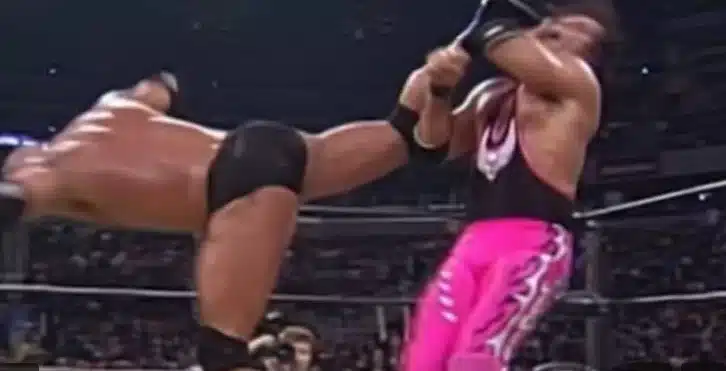
Bret Hart’s career concluded abruptly after sustaining a severe concussion from Goldberg’s stiff kick at Starrcade 1999, leaving him with chronic post-concussion symptoms that made it unsafe to continue competing. Shinya Otani suffered cervical spine damage from a German Suplex into a turnbuckle, resulting in paralysis that ended his career.
Statistical evidence reveals the scope of this crisis across the industry: only 30% of wrestlers return after severe injuries, with 26% requiring surgical intervention. These catastrophic outcomes reflect systemic risks inherent in professional wrestling — the entertainment demands consistently clash with athlete safety, creating an environment where career-altering mishaps remain disturbingly commonplace.
Chuck Austin’s paralysis from a botched Rocker Dropper led to a $10 million settlement against WWE, highlighting the severe financial and legal consequences that can follow wrestling accidents and the liability exposure promotions face when safety protocols are inadequate. Many wrestlers report injuries reluctantly due to fear of repercussions, further complicating recovery and treatment efforts. Injured wrestlers may face being booked to lose consistently, effectively weakening their position while they struggle to perform through pain.
Hilarious Production Failures and Ring Disasters
Professional wrestling’s ambitious pursuit of spectacle inevitably produces spectacular failures, where technical malfunctions transform intended drama into unintentional comedy.
Eddie Guerrero accidentally triggered his pyrotechnics at the 2005 Royal Rumble, startling himself and nearby crew members. The Shockmaster’s infamous debut saw the character trip through a wall, losing his helmet and instantly becoming meme material before he had spoken a single word.
WrestleMania IX’s grand elephant entrance was derailed when the animal urinated on stage during the live broadcast. Drew McIntyre’s dramatic sword-planting at WrestleMania 36 backfired when the weapon bounced off the stage surface instead of embedding dramatically as intended.
Audio disasters include playing the wrong theme music for wrestlers — a particularly deflating experience for performers with pyrotechnics timed to a specific cue — and microphones picking up rehearsal lines during live segments. Ring malfunctions have trapped performers when entrance ramps collapsed, or ropes snapped mid-match, forcing them to engage in creative improvisation under pressure.
These moments shatter the carefully constructed illusion of reality that professional wrestling relies upon to maintain audience engagement. Unlike in-ring botches, which can sometimes be sold, production failures leave performers with almost nothing to work with — the environment itself has failed them.
When Wrestlers Can’t Sell the Moment
The art of selling — convincingly portraying the impact and pain of an opponent’s moves — forms the foundation of wrestling’s believability, yet countless performers struggle to master this essential skill, and selling failures constitute their own category of botch.
Wrestlers react before contact occurs, making opponents appear weak and uncoordinated. Others commit no-sell errors, immediately standing after devastating finishers that should end matches, which tells the audience those finishers don’t matter, damaging everyone involved.
Conversely, overselling transforms serious moments into unintentional comedy — Rusev’s wild reactions and Booker T’s cartoonish Stunner sells became viral clips rather than compelling drama, remembered more for their absurdity than for the matches surrounding them.
Miscommunication creates awkward pauses where wrestlers freeze on camera, waiting for cues or signals that have been missed. Breaking kayfabe through visible laughter or audible coaching destroys immersion entirely. Poor timing of reactions often compounds these issues, as wrestlers fail to deliver the delayed responses that create believable drama and signal to the audience that a move was genuinely impactful.
Effective selling requires wrestlers to understand the narrative flow of each match and respond appropriately to maintain the story’s emotional arc. These repeated failures spike audience disengagement and permanently damage wrestlers’ reputations — poor sales can undermine even the most carefully crafted storylines.
Viral Botches That Became Internet Sensations
Modern wrestling botches no longer fade quietly into obscurity — instead, they explode across social media platforms as viral content that transcends the sport’s traditional boundaries and reaches audiences who have never watched a full match.
Randy Orton’s RKO finisher spawned the “RKO Outta Nowhere” phenomenon, with fans editing footage of random accidents and overlaying the wrestling move in perfect timing. The meme reached non-wrestling audiences, garnering millions of views and attracting celebrity participation — one of the most successful crossover moments in wrestling’s internet history.
Meanwhile, botched finishers like CM Punk’s failed GTS on Kane and Rey Mysterio’s mistimed 619 attempts become instant meme material. These failed attempts at signature moves often gain more attention than perfectly executed finishing sequences, highlighting wrestling’s unpredictable nature and the audience’s appetite for authentic chaos.
Female wrestlers face similar scrutiny, with missed moves from matches involving Lita and Trish Stratus circulating widely under hashtags like “Wrestling Girls.” TikTok and YouTube compilations titled “Wrestling’s Funniest Botches” regularly surpass one million views, proving that wrestling’s mistakes often generate more engagement than its successes.
How Botches Impact Wrestler Reputations
While viral wrestling botches may generate millions of views and endless memes, their impact on the wrestlers involved extends far beyond momentary internet fame.
Botches disrupt the suspension of disbelief, making fans acutely aware of wrestling’s scripted nature. This awareness damages the carefully constructed illusion that keeps audiences invested. Repeated errors transform wrestlers into objects of mockery, regardless of their previous achievements or future potential.
Promoters often respond by reducing the number of pushes or limiting wrestlers’ television time with botch-heavy reputations. In extreme cases, botches can lead to immediate career termination — Randy Orton’s safety concerns over Mr. Kennedy’s repeated mistakes contributed to Kennedy’s release from WWE, and backstage trust had eroded beyond repair. Peers lose confidence in careless performers, particularly when mistakes result in injuries to others.
The most damaging aspect remains the lasting legacy — memorable botches become permanently associated with wrestlers’ careers through documentaries, video compilations, and fan discussions, overshadowing years of solid professional work. Goldberg’s stiff kick that ended Bret Hart’s career defines how many casual fans remember both performers from that era, regardless of everything else they accomplished.
Safety Protocols and Prevention Strategies
Preventing catastrophic wrestling botches demands rigorous safety protocols that address every stage of match preparation and execution. Referee oversight proves essential, with officials empowered to halt matches at signs of excessive force, preventing dislocations and fractures before they occur.
Strict enforcement of banned maneuvers — the piledriver ban in WWE being the most prominent example — has reduced certain categories of neck and spine injury. Modern safety equipment creates additional protective layers. Thicker, more resilient mats decrease the risk of injury from falls and slams, while mandatory headgear protects against head and ear trauma in training environments.
Comprehensive education programs teach wrestlers proper falling techniques and safe application of holds, with regular training ensuring that coaches, officials, and athletes are aware of evolving safety practices. On-site medical personnel provide immediate assessment during live events, while concussion protocols require removal when head injuries are suspected — a significant improvement over the era when performers were expected to work through obvious neurological symptoms.
The broader shift toward wrestler welfare awareness, driven partly by the legal and public relations consequences of high-profile injuries, has made safety conversations in professional wrestling more common and more substantive than they were during the eras when botches were simply accepted as an unavoidable cost of the business.
Level Up Your Fight IQ
Every botch reveals something about how professional wrestling works — explore the craft behind the performance:
Frequently Asked Questions
Do wrestling promotions face lawsuits when botches cause serious injuries?
Major wrestling promotions frequently face lawsuits when botched moves result in serious injuries. Over 50 former wrestlers have filed class-action suits against WWE, alleging negligence and concealment of medical dangers. High-profile incidents, such as Owen Hart’s botched piledriver on Steve Austin and Chuck Austin’s paralysis from a Rocker Dropper, resulted in substantial legal action and significant settlements. However, promotions have often prevailed in court, with judges ruling that insufficient evidence exists to show companies knowingly concealed risks or acted fraudulently rather than simply failing to prevent an inherently dangerous activity.
How do referees handle botches during live matches?
Referees handle botches through quick improvisation and subtle communication. They adjust count speeds, delay calls, or feign distractions to help wrestlers recover without the audience realising anything has gone wrong. Verbal cues and non-verbal signals guide performers back on track when mistakes occur. If planned finishes fail to execute correctly, referees can extend matches or prompt wrestlers into alternative sequences. They position themselves strategically to mask errors and redirect audience attention. Experienced officials remain composed under pressure, using whispered instructions to prevent confusion from escalating into something the crowd cannot ignore.
Do wrestling botches ever injure audience members?
Audience members occasionally sustain injuries from wrestling botches, though documented cases are relatively rare. Equipment failures — snapped ring ropes or barrier collapses — can expose fans near the ringside area to risk. High-flying moves near the ring edges sometimes send performers tumbling into spectator areas unintentionally. Prop malfunctions may send debris toward crowds, while pyrotechnic accidents can cause burns. Major promotions implement safety protocols and barriers to minimise these risks, but complete elimination remains impossible given the physical and unpredictable nature of live professional wrestling performance.
Do wrestlers receive psychological counseling after traumatic botches?
Access to psychological counselling after traumatic wrestling injuries varies considerably. Some larger promotions have improved their welfare provisions in recent years, but professional wrestlers — who typically work as independent contractors rather than employees — have historically faced significant gaps in mental health support compared to mainstream athletes. One in five wrestlers is estimated to experience mental health challenges within six months of a serious injury. Whether a performer receives adequate psychological support often depends on the promotion they work for, their own financial resources, and whether the injury occurs in a context where welfare provisions apply.
Can wrestling insurance companies refuse coverage after repeated botches?
Wrestling insurance companies possess the authority to refuse coverage following repeated botches, as policies typically include explicit exclusions for reckless or negligent acts. Insurers can cancel or deny renewal after patterns of dangerous incidents emerge, and companies closely monitor claim histories to identify increased risk factors. When botches become frequent or preventable, insurers exercise their contractual rights to terminate coverage or dramatically increase premiums to protect their financial interests. This creates a practical incentive for promotions to address botch-prone performers — beyond the reputational and safety concerns, there is a direct financial liability consequence to allowing known risks to continue.