Fight IQ: Pro Wrestling Glossary
Kayfabe is the sacred code that made wrestling “real,” and understanding it changes how you watch every match.
This guide covers the carny origins of the word, the extreme lengths wrestlers went to protect the illusion, the moments that shattered it forever, and how kayfabe quietly reinvented itself for the social media era.
What is Kayfabe?
What Does Kayfabe Mean?
In the wild world of professional wrestling, heroes and villains clash, championships are won and lost, and feuds can last a lifetime. For decades, the entire industry operated under a sacred, unspoken pact to present all of this as 100% real. This grand illusion, this code of secrecy, has a name that every wrestling fan eventually learns: kayfabe.
At its most basic, kayfabe refers to the practice of presenting professional wrestling’s scripted elements, such as rivalries, characters, and storylines, as genuine and unscripted. It’s the collective agreement between wrestlers, promoters, and fans that the show is real. A wrestler playing a heel genuinely hates the babyface they’re feuding with. The finishing move actually hurts. The title change actually matters.
But what is it, really? Where did this carny-sounding word come from? And in an age of social media and tell-all documentaries, does kayfabe have any meaning left at all?
The Origins of Kayfabe: From Carnival Slang to Wrestling Code
The etymology of “kayfabe” is genuinely murky, which feels entirely appropriate given its purpose. The word is widely believed to have originated in carny talk, the private slang used by traveling carnival workers in the early 20th century. Professional wrestling shares deep roots with carnival culture, and when wrestlers needed a code word to warn each other that outsiders (called “marks”) were nearby, they turned to that same cryptic language.
The most popular origin story is that if an outsider walked into the locker room, a wrestler would shout “Kayfabe!” as an alarm, essentially: “Shut up, the fans are listening. Go back to pretending you hate each other.” It was the industry’s secret handshake and emergency alarm rolled into one.
As for where the word itself comes from, nobody can say for certain. Theories include a scrambled version of “be fake” (possibly through a pig Latin-style transformation), the Latin cavēre meaning “beware,” and even a phrase used by Jewish carnival workers in East London between the World Wars. The Merriam-Webster Dictionary, which officially added kayfabe in 2023, acknowledges the uncertainty directly. Whatever its true origin, it was a word designed to be opaque, and on that front it succeeded completely.
How Do You Pronounce Kayfabe?
If you are wondering how to pronounce kayfabe, the standard pronunciation is KAY-fayb (rhyming with “gave”), with the stress on the first syllable. You will occasionally hear kay-FAYB from old-school wrestlers and carnival veterans, but KAY-fayb is what modern commentators, podcasters, and insiders use today. Since the word almost certainly started as spoken slang long before anyone wrote it down, some variation in pronunciation survived even after the spelling settled.
How Wrestlers Protected Kayfabe: The Extreme Lengths of the Territory Era
In the territory days of wrestling, roughly from the 1940s through the early 1980s, kayfabe wasn’t just encouraged, it was law. Promoters and wrestlers went to hilarious and sometimes genuinely extreme lengths to protect the illusion. A work had to look real, and anyone who broke that code was betraying the entire business.
Separate Everything
Heels and babyfaces didn’t just play enemies on television: they were expected to maintain the fiction everywhere. Separate locker rooms. Separate travel. They didn’t sit together in restaurants, didn’t ride the same cars, didn’t acknowledge each other in public. The logic was airtight: if fans saw the villain buying coffee with the hero he was supposed to want to murder, the entire feud collapsed.
The Kamala Story
One of the most remarkable stories of kayfabe enforcement involves the family of James Harris, known in wrestling as Kamala the Ugandan Giant. In the 1970s, Harris’s own wife, not clued into the scripted nature of the business, genuinely celebrated when her husband “won” a $5,000 prize in a battle royal. She had no idea the prize money was part of the storyline. Harris maintained kayfabe even at home.
The Plane Crash That Nearly Blew Everything
In 1975, a small plane carrying NWA executive David Crockett, Johnny Valentine, a young Ric Flair, and masked wrestler Mr. Wrestling crashed on takeoff. The problem? Mr. Wrestling was a babyface. Flair was a heel. They weren’t supposed to be anywhere near each other. While recovering in the hospital, Mr. Wrestling, still in tremendous pain, gave a false name and lied about his profession to prevent fans from connecting the dots. Two weeks after the crash, still battered, he put his mask back on and returned to the ring. Kayfabe had to be protected, even from a hospital bed.
The Moments That Shattered the Illusion
Of course, the “secret” was never perfectly kept. Newspapers questioned the legitimacy of wrestling as far back as the 1880s. But within the industry, the code of silence held, until a handful of moments cracked it open forever.
The Curtain Call (1996)
On May 19, 1996, at a Madison Square Garden house show, something unprecedented happened. Shawn Michaels, Triple H, Diesel (Kevin Nash), and Razor Ramon (Scott Hall), two faces and two heels, embraced in the ring after the main event. Nash and Hall were heading to WCW, and this was their farewell. The problem was that house shows weren’t televised, but they weren’t private either. Photographs circulated. Fans talked.
The fallout was immediate. WWF couldn’t punish Nash and Hall: they were already gone. Michaels was the WWF Champion. That left Triple H, who was stripped of a King of the Ring tournament win he had been booked to receive. The Curtain Call cost Triple H months of his career trajectory. It was the first major, documented proof that kayfabe had cracks.
The Montreal Screwjob (1997)
If the Curtain Call was a crack, the Montreal Screwjob was a demolition job. On November 9, 1997, at Survivor Series, WWF Champion Bret Hart was in a match against Shawn Michaels that Hart believed was booked to end differently. Vince McMahon, having privately arranged a different outcome, called for the bell mid-match while Michaels had Hart in his own submission hold, the Sharpshooter. Hart, who was leaving for WCW, never agreed to drop the title that night.
The Screwjob became the most documented backstage controversy in wrestling history. It wasn’t just that the “result” was manipulated: that was always the case. It was that the manipulation itself became the story, visible to everyone. Kayfabe didn’t just break in Montreal; it became the subject of a documentary (Wrestling with Shadows), countless shoot interviews, and an entire era of wrestling storytelling built around blurring the line between what was real and what wasn’t. The concept of the shoot entered mainstream wrestling vocabulary because of this one night.
Who Killed Kayfabe?
Vince McMahon arguably fired the first shot himself. In 1989, facing pressure from state athletic commissions that wanted to regulate, and tax, professional wrestling as a legitimate sport, McMahon testified to New Jersey authorities that wrestling was, in fact, a performance. It was a calculated business decision: avoid sports regulation by admitting what everyone already suspected. Kayfabe was sacrificed on the altar of corporate convenience.
Then the internet arrived, and what was left burned quickly. The Wrestling Observer Newsletter had been pulling back the curtain for insiders since the 1980s. By the mid-1990s, newsgroups and early web forums were openly trading insider wrestling language: works, shoots, gimmicks, booking decisions. By the time YouTube existed, the infrastructure for keeping wrestling’s secrets was no longer in place.
The business adapted. Instead of trying to prevent fans from knowing that wrestling was scripted, promotions gradually leaned into that knowledge, using it as a storytelling tool rather than something to hide.
Kayfabe in the Modern Era
Modern kayfabe is a fundamentally different beast from its territory-era ancestor. It has three defining characteristics that make it more sophisticated, and arguably more interesting, than the old version.
It’s selective. Kayfabe is maintained within the show’s context. Wrestlers play their roles, and commentators react with shock, but the illusion often ends when the cameras stop rolling. No one expects John Cena to refuse to share a cab with his current rival.
The lines are deliberately blurred. Modern booking regularly incorporates real-life elements: real injuries, real contract disputes, real personal history, woven into scripted storylines. This leaves fans genuinely uncertain about what they’re watching, creating a different but equally effective kind of investment. CM Punk’s 2011 “pipebomb” promo is the defining example.
Fans are partners, not marks. The audience and the performers now operate in a kind of shared agreement. We know it’s scripted. We willingly suspend disbelief to enjoy the show. Cheering the hero and booing the villain is part of the fun, and knowing the secret doesn’t ruin the experience: it actually deepens it for those who understand the craft of ring psychology and storytelling.
CM Punk’s Pipebomb (2011)
On June 27, 2011, CM Punk sat cross-legged at the entrance ramp on Monday Night Raw with a microphone. What followed, a promo that directly attacked Vince McMahon, John Cena, WWE management, and the broader wrestling business by name, was immediately dubbed the “pipebomb.” It referenced real contract disputes, real backstage politics, and real frustrations. It felt like a shoot. It was almost certainly a very well-crafted work. Maybe both. The point is that nobody could be completely sure, and that ambiguity was entirely intentional. It became one of the most-watched wrestling promos in internet-era history precisely because it weaponized the uncertainty kayfabe had left behind.
MJF: Old-School Kayfabe in a New Era
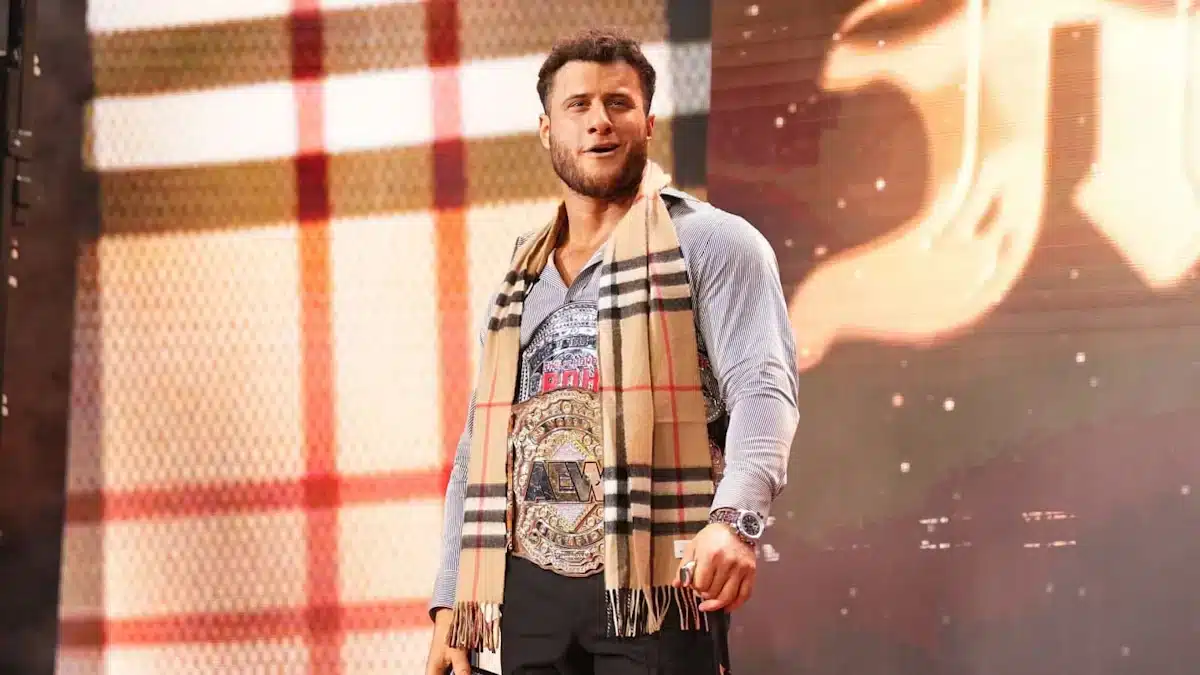
Maxwell Jacob Friedman, MJF, represents one of the most committed kayfabe experiments of the modern era. He doesn’t just play a heel on television. He maintains the character in nearly all public appearances: signings, conventions, and social media. Reports from Rhode Island Comic Con described him staying completely in character at an autograph session: rude, dismissive, throwing merchandise across tables, while fans paid good money to interact with him, thoroughly entertained by the whole thing. Bully Ray put it simply: MJF was “a complete d***” to everyone there. That is the job. And fans love to hate him for it.
MJF revived an old-school dedication to character that most thought was permanently extinct. He proved kayfabe isn’t dead: it just requires more deliberate commitment than it once did.
Is Kayfabe Truly Dead?
The honest answer is: the old kayfabe is dead. The version that required wrestlers to hide friendships, travel separately from rivals, and maintain complete fiction in everyday life: that’s been gone since the internet arrived and nobody credibly fought to bring it back.
But something called kayfabe absolutely still exists, and it might be more powerful than ever. It’s just evolved from a conspiracy of silence into a performance contract. Wrestlers and fans both know the deal. We’ve both agreed to show up, play our parts, and enjoy the spectacle for what it is. The Undertaker spent decades refusing interviews in character, insisting on the supernatural mystique of his gimmick. When he finally did break from it, it made the unmasked moments more powerful, not less.
The best wrestling today uses kayfabe as a creative tool: leaning into and out of it deliberately, blurring the line between performance and reality in ways that create genuine emotional investment. That’s not the death of kayfabe. That’s its maturation.
And if you want proof, does it still matter? Notice how wrestling fans genuinely lose their minds when a beloved performer’s real-life injury turns out to be a work. The outrage is real because the investment was real. Kayfabe, the idea that this thing we’re watching actually means something, never died. It just stopped requiring everyone to pretend it was a legitimate sport.
Level Up Your Fight IQ
Kayfabe connects to everything in wrestling. Explore the full vocabulary:
Frequently Asked Questions About Kayfabe
What does kayfabe mean in pro wrestling?
Kayfabe refers to the practice of presenting professional wrestling’s scripted elements, such as characters, rivalries, storylines, and match outcomes, as genuine and real. A wrestler “in kayfabe” stays in character and treats the fiction as fact. It originated as carny slang used by carnival workers and was adopted by wrestlers as a code word warning that outsiders were nearby.
Is kayfabe dead in wrestling?
The old version of kayfabe, where wrestlers genuinely tried to convince fans that everything was real, traveled separately from rivals, and stayed in character off-camera, is largely gone since the internet era. However, a modern form of kayfabe survives as a deliberate performance contract: wrestlers and fans both know the show is scripted, yet both agree to invest in it. Some performers, notably MJF, maintain near-total character commitment as a conscious artistic choice.
What is “breaking kayfabe” in wrestling?
Breaking kayfabe means stepping outside the fictional world of wrestling and acknowledging that it is scripted, either intentionally or accidentally. Famous examples include the Curtain Call (1996), where heels and babyfaces publicly embraced; the Montreal Screwjob (1997), where a real dispute became public knowledge; and CM Punk’s 2011 “pipebomb” promo, which deliberately blurred the line between character and reality.
What is the difference between kayfabe and a work?
Kayfabe is the overall system: the code for presenting wrestling as real. A work is a specific scripted element within that system. A match result is a work. A feud is a work. An injury angle is a work. Kayfabe is the commitment to not letting fans see that these things are works. A shoot, by contrast, is something genuinely unscripted: a real emotion, a real confrontation, or a match breaking down into legitimate competition.
Where does the word kayfabe come from?
The exact origin is unknown, which is fitting for a word designed to be opaque. The most widely accepted theory is that it derives from carnival slang, possibly a scrambled or pig Latin-style variation of “be fake.” Other theories link it to the Latin cavere (to beware) or to a phrase used by carnival workers as a coded warning. Merriam-Webster officially added the word in 2023 and acknowledges the etymology remains uncertain.
Who broke kayfabe the most famously?
Vince McMahon’s 1989 testimony to New Jersey athletic commission authorities, admitting wrestling was entertainment, not sport, was arguably the most consequential break in kayfabe history. Among wrestlers, the Montreal Screwjob (1997) is the most famous single incident. The Curtain Call (1996) is notable for the career consequences Triple H faced as a result.
How does understanding kayfabe change the way you watch wrestling?
Once you know what kayfabe is, you can recognize ring psychology at work: the way a wrestler sells an injury to tell a story, how a heel’s gimmick is designed to draw heat, or how a promo blurs the line between character and reality. You move from watching a spectacle to watching a craft, which most fans find considerably more rewarding.