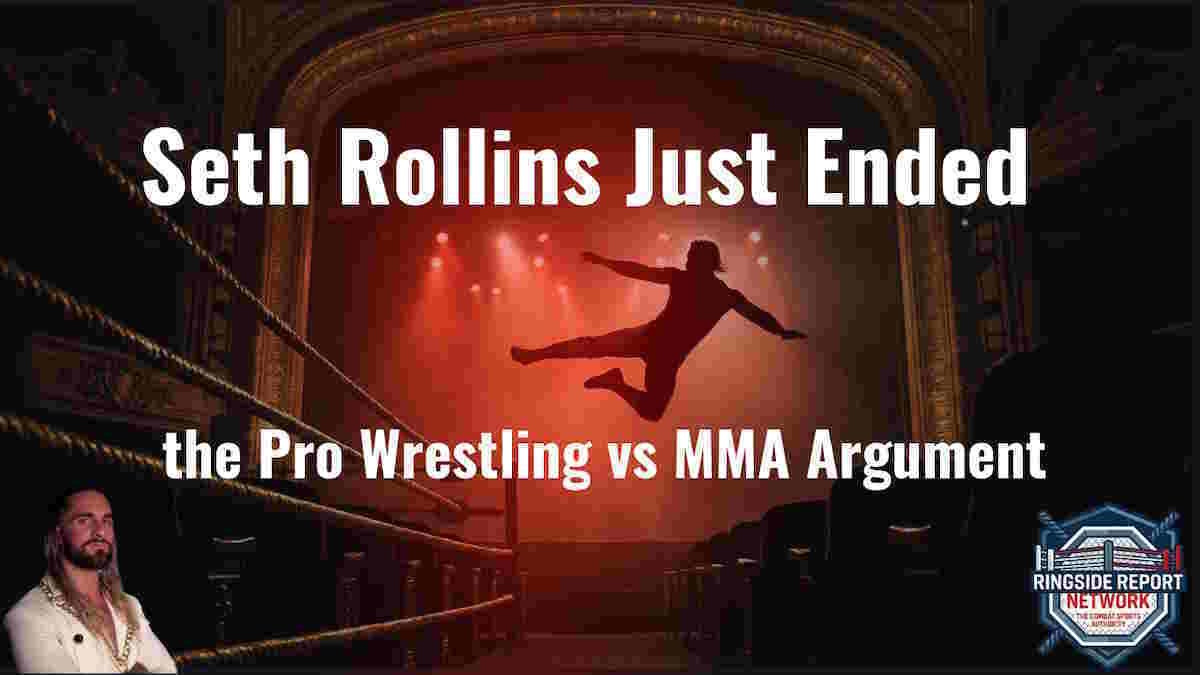

Before the keyboard warriors start typing about “fake fighting,” let me be clear: I’m not saying pro wrestlers would beat UFC champions in a real fight. That’s not the pro wrestling vs MMA argument Rollins is making. What he’s actually saying, and what most combat sports fans refuse to acknowledge, is that professional wrestling demands a skill set so diverse that it makes pure combat sports look one-dimensional by comparison.
Why the Pro Wrestling vs MMA Debate Makes Fans Uncomfortable
Here’s the thing: when you’re a boxer, you master one discipline. When you’re an MMA fighter, you master four or five. But when you’re a professional wrestler at the elite level, you’re simultaneously mastering athletic performance, theatrical storytelling, improvisational psychology, crowd manipulation, and yes, actual wrestling technique that would surprise most people who’ve never trained.
The comparison to stand-up comedy isn’t random. Stand-up comedians read the room, adjust their timing based on audience energy, and elicit emotional responses through pure performance skill. Wrestlers do that every single night while executing complex athletic sequences that would injure most people if done incorrectly. They’re combining the physical demands of gymnastics with the improvisational requirements of live theater, with the psychological manipulation of a con artist.
The Athletic Component Nobody Talks About
Let’s address the elephant in the room: pro wrestling’s predetermined outcomes don’t eliminate the athletic requirements. If anything, they increase them. MMA fighters train to finish fights as quickly as possible. Wrestlers train to perform athletically for 20-30 minutes while making it look spontaneous, protecting their opponent’s safety, and telling a coherent story that justifies every move.
As we’ve covered extensively in our analysis of why wrestling is the best base for MMA, the conditioning and body control required for high-level wrestling translates directly to combat effectiveness. The difference is that pro wrestlers add layers of performance skill on top of that athletic foundation that pure combat athletes never develop.
The Broadway Comparison Actually Proves Rollins’ Point
Why Theater Training Makes Wrestling Harder, Not Easier
When Rollins mentions Broadway, he’s talking about something most combat sports fans have zero frame of reference for: the ability to perform the same high-intensity routine night after night while making it feel fresh and spontaneous to different audiences. Broadway performers do eight shows a week. Pro wrestlers at WWE’s level work 200+ dates per year.
Think about that for a second. UFC champions fight 2-3 times per year. Boxing champions fight 1-2 times per year if they’re active. Top-tier pro wrestlers can work 150-200+ dates per year during heavy touring periods, traveling between cities, adjusting to different crowds, working through injuries, and maintaining character consistency across months of storylines. Saying combat athletes never develop performance skills ignores guys like Conor McGregor and Chael Sonnen who built empires on promo ability, but those are exceptions, not the training focus.
The physical toll alone is insane. But add the mental component, remembering sequences, calling spots in real-time, reading crowd reactions, adjusting psychology mid-match, and you’re looking at a cognitive load that makes a 15-minute UFC fight look like a simple task by comparison.
The Improvisational Element Nobody Appreciates
Here’s what separates great pro wrestlers from good ones: the ability to improvise when things go wrong. An MMA fighter who gets rocked can clinch and recover. A boxer who’s hurt can hold and buy time. A pro wrestler who botches a spot has to immediately adjust the entire sequence, maintain character, protect the story, and make it look intentional, all while their opponent is doing the same.
That’s not easier than real fighting. It’s just a completely different skill set that requires the same athletic foundation plus additional performance layers.
Let’s Be Honest About What This Argument Actually Means
The Insecurity Behind the Pushback
The reason the pro wrestling vs MMA comparison triggers such defensive reactions isn’t because Rollins is wrong. The reason MMA and boxing fans get so defensive about this comparison isn’t that Rollins is wrong. It’s because acknowledging he’s right would mean admitting that the “realness” of combat sports doesn’t automatically make them more difficult or more complete as disciplines.
Combat sports fans have built their identity around the idea that predetermined outcomes = less legitimate. But difficulty and legitimacy aren’t the same thing. Playing a character convincingly while executing athletic sequences safely for 30 minutes requires a different kind of difficulty than fighting for real for 15 minutes. It requires more diverse skills. That doesn’t make it “better”; it makes it different.
Where Rollins’ Argument Gets Complicated
Here’s where I’ll admit the nuance: pro wrestling’s lack of competitive legitimacy does change the stakes in ways that matter. When Conor McGregor steps into the octagon, his career, health, and legacy are genuinely on the line. When Seth Rollins steps into the ring, he’s executing a performance where the outcome is predetermined and the risks, while real, are managed through cooperation.
That psychological pressure of genuine competition is something pro wrestlers never experience in their primary discipline. The fear of actually losing, of being exposed as inferior, of suffering a career-ending knockout: that’s a mental burden that shapes combat athletes in ways performance artists never face.
My Bold Prediction: This Debate Will Define the Next Generation
Here’s what matters: the next evolution of combat sports entertainment will blur these lines completely. We’re already seeing UFC invest heavily in storytelling and character development. We’re seeing pro wrestling incorporate more legitimate athletic credentials and combat sports backgrounds.
Within five years, we’ll see a major star successfully transition from pro wrestling to high-level legitimate MMA competition and openly credit their wrestling skills for their ability to handle the mental pressure. Not the physical skills: the performance psychology. The ability to control a crowd’s emotions will directly translate into controlling the psychological warfare of fight promotion and cage presence.
Where This Could Go Wrong
I could be completely off base here. The skill sets might be too different for that crossover to happen at the elite level. We’ve seen wrestlers try MMA and fail more often than succeed. But those failures came from wrestlers who tried to rely on toughness instead of translating their actual performance advantages.
What This Really Tells Us About Combat Sports Evolution
Seth Rollins isn’t saying pro wrestling is better than MMA or boxing. He’s saying it’s more complete as a performance discipline because it requires athletic ability, PLUS theatrical skill, PLUS improvisational psychology, PLUS character consistency, PLUS crowd manipulation.
And honestly? That’s a stronger argument than most combat sports fans want to admit. You can argue about which discipline is more valuable, more legitimate, or more impressive. But arguing that one requires a broader set of skills is harder to counter than MMA purists think. Wrestling wins that comparison because it includes everything combat sports require, plus additional layers that combat athletes never develop.
The real question isn’t whether Rollins won the pro wrestling vs MMA argument. He made a compelling case. The real question is whether combat sports fans can acknowledge that truth without feeling it diminishes what they love about real fighting. Because here’s the reality: both disciplines are incredibly difficult. Both require elite athleticism. Both deserve respect.
But only one requires you to be an athlete, an actor, a psychologist, and an improviser simultaneously. And that’s exactly what makes pro wrestling the ultimate combat art, even if the combat itself is choreographed.
The pro wrestling vs MMA debate just got a new voice, and it’s going to piss off every combat sports purist out there. Seth Rollins compared pro wrestling to stand-up comedy and Broadway, calling it a complete performance art that requires a broader range of skills than any pure combat sport. And you know what? He’s got a point that deserves more than reflexive dismissal.