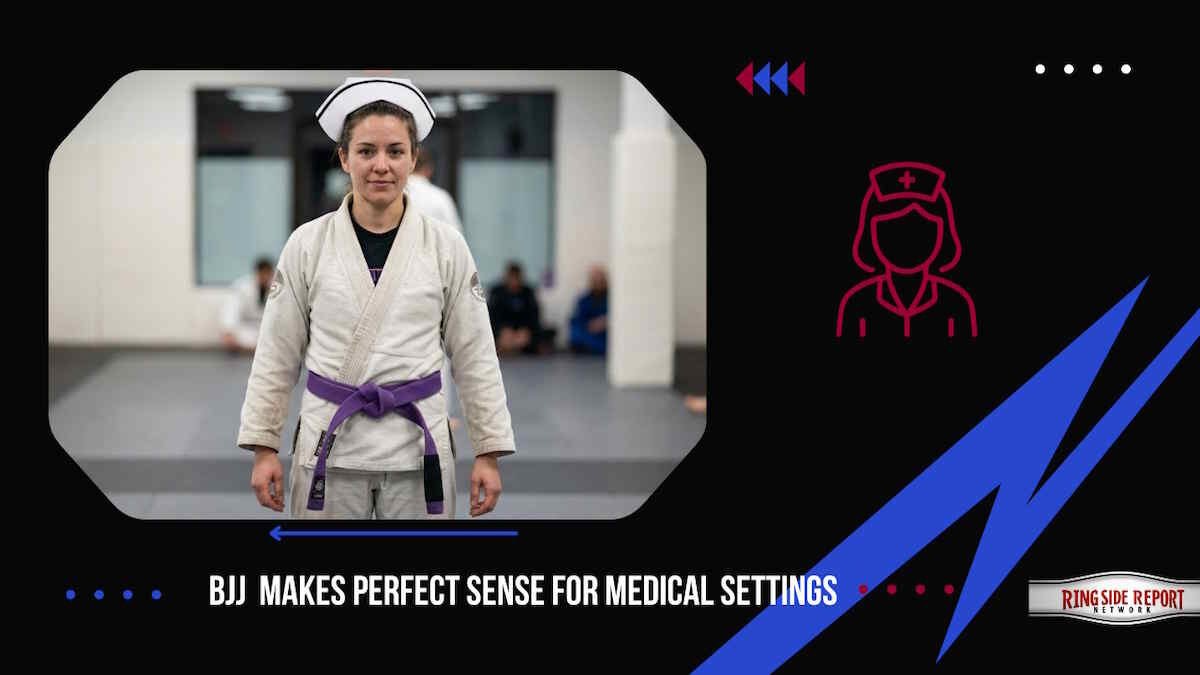

When Nurses Start Training Like Fighters, We’ve Got Bigger Problems
Look, nurses learning BJJ to defend themselves at work wasn’t on my 2025 bingo card, but here we are. If you told me five years ago that emergency room nurses would be drilling armbars and learning how to escape from grabs just to survive their shifts, I’d have called you crazy. But healthcare workers across the country are flooding into Brazilian Jiu-Jitsu academies — not for fitness or fun, but because they’re getting physically assaulted at work and hospital security isn’t cutting it.
The statistics are brutal. Healthcare worker assaults have increased 63% since 2020, with nurses bearing the brunt of patient violence. What do you expect when you combine understaffed hospitals, mental health crises, and substance abuse issues? These professionals are getting punched, bitten, and grabbed daily, and hospital security isn’t always there when things go sideways.
The obvious take here is simple — this shouldn’t be controversial. Healthcare workers going to their jobs shouldn’t need to know how to sprawl out of a takedown or break someone’s grip on their scrubs. When nurses and doctors are spending their off-hours learning arm drags and hip escapes instead of relaxing after 12-hour shifts, we’ve got bigger problems than what martial art works best for self-defense.
Why BJJ Actually Makes Perfect Sense for Medical Settings
The Control Factor That Changes Everything
That’s the thing about Brazilian Jiu-Jitsu, though — if you’re going to learn any martial art for this situation, BJJ might be the smartest choice these healthcare workers could make. Unlike striking arts that could escalate situations or cause serious injury to already compromised patients, jiu-jitsu’s emphasis on control and positional dominance translates directly to medical scenarios.
When a 120-pound nurse needs to handle a 200-pound patient having a psychotic episode, traditional striking arts aren’t the answer. You can’t throw haymakers in a hospital room. But understanding leverage, body positioning, and how to escape from grabs? That’s lifesaving knowledge. I’ve been covering combat sports long enough to know that BJJ’s emphasis on technique over strength makes it ideal for smaller practitioners facing larger, aggressive opponents.

The Psychology Behind Grappling in Healthcare
Think about what happens when a confused or agitated patient grabs a nurse. Traditional training might tell them to pull away or call security, but BJJ teaches something different — how to stay calm under physical pressure, how to control distance, and most importantly, how to neutralize a threat without causing harm.
The grip breaks, the ability to create space, the confidence that comes from knowing you can handle physical confrontation — all of this changes how someone carries themselves in potentially dangerous situations. And here’s what most people miss: that confidence often prevents the confrontation from happening in the first place.
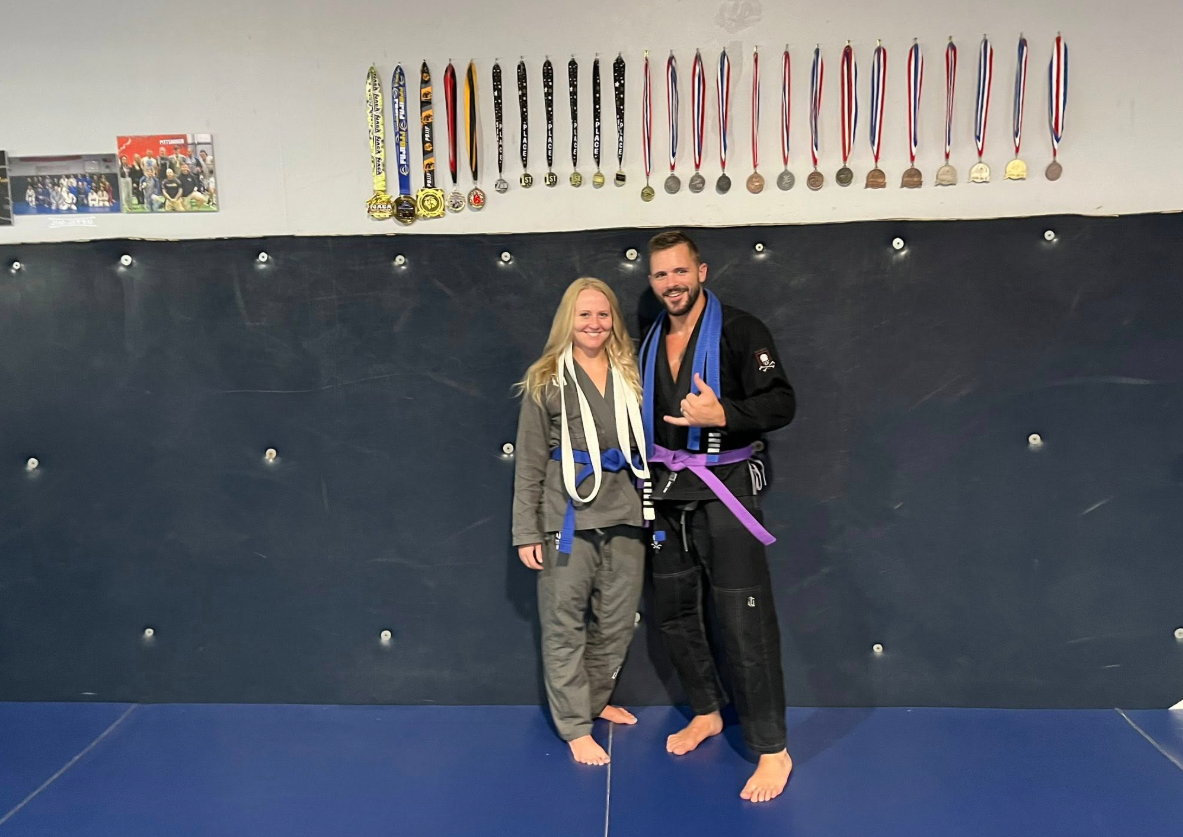
20 months of consistency. During that time, I leveled up from Nurse to Nurse Practitioner while raising our two little girls. Couldn’t have done ANY of this without my husband; who became a purple belt the same day I became a blue belt. I love this sport – Jacqueline Shea
The Complicated Reality Nobody Wants to Discuss
The Liability Nightmare Nobody Talks About
Here’s the complicated part that most coverage misses: hospitals are walking a tightrope between employee safety and patient care liability. Teaching staff submission holds open legal questions that make administrators nervous. What happens when a nurse puts a patient in a rear-naked choke? Even if it’s justified self-defense, the optics are terrible.
Smart BJJ instructors working with healthcare facilities are focusing on escape techniques, distance management, and basic control positions rather than submissions. It’s about getting away safely, not finishing the fight.
When Training Meets Reality Stress
I’ve seen enough fighters freeze up in competition to know that drilling techniques in a controlled academy environment doesn’t automatically translate to real-world effectiveness. A nurse dealing with a violent patient isn’t just managing physical technique — they’re handling someone they’re supposed to care for, often while other patients are watching.
The psychological aspect is massive. These healthcare workers signed up to heal people, not fight them. Even when they’re being attacked, there’s an internal conflict that can override training. That’s completely different from a competitor who’s mentally prepared for combat.

The Burnout Factor Nobody Mentions
Come on, these people are already working 12-hour shifts in high-stress environments. Now we’re asking them to spend their off-hours learning martial arts because their workplace is too dangerous? That’s not solving the root problem — it’s just adding another burden to overworked professionals.
The fact that we’re even having this conversation is insane. Healthcare workers learning martial arts to do their jobs safely? That’s not a feel-good story about empowerment; it’s an indictment of how we’ve failed to protect the people taking care of us. Hospitals are understaffed, security is often inadequate, and the legal system frequently fails to prosecute assaults on medical personnel. So these workers are taking matters into their own hands, literally.
My Bold Prediction: This Goes Mainstream Within Two Years
Why Hospital Systems Will Embrace Martial Arts Training
Here’s what I think happens next, and I might be wrong. Still, I’m calling it anyway: within two years, major hospital networks will start partnering with BJJ academies for mandatory self-defense training. Not because administrators suddenly care more about worker safety, but because the liability costs of failing to provide it become too high.
The tipping point comes when a high-profile case — probably a nurse getting seriously injured — creates enough public pressure that hospitals can’t ignore the issue anymore. The insurance companies will drive this change. When healthcare worker injuries from patient violence start costing more than prevention programs, the math becomes simple. Worker compensation claims and staffing shortages will force administrators’ hands.
Where This Could Go Completely Wrong
Look, I could be entirely off base here. Hospital bureaucracy moves more slowly than molasses, and the legal complications might prove insurmountable. There’s also the real risk that poorly trained staff could escalate situations that might otherwise de-escalate naturally.
But here’s what worries me most: if this becomes mandatory training, you’re going to get watered-down, liability-focused programs that miss the point entirely. The confidence and practical skills that come from real BJJ training — the kind these healthcare workers are seeking out on their own — can’t be replicated in a two-hour corporate seminar.
What This Means for Combat Sports and Healthcare
This trend represents something we’ve been tracking at Ringside Report: the evolution of martial arts from sport to a practical life skill. BJJ gyms are adapting their business models to offer specialized programs for healthcare workers, teachers, and other professionals who deal with workplace violence.
It’s complicated because it changes how we think about combat sports training. These aren’t athletes preparing for competition — they’re people learning skills they hope they’ll never need to use. The psychological preparation is different, the techniques are modified, and the success metrics aren’t about winning fights but about going home safe.
Brother, if healthcare workers need to learn fighting techniques to do their jobs safely, we’ve got bigger problems than just hospital security. But until those systemic issues get addressed, BJJ might be the most practical solution available. The reality is that these professionals deserve to protect themselves, and if martial arts training gives them that capability, then we should support it.
The question isn’t whether healthcare workers learning BJJ makes sense — it obviously does. The question is whether we’re going to address why they need it in the first place. Until hospitals invest in proper staffing, adequate security, and systemic changes to reduce patient violence, we’re just putting band-aids on a much deeper problem.
What do you expect, though? In a system that asks healthcare workers to do more with less while facing increasing violence, of course,e they’re going to find their own solutions. And if that solution happens to involve learning some of the most effective self-defense techniques ever developed, well, at least they’re making wise choices about which martial art to study.