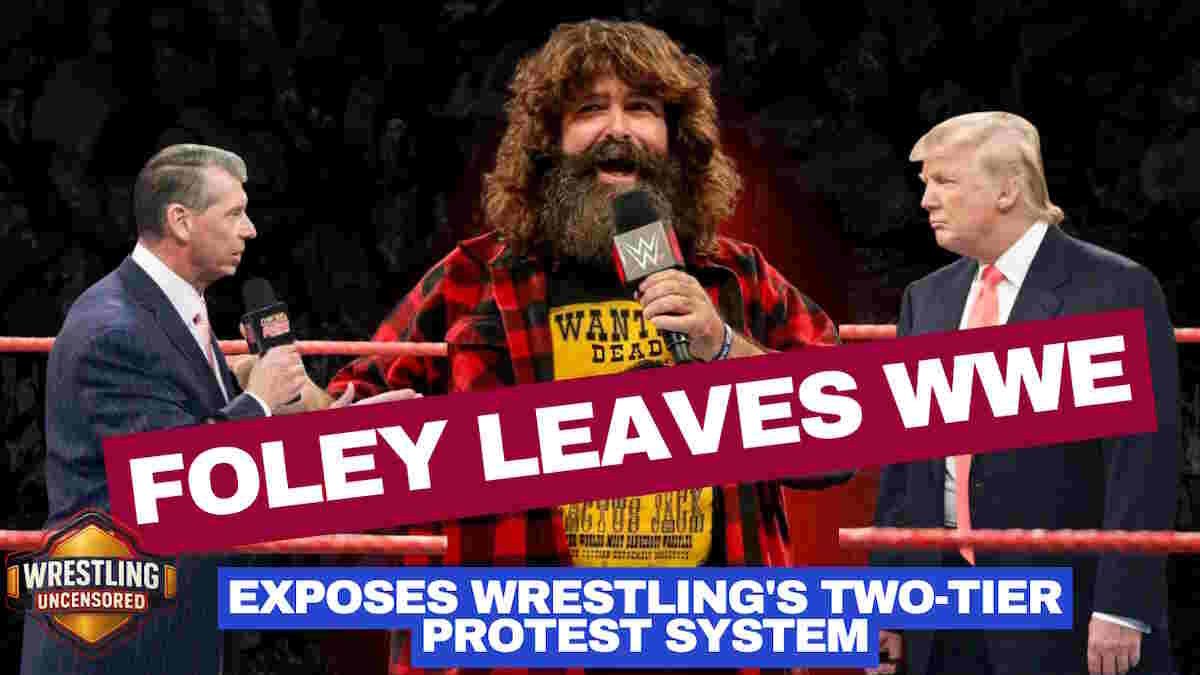

Mick Foley leaves WWE this week. Not because of money. Not because of creative differences. Not because someone younger got his spot. He walked away because WWE is holding events in Saudi Arabia, and because the company’s relationship with the Trump administration represents a line he won’t cross.
The easy take? This is just another wrestler making a political statement that’ll be forgotten by next week. But here’s what matters: when Mick Foley leaves WWE after decades of loyalty, it signals something fundamental has shifted in how talent-management relationships work in professional wrestling. And whether you agree with his politics or not, the business implications deserve serious attention from anyone who covers combat sports at the level we do at Ringside Report Network.
That’s the thing—Foley isn’t some mid-card guy looking to make headlines. He’s a Hall of Famer who literally sacrificed his body to build WWE’s Attitude Era success. When someone with that kind of legacy walks away citing moral concerns, it creates permission for others to do the same. Or does it?
The Reality of Wrestling’s Political History
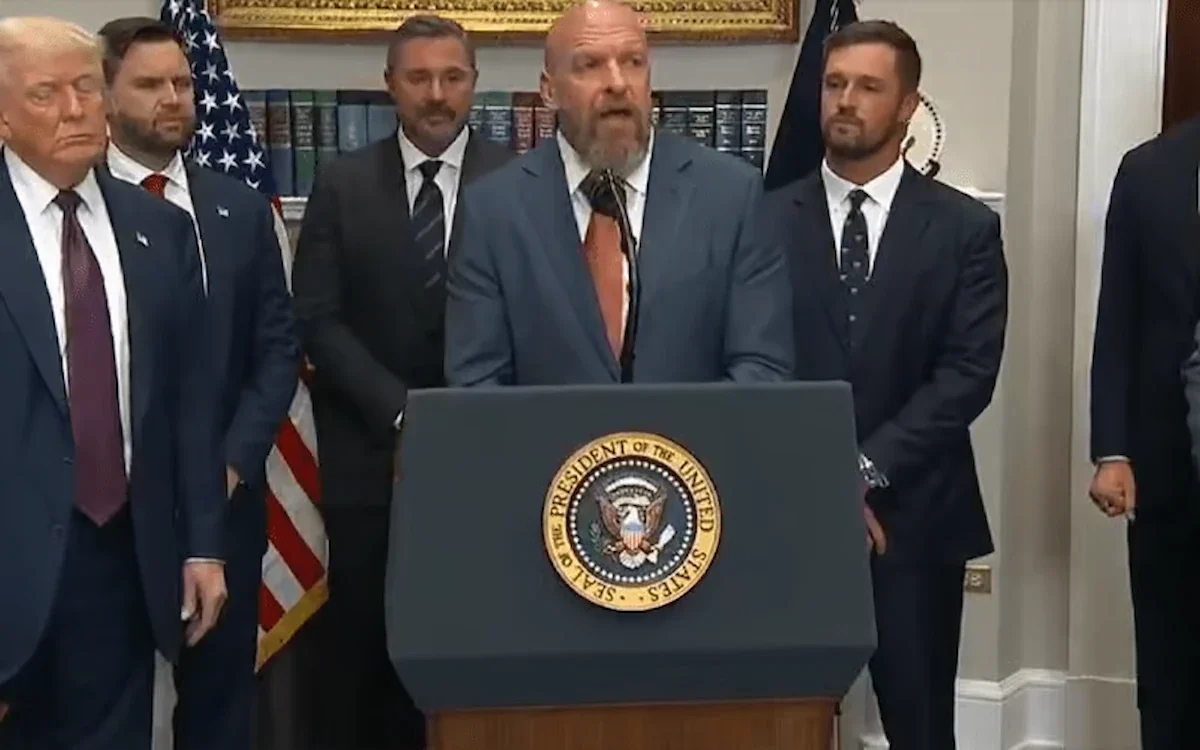
Professional wrestling has always had a complicated relationship with politics. Vince McMahon’s wife, Linda, served as Administrator of the U.S. Small Business Administration in Trump’s first administration (2017-2019) and acts as U.S. Secretary of Education in his second term. The company has run Saudi Arabia shows since 2018 despite massive controversy around the Jamal Khashoggi murder, women’s wrestling restrictions, and the 2019 travel incident that left talent stranded. WWE has positioned itself as family entertainment while navigating some decidedly unfamily-friendly business partnerships.
What’s different now is the talent response. For decades, wrestlers kept their heads down and cashed checks. You didn’t publicly criticize the company while under contract. You certainly didn’t walk away from guaranteed money over principle. The unwritten rule was simple: Vince McMahon’s political relationships were Vince McMahon’s business, not yours.

When Mick Foley leaves WWE, he breaks that pattern completely. He’s not under contract pressure. He’s not trying to negotiate a better deal. He’s simply saying, “I can’t be associated with this anymore” and walking away. That’s unprecedented for someone of his stature in modern WWE history.
The Leverage Question Nobody’s Asking
Here’s the thing about why Mick Foley leaves WWE and most wrestlers can’t: Foley can afford to take this stand. He’s made his money. His legacy is secure. He doesn’t need WWE’s platform to pay his mortgage. But what about the wrestlers who do?
The reality is that most WWE talent can’t afford principled exits. They’ve got mortgages, families, and medical bills from years of physical punishment. The independent wrestling scene isn’t what it was five years ago. AEW exists as an alternative, but they’re not hiring everyone who walks away from WWE. For most wrestlers, leaving WWE over politics isn’t brave — it’s financial suicide.
This creates a two-tier system where legends can take stands while active roster members stay silent. It’s not hypocrisy. It’s economics. Come on—you can’t blame a 30-year-old mid-card wrestler with two kids for not following Foley’s lead. That’s not moral weakness. That’s survival.
What This Reveals About WWE’s Corporate Evolution
WWE isn’t the company it was even five years ago. It’s now part of TKO Group Holdings, merged with UFC under Endeavor’s umbrella. The Saudi Arabia deal reportedly brings in $50 million per show. The Trump administration connections run deeper than ever—Linda McMahon now serves as Secretary of Education, giving WWE direct cabinet-level access in two separate policy domains across both Trump administrations.
What’s often overlooked is how this corporate structure insulates WWE from individual talent protests. When Mick Foley leaves WWE, it barely registers in the stock price. The company’s revenue streams are sufficiently diversified that losing even a prominent legend doesn’t put financial pressure on it to change course.
Compare this to the 1990s, when losing top talent to WCW created existential threats. Back then, wrestlers had leverage because competition existed and television ratings directly drove revenue. Today? WWE’s business model is built on long-term media rights deals and international partnerships. Individual talent decisions matter less to the bottom line than ever.
Brother, that’s the business reality nobody wants to acknowledge. Foley’s exit is morally significant. Financially? WWE doesn’t even blink.
The Saudi Arabia Complication
The Saudi shows deserve specific attention here. WWE has faced criticism for these events since day one. Multiple wrestlers have quietly refused to work these shows over the years—Daniel Bryan, John Cena, Kevin Owens, and Sami Zayn have all sat out at various points. But those were quiet absences. Foley made his departure public and explicitly tied it to Saudi Arabia.
That’s different. That’s creating a public record that forces other talent to consider their own positions. When legends like Mick Foley leave WWE over moral concerns and say so publicly, it makes it harder for everyone else to stay silent.
My Bold Prediction: This Changes Nothing (And Everything)
Here’s what I think happens: WWE will continue the Saudi Arabia shows for at least another five years, regardless of talent objections. The money is too significant, and the corporate structure makes individual protests manageable.
What might change is how WWE handles talent objections. We could see more formalized opt-out policies for controversial international shows. Not because WWE suddenly grows a conscience, but because it’s cheaper to let a few people sit out than deal with public departures and the PR nightmares they create.
The fundamental shift isn’t in WWE policy. It’s in what’s now considered acceptable to say publicly. Five years ago, a wrestler criticizing Saudi Arabia shows risked burial or release. Today? When Mick Foley leaves WWE and explains why, WWE’s response is basically silence. That’s not approval, but it’s tolerance. And tolerance creates space.
Where I Might Be Wrong
Here’s the reality: I’m analyzing this through a business lens because that’s what I know from covering combat sports. But Foley’s decision might not be about business leverage or industry trends at all. It might just be about a man reaching a personal line he won’t cross, regardless of the broader implications.
Sometimes the simplest explanation is the right one. A 59-year-old man with nothing left to prove decided his conscience mattered more than his WWE relationship. That’s not a business story. That’s a human story. And maybe trying to extract industry trends from individual moral decisions misses the point entirely.
What do you expect? Not everything is about leverage and corporate strategy. Sometimes people just do what they think is right, consequences be damned.
What Happens Next
WWE will continue its partnership with Saudi Arabia and deepen its connections with the Trump administration—Linda McMahon’s move from the Small Business Administration to Secretary of Education shows how these relationships expand rather than contract. Most wrestlers will continue working these shows because they need the income. Foley will continue his advocacy work outside WWE’s structure. And the industry will keep evolving in ways that make these individual decisions simultaneously more possible and less impactful.
The real test comes when an active, full-time roster member faces this choice. When someone who needs WWE decides they can’t participate in something the company demands. That’s when we’ll learn whether wrestling’s talent-management relationship has actually evolved, or whether legends just have different rules than everyone else.
For now, the fact that Mick Foley leaves WWE stands as a marker—a moment when someone with options chose principle over partnership. Whether that moment matters beyond itself depends on what happens next. And in wrestling, what happens next is always more complicated than anyone predicts.