
From 19th-century carnival tents to a $21.4 billion entertainment empire — the eight pivotal moments that didn’t just shape professional wrestling, they redefined American entertainment itself.
Professional wrestling didn’t become a global phenomenon by accident. Behind every legendary match, shocking heel turn, and industry-shaking decision lies a calculated move that permanently altered the business. This isn’t just a list of great matches. These are the eight defining milestones that didn’t just change wrestling — they completely rewrote the business’s rules.
In This Article
1. The Carnival Strongmen (1860s–1910s): Wrestling Invents Itself
Professional wrestling didn’t start in an arena. It started in a tent, on fairgrounds, where traveling strongmen challenged local volunteers to stay on their feet for cash prizes. Nobody cared who won — they cared about the show.
The critical evolution happened gradually across American and European carnivals in the late 19th century. Promoters discovered that a fixed result was far more reliable than a genuine contest. Legitimate wrestlers were difficult to control, unpredictable in outcome, and occasionally lost to locals, destroying the whole attraction in an instant. Worked matches solved all three problems simultaneously.
The “hookers” — legitimate submission wrestlers kept on the payroll to handle marks who wanted a real fight — and the “workers” focused on entertainment became the two pillars of an industry that still operates on that same fundamental division today. But the most important invention of this era wasn’t the predetermined finish. It was the secret.

Carnival culture had a word for the code of silence that protected the business: kayfabe. Treating the performance as sport, insisting the competition was legitimate — that secret became wrestling’s most valuable asset and its most elaborate long-term con. Everything that followed was built on it.
2. The Gold Dust Trio (1920s): Wrestling Gets a Script
By the 1920s, wrestling had a structural problem. Regional promoters ran independent shows without coordination, leading to inconsistent results; top stars couldn’t travel between territories without losing to local talent, and the business was damaging its own credibility. Ed “Strangler” Lewis, manager Billy Sandow, and booker Toots Mondt changed everything.
As the Gold Dust Trio, they created a centralized system that controlled major championships, coordinated results across territories, and — most importantly — introduced narrative structure to wrestling. Mondt’s “Slam Bang Western Style” ditched exhausting mat-work sessions that put legitimate crowds to sleep and replaced them with time limits, rope breaks, and theatrical spots engineered for maximum crowd reaction. He essentially wrote the first wrestling script.
What the Gold Dust Trio built wasn’t just a business arrangement. It was the prototype for every wrestling promotion that followed: a central authority controlling championship lineages, talent working controlled narratives toward predetermined conclusions, and local territories operating under a shared framework. The NWA, WWF/WWE, WCW — all trace their organizational DNA directly to what three men built in the 1920s.
3. Cable Television and WrestleMania (1984–1987): Wrestling Goes National
For most of its existence, professional wrestling was a regional business. Vince McMahon Sr. ran the northeast. Fritz Von Erich ran Texas. Jim Crockett ran the Carolinas. The territories coexisted by staying in their lanes — an unwritten agreement that had defined the industry for 40 years. Vince McMahon Jr. bought his father’s company in 1982 and immediately broke every rule.
Using cable television as a delivery mechanism that crossed territorial boundaries, McMahon signed the NWA’s biggest regional stars — Hulk Hogan, Roddy Piper, Jesse Ventura — and ran shows across the entire country. The territorial system, which had survived since the Gold Dust Trio era, collapsed within three years.

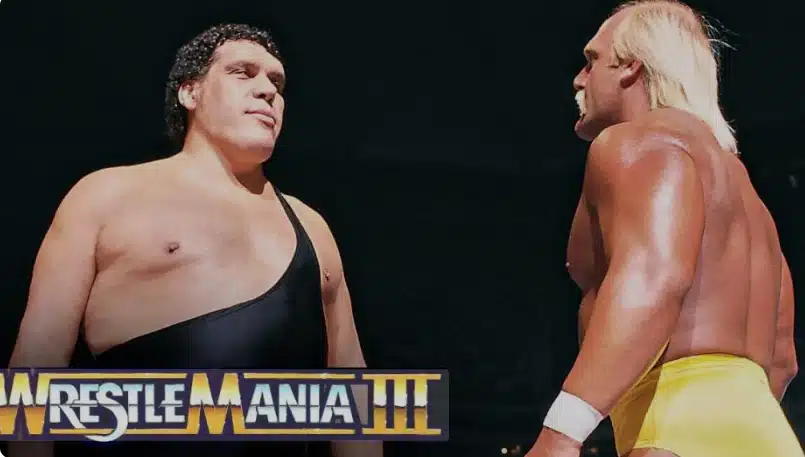
The exclamation point was WrestleMania on March 31, 1985 — held at Madison Square Garden with a live gate of 22,092 and closed-circuit distribution to 135 venues. WrestleMania III in 1987, with 93,173 fans at the Pontiac Silverdome, witnessed Hulk Hogan bodyslam André the Giant and remains one of the highest-attended live events in American history. The national expansion permanently rewrote wrestling’s economics. Ring psychology — the ability to work a crowd of 90,000 rather than 2,000 regulars — suddenly mattered more than mat technique. Everything scaled up.
4. Hulk Hogan Joins the nWo (1996): 83 Consecutive Weeks
At WCW Bash at the Beach on July 7, 1996, Hulk Hogan — the most recognizable babyface in wrestling history, the hero of a generation of children, the man who had slammed André the Giant — walked out to the ring and joined the invading heels. The crowd didn’t just boo. They threw garbage into the ring for ten minutes.
WCW had been losing the Monday night ratings war against WWE Raw since both shows launched head-to-head in 1995. The nWo storyline — built around outside invaders attempting a hostile takeover of WCW — changed everything. Hogan’s involvement transformed a compelling angle into a cultural phenomenon. For the first time in wrestling history, the villain was the biggest star in the business.
The result was 83 consecutive weeks of WCW Monday Nitro defeating WWE Raw in Nielsen ratings — an unprecedented run that forced WWE to fundamentally reinvent itself in response. That competition produced the Attitude Era, Stone Cold Steve Austin, D-Generation X, and the most commercially successful period in wrestling history. The nWo proved that a babyface with 15 years of positive equity generates more heat as a heel than anyone built from scratch — and that genuine competition between promotions produces better wrestling than a monopoly.
5. Austin vs. Hart at WrestleMania 13 (1997): The Double Turn
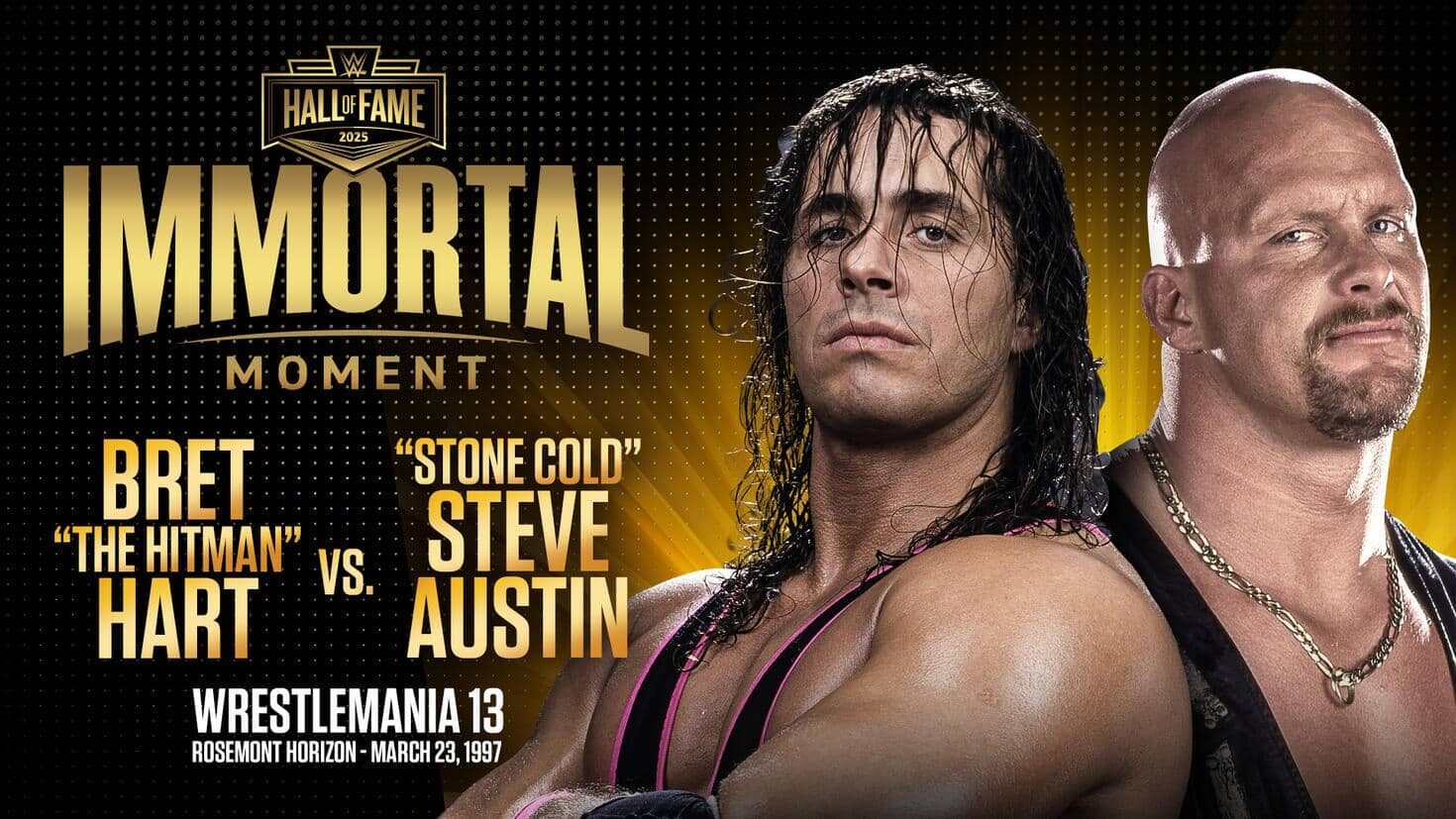
The double turn — where both participants switch alignment simultaneously during a single match — is wrestling’s most technically difficult storytelling achievement. Steve Austin and Bret Hart achieved it perfectly at WrestleMania 13 on March 23, 1997.
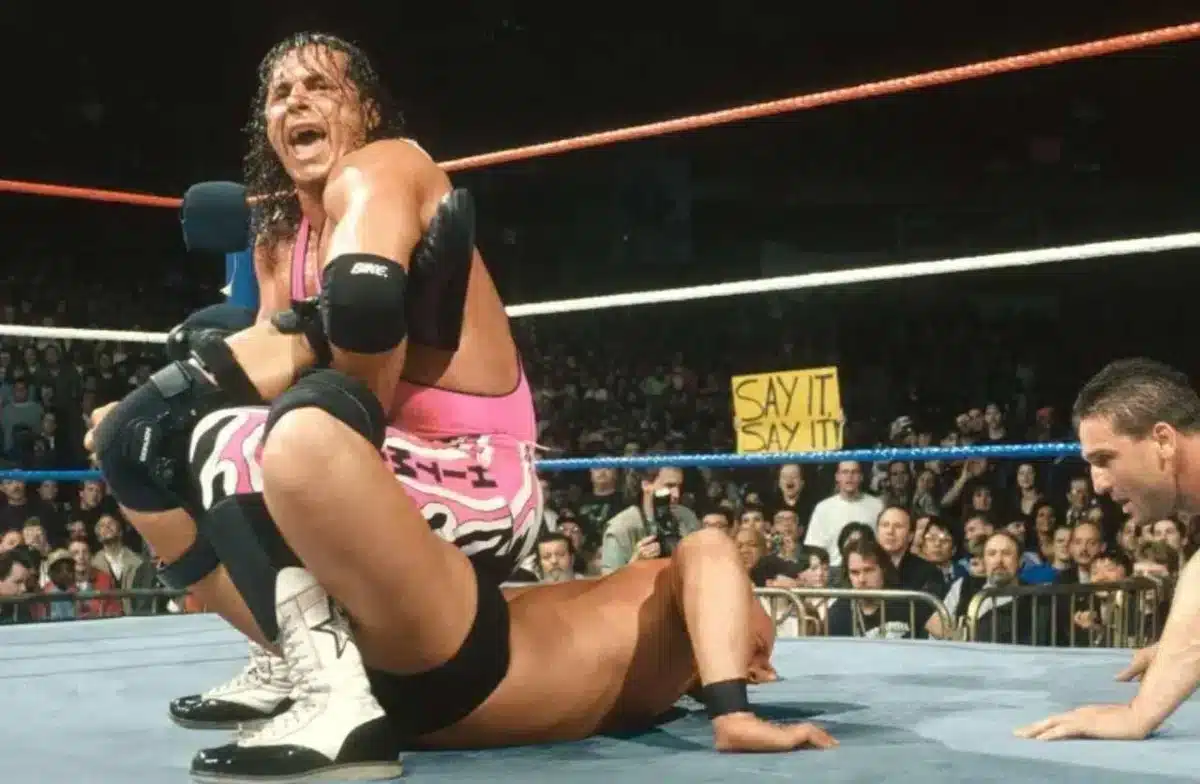
Hart entered as a heel who had turned on American audiences. Austin entered as a brawling anti-hero, the crowd was beginning to embrace, but hadn’t fully committed to. By the time Hart locked in the Sharpshooter and Austin — bleeding heavily, refusing to tap out — finally passed out rather than submit, the entire arena had inverted its allegiances. Hart left as the cynical villain who couldn’t respect toughness. Austin left as the toughest man alive.
The match launched the most profitable run in wrestling history. Stone Cold Steve Austin’s rebellion against authority connected with late-1990s American audiences in a way that transcended sport. The Attitude Era’s commercial peak is directly traceable to this single match and the character it crystallized. It also demonstrated that ring psychology alone can accomplish more than a year of television booking — a 22-minute match with the right emotional architecture can permanently change audience allegiances.
6. The Montreal Screwjob (1997): The Night Kayfabe Died for Good
Eight months after WrestleMania 13, wrestling produced its most consequential single moment. On November 9, 1997, at Survivor Series in Montreal, WWF Champion Bret Hart lost his title to Shawn Michaels in a finish Hart never agreed to. Vince McMahon ordered referee Earl Hebner to call for the bell while Michaels had Hart in the Sharpshooter — Hart’s own finishing hold — regardless of whether Hart submitted. Hart hadn’t submitted. He never tapped.
Hart’s real-life fury in the aftermath — he spat in McMahon’s face, destroyed monitors at ringside, and punched McMahon backstage — was not scripted. Neither was the bewilderment spreading through the live crowd and the locker room. For the first time on a major WWE broadcast, the audience was watching something genuinely real happen inside a worked context, and they knew it.
The Montreal Screwjob did three things that permanently altered professional wrestling. First, it blurred the line between kayfabe and reality in a way that couldn’t be unblurred — once fans knew a promoter could overrule a champion with a real-world business decision, the entire pretense of athletic sport became harder to maintain and more interesting to deconstruct. Second, it created the “Mr. McMahon” character: the tyrannical, self-serving authority figure who became Stone Cold Steve Austin’s greatest foil and the engine of the Attitude Era’s most profitable storylines. Third, it established that real heat — genuine backstage animosity between performers and management — could be weaponized as the most compelling storyline in the business.
Every “worked shoot” angle, every blurred fiction-reality segment, every authority figure who “runs the show” against fan favorites traces its lineage directly to that night in Montreal. The shoot had officially become part of the show.
7. The Shield Breaks Up (2014): Three Main Event Stars at Once
When Seth Rollins turned on Roman Reigns and Dean Ambrose on June 2, 2014, WWE accomplished something it had struggled to do for a decade: it created three legitimate main event stars simultaneously from a single act of betrayal — and in doing so, validated a developmental and financial model that has shaped WWE’s roster strategy ever since.
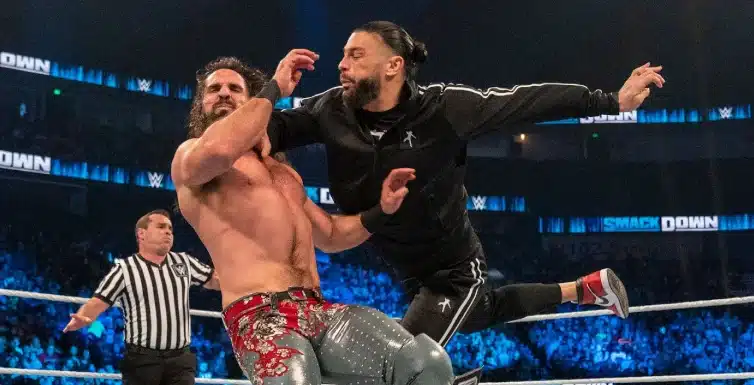
The Shield — Roman Reigns, Seth Rollins, Dean Ambrose — debuted in November 2012 as a heel faction and spent 18 months dismantling WWE’s established top tier. By the time they turned face in early 2014, they had become the most organically over group in years. Rollins’ betrayal worked because genuine investment creates genuine reaction — but the Shield split operated at a different scale from any previous faction fracture.
It didn’t create one breakout star at the expense of another. It created three viable solo careers in distinct commercial positions: Rollins as the calculating corporate heel with championship upside, Ambrose as the unhinged fan favorite who could headline on any card, Reigns as the long-term investment being protected for a decade-long championship run. WWE essentially tripled its main event inventory in a single segment. Every faction built and fractured since — The Wyatt Family, The New Day’s various evolutions, Judgment Day — follows that same financial blueprint: build the unit’s credibility, then break it apart at the moment of maximum emotional investment to generate the largest possible return on three separate performers.
8. The WWE-UFC Merger into TKO Group Holdings (2023): The $21.4 Billion Endgame
On September 12, 2023, TKO Group Holdings — a new entity combining WWE and UFC — began trading on the New York Stock Exchange at a valuation of approximately $21.4 billion. The carnival strongmen had become a publicly traded media conglomerate.
The merger completed wrestling’s commercial transformation from working-class entertainment to premium content. WWE’s television rights deal with Netflix — which took effect in January 2025 — brought Raw to the world’s largest streaming platform, ending the episodic broadcast television model the company had operated under since 1993. TKO’s combination of WWE and UFC created the world’s most valuable combat sports and entertainment company, and as Seth Rollins himself has noted, the divide between professional wrestling and MMA has never been smaller in terms of production values, global reach, or business sophistication.
What began in carnival tents — predetermined results protected by a code of silence — had become a $21 billion publicly traded institution. Full breakdown of the WWE-UFC ownership structure here.
What These Eight Moments Have in Common
Each of these milestones shares one characteristic that separates them from ordinary wrestling history: they didn’t just happen within the wrestling business — they changed the rules of how the wrestling business operates. The Gold Dust Trio changed how wrestling was organized. WrestleMania changed the scale at which it operated. The nWo changed who could be a villain. Montreal changed what was real and what wasn’t. The Austin-Hart double turn changed what a single match could accomplish narratively. The TKO merger changed who owns it and what it’s worth.
Wrestling’s history is the history of an entertainment form that has reinvented its own rules at least eight times and survived every reinvention. From kayfabe to Netflix, from carnival tent to NYSE listing, the essential product hasn’t changed: larger-than-life characters, dramatic conflict, and athletic spectacle that sits somewhere between sport and theater — and has always been better than both.