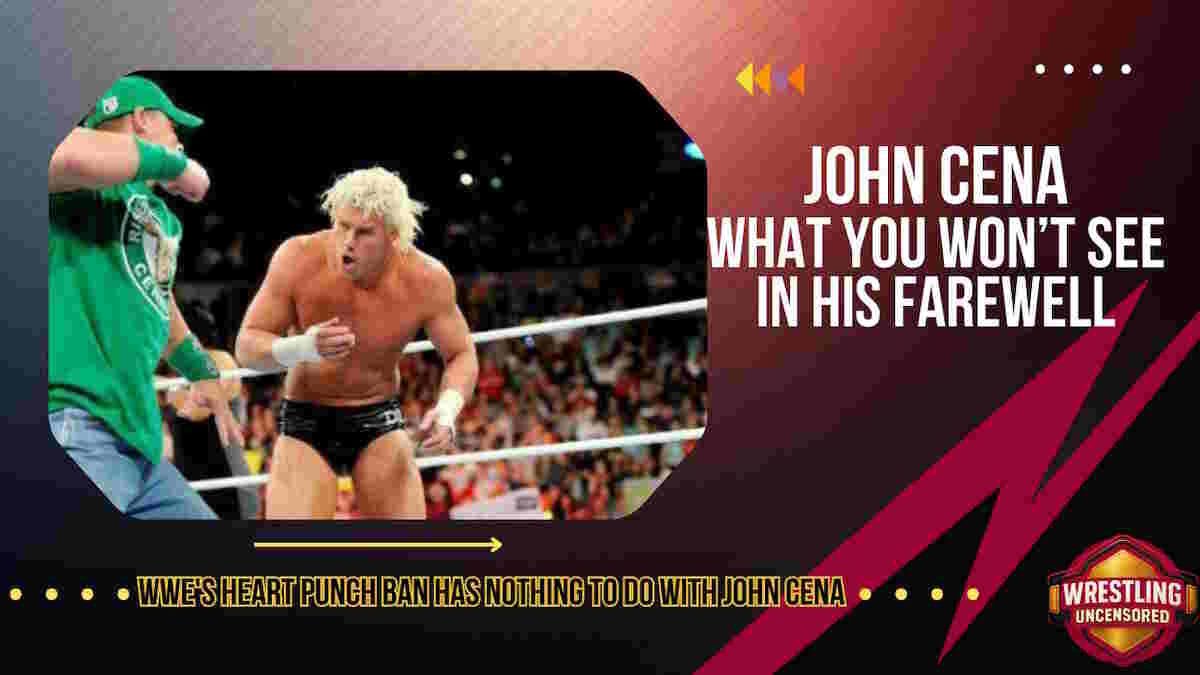

We Need to Talk About This Heart Punch Thing
John Cena’s doing his farewell tour, right? The biggest star WWE’s had since The Rock, coming back for one last run, and everyone’s wondering what special moments we’ll get. Maybe he’ll bust out some old moves, give us that nostalgia hit. But here’s what you won’t see: the heart punch. And brother, there’s a reason WWE banned that move decades ago, and it’s got nothing to do with Cena specifically.
The heart punch — or as wrestling historians know it, the “heart shot” — has one of the darkest legacies in professional wrestling. We’re talking about a finishing move that was literally sold as stopping your opponent’s heart. Not knocking them out and not making them submit. Stopping. Their. Heart. That’s the thing about old-school wrestling psychology — they went places modern wrestling won’t touch with a ten-foot pole.
Oxford Bellow made this move famous in the territory days, and it worked because the kayfabe was different back then. Fans believed this stuff could actually happen. You’d have guys selling the heart punch like they were having a cardiac episode in the ring. Referee checking for a pulse. The whole nine yards. It was effective storytelling, but it was also playing with fire in ways that make zero sense in 2025.
Why WWE’s Ban Makes Perfect Business Sense
The Liability Nightmare Nobody Talks About
Here’s the reality: WWE is now a publicly traded company. They’ve got shareholders, corporate sponsors, and more lawyers than you can count. Imagine trying to explain to Mattel or Snickers why your top babyface is using a move that simulates causing heart failure. Come on. That’s not happening.
The issue goes deeper than just sponsor concerns. WWE spent years — decades, really — trying to distance itself from the carnival aspects of wrestling. They want to be seen as athletic entertainment, not the sideshow stuff from the territorial era. A move that’s sold as literally stopping someone’s heart? That’s precisely the kind of thing Vince McMahon spent the Attitude Era and beyond trying to evolve past.
The Medical Reality WWE Can’t Ignore
Let’s be honest about something else: WWE has had legitimate medical tragedies in its history. Owen Hart. Eddie Guerrero. The concussion lawsuits. The company is hyper-aware of anything that could be perceived as making light of actual medical emergencies. A finishing move based on cardiac arrest? That’s not edgy storytelling anymore — that’s a PR disaster waiting to happen.
As we’ve been covering combat sports for years, we’ve seen how quickly public perception can turn on violence in entertainment. MMA had to clean up its image to get sanctioned everywhere. Boxing constantly battles its reputation for brain damage. WWE’s trying to position itself as family entertainment while still delivering the violence fans want. The heart punch doesn’t fit that equation.
The Complicated History of “Death Touch” Moves
Why These Finishers Actually Worked
Oxford Bellow wasn’t the only guy using variations of this. You had the Asian mist that was supposedly poisonous. The mandible claw that supposedly cut off the oxygen supply. The Vulcan nerve pinch — yes, wrestling borrowed from Star Trek. These moves worked because they added mystique to the performers.
The heart punch had this quasi-medical legitimacy. “Oh, he hit him right in the chest cavity, disrupted the rhythm” — announcers could sell it with pseudo-science that sounded plausible enough to casual fans. It gave smaller guys a believable finish against bigger opponents. You didn’t need to be a powerhouse to stop someone’s heart with one precise strike, theoretically.
What do you expect when wrestling was still operating in that gray area between sport and entertainment? They could get away with stuff that modern wrestling absolutely cannot.
My Bold Take: Cena’s Better Off Without It Anyway
The Nostalgia Factor Doesn’t Apply Here
Here’s where I might lose some of you, but stick with me: even if WWE lifted the ban tomorrow, John Cena shouldn’t use the heart punch. It’s not his move. It’s not part of his legacy. The guy’s finishing arsenal is the Attitude Adjustment and the STF — moves that fit his character as the never-give-up superhero.
Bringing out some obscure finishing move from the territorial days for his farewell tour would be weird fan service that doesn’t actually serve the story. Cena’s not a technical wizard who studied under old-school masters. He’s not a heel who’d need a devastating “killer” finish. He’s John Cena. The Five Moves of Doom guy. That’s his brand, and adding this dark, mystical finish would feel entirely out of character.
Where This Logic Could Fall Apart
I’ll admit — there’s a scenario where I’m wrong about this. If WWE wanted to do some kind of “passing of forbidden knowledge” angle, where an old legend teaches Cena this devastating move for one final challenge, that could work. Wrestling loves that stuff. But it would require completely recontextualizing what his farewell tour is about, and I don’t see them doing that for a move most modern fans have never heard of.
What Actually Happens With Cena’s Final Run
Here’s my specific prediction: Cena’s farewell tour will be about hitting all the nostalgia beats fans actually remember. You’ll get the big matches with current stars. You’ll get the “You Can’t See Me,” the shoulder tackles, and the Five Knuckle Shuffle. Maybe — maybe — they’ll bring back the FU name for one night if they’re feeling spicy. But experimental finishers from wrestling’s carny past? Not a chance.
The heart punch ban isn’t really about John Cena at all. It’s about WWE protecting its brand in an era where everything is scrutinized, recorded, and potentially viral. One clip of their biggest star pretending to stop someone’s heart could undo years of carefully crafted corporate positioning. That’s not being overly cautious — that’s just basic risk management.
And honestly? That’s probably for the best. Wrestling’s evolved past the need for these kinds of gimmicks to be compelling. We can tell dramatic stories without simulating cardiac arrest. The heart punch belongs in the history books, right next to the pile driver being banned and the blood capsules getting outlawed. Some things stay in the past because that’s where they work best.
Cena’s legacy doesn’t need the heart punch. It never did. His farewell tour will be memorable enough with the moves that actually made him a legend. Sometimes the forbidden stays forbidden for good reason, brother. This is one of those times.