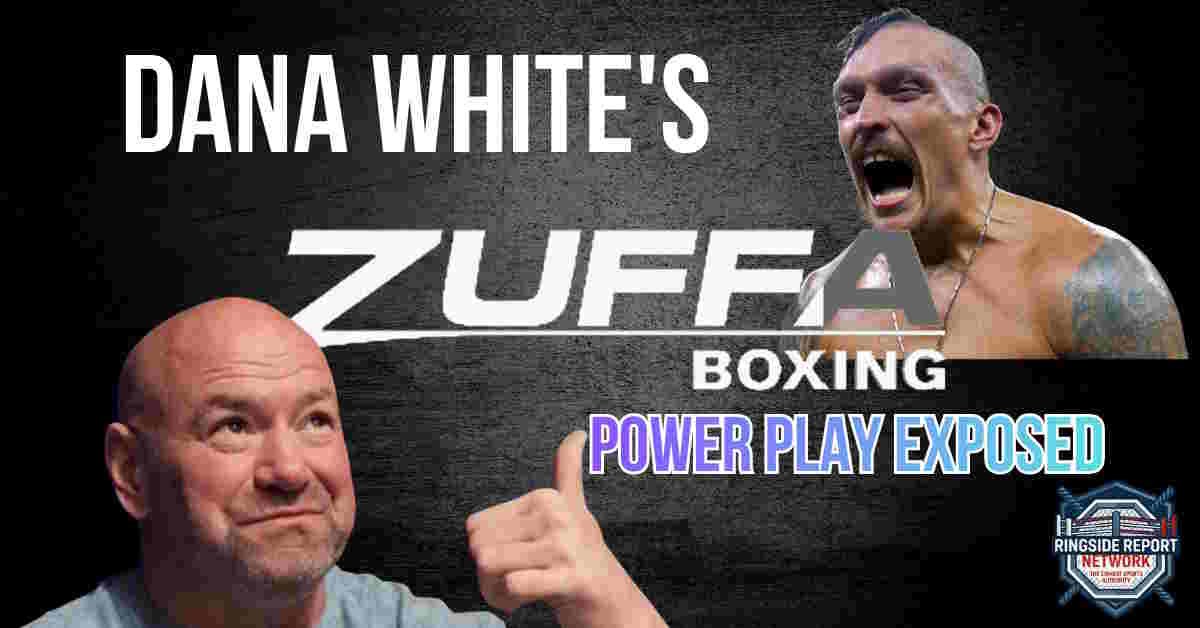

The casual boxing fan sees Usyk Zuffa Boxing negotiations as just another promotional move. Another fighter switching teams. Another headline. They’re missing the entire point—this could be boxing’s most significant power shift since the alphabet soup sanctioning bodies took over.
Why Usyk Zuffa Boxing Talks Signal Total Control
Here’s the reality: Usyk ending his relationship with K2 Promotions in June 2025 and parting ways with Saudi Arabia’s Skill Challenge and Riyadh Season in 2025 didn’t just free him up for American opportunities. It positioned him perfectly for what could be boxing’s most significant power shift since the alphabet soup sanctioning bodies took over.
Zuffa Boxing launches January 23rd with Callum Walsh versus Carlos Ocampo at the UFC APEX. They’ve got Artur Gvozdyk versus Danilo Kalajdzic debuting on February 1st, Efe Ajagba versus Zhilei Zhang on February 14th. That’s not a promotional launch—that’s a statement. And Dana White‘s already made his feelings about the WBC, WBA, and IBF crystal clear: he dismisses alphabet belts entirely.
What do you expect when the guy who built the UFC into a multi-billion dollar empire decides boxing needs fixing? He’s not playing by boxing’s rules. He’s rewriting them.
The Saudi Pullback Nobody’s Talking About
Forbes honoree Antonio McMillon put it perfectly when he blasted the Saudi pullback to TKO and Zuffa: “Turki severely damaged the market… inflated purse expectations. With no Turk, it will be spooky lol.” That’s not just industry gossip—that’s the sound of boxing’s economic foundation cracking.

Saudi money created an artificial ceiling. Fighters got used to eight-figure paydays for fights that wouldn’t have generated half that in the traditional market. Now that money’s consolidating under the UFC’s parent company, making Usyk Zuffa Boxing negotiations even more significant, McMillon’s warning about “spooky” times ahead echoes fears of UFC-style pay cuts for stars like Tyson Fury, who’ve gotten comfortable with Saudi purses.
The Jon Jones-Francis Ngannou Playbook
Here’s what matters: we’ve seen this exact movie before. When Francis Ngannou wanted boxing money and the flexibility to defend his title, the UFC let him walk. Dana White built an entire heavyweight division narrative without him. Now Ngannou’s boxing career is… well, it’s complicated.
The Usyk Zuffa Boxing situation mirrors that dynamic perfectly, except Usyk’s already accomplished everything in boxing. He’s the former undisputed heavyweight champion. He’s beaten everyone who mattered. What leverage does he actually have if White offers him the Deontay Wilder fight everyone wants—rumored for April or May in Vegas or LA—but demands he vacate his belts?
That’s the thing about White’s “new world order” without belts: it only works if the fighters with belts are willing to give them up. And Usyk’s WBC, WBA, and IBF title obligations aren’t just ceremonial—they’re contractual. Vacating means admitting those belts never mattered, which undermines the entire premise of his undisputed run.
The Small Venue Problem
Zuffa Boxing’s UFC APEX model creates another fascinating wrinkle. Walsh-Ocampo at the APEX isn’t Riyadh Season’s 60,000-seat stadium spectacle. It’s intimate, controlled, UFC-branded content designed for streaming. That works for building prospects like Walsh. But a Usyk Zuffa Boxing debut at the APEX for a Wilder fight? Come on.
The economics don’t support it. Wilder-Fury III did over 600,000 pay-per-view buys. Usyk’s fights with Fury generated massive gate revenues in Saudi Arabia. Shrinking that to an APEX show means the entire revenue model shifts to subscription-based UFC Fight Pass distribution or ESPN+ integration. Which means fighter pay structures shift accordingly.
And there’s your UFC-style control: smaller venues, streaming-focused distribution, fighters paid through tiered contracts rather than per-fight negotiations. It’s not boxing anymore—it’s MMA economics applied to boxing matches. Understanding what a knockout means in MMA helps you see why Dana White values finishes over decisions—and how that philosophy will reshape boxing matchmaking.
Let’s Be Honest About What This Really Means
For Usyk Specifically
No confirmed Usyk Zuffa Boxing contract exists yet, but the timing tells the story. Post-K2 and post-Saudi splits enable Zuffa talks with his manager, Egis Klimas, involved. The Wilder fight makes sense as a legacy bout—Usyk proving he can handle the biggest puncher in heavyweight history. But risking belt vacations for it? That’s where my prediction gets uncertain.
I think Usyk takes the Zuffa deal if the Wilder purse matches what Saudi would’ve paid. But I could be completely wrong about his willingness to abandon the belts. Some fighters care about legacy more than logic, and Usyk’s entire career has been about proving himself through the traditional championship system.
For Boxing’s Future Structure
Here’s my bold prediction: within three years, every major boxing promotion either partners with or gets absorbed by a larger entertainment conglomerate. Zuffa Boxing isn’t the exception—it’s the blueprint. Saudi Arabia’s Turki Alalshikh consolidating through TKO (UFC’s parent company) proves that even oil money recognizes corporate infrastructure beats independent promotion.
We’re not debating whether boxing gets corporatized. We’re just arguing about which corporation wins.
The hardcore fans have already speculated that Usyk has signed, fueling outrage over UFC-style control. That speculation alone shows how drastically the landscape has shifted.
Traditional boxing promoters can’t compete with UFC’s existing broadcast infrastructure, arena relationships, and marketing machine. What took Bob Arum and Don King decades to build, White inherited through the UFC’s established ecosystem. That’s not a fair fight—it’s a corporate acquisition disguised as competition.
Where This Could Go Wrong
The sanctioning bodies could refuse to cooperate with any Usyk Zuffa Boxing arrangement. The WBC, WBA, and IBF might strip Usyk of their titles immediately if he signs with a promotion that publicly dismisses their authority. That creates a split-championship scenario where Usyk’s the “linear” champion but someone else holds the alphabet belts. Boxing’s done that before, and it never helps the sport’s credibility.
White’s also notorious for overestimating boxing’s willingness to abandon tradition. Remember when he tried launching Zuffa Boxing the first time in 2018? Yeah, exactly. Boxing fans care about belts, rankings, and sanctioning body politics in ways MMA fans never did. Ignoring that cultural difference could doom the entire venture.
And if Usyk-Wilder flops commercially under the Zuffa model—lower gate revenue, disappointing streaming numbers—it proves White’s approach doesn’t translate to boxing economics. That failure would set back corporate consolidation efforts for years.
What Happens Next
The January 23rd Walsh-Ocampo card determines everything. If Zuffa Boxing’s debut delivers quality matchmaking and competitive fights, the credibility builds. If it’s UFC-style matchmaking, where prospects are protected by carefully selected opponents, boxing purists reject it immediately.
The Usyk Zuffa Boxing decision—whether he actually signs or not—becomes boxing’s referendum on corporate control versus traditional independence. And here’s the reality: independence lost this fight the moment Saudi money proved how easily billions could reshape the sport’s economics.
We’re not debating whether boxing gets corporatized. We’re just arguing about which corporation wins. And my money’s on the one that already figured out how to make combat sports profitable without needing sanctioning body approval.
That’s not cynicism—that’s pattern recognition. Ask any fighter who’s navigated both the traditional boxing system and the UFC’s structure which one actually protects their long-term interests. The answer might surprise you, but it probably won’t change what’s coming.
As we’ve been covering at Ringside Report, understanding the business side of combat sports matters as much as knowing the technical details. Because when Dana White enters your sport, the rules change whether you’re ready or not.