

When examining Ronda Rousey’s UFC legacy, the clearest place to start is the UFC Women’s Bantamweight division — an entire weight class willed into existence by her undeniable star power. While the Netflix-streamed superfight is dominating the headlines, the true legacy of Rousey’s career lives inside the Octagon — specifically in the UFC Women’s Bantamweight division, an entire weight class willed into existence by her undeniable star power.
To fully grasp the magnitude of her return, we must look back at how she left, what happened to the 135-pound weight class in her absence, and how a new generation of champions has reshaped the landscape she built. And to understand why this Carano fight carries the weight it does, it helps to read it alongside our breakdown of the Gene LeBell legacy that runs through Rousey’s entire career.
⚡ Quick Facts: The UFC Women’s Bantamweight Division
Ronda Rousey’s UFC Legacy
Rousey’s Complicated Exit: The Silent Concussion Crisis
Ronda Rousey’s departure from the UFC following her December 2016 loss to Amanda Nunes was swift, silent, and widely misunderstood. For years, the dominant narrative was that the sport had simply passed her by, or that she lacked the mental fortitude to bounce back from devastating knockout losses to Holly Holm and Nunes. The media that had spent years building her up turned on her with remarkable speed.
The truth, which Rousey addressed publicly and revisited in her 2024 memoir Our Fight, was far more complicated. Her exit was driven by an extensive history of concussions that dated back to her Olympic judo days. She kept the neurological trauma largely secret — including from regulators — in order to continue competing and protect her fighting license. Acknowledging her concussion history publicly would have put a target on her head inside the cage and risked having her medical clearance revoked.
Her sudden disappearance was not a surrender; it was a medical necessity. Understanding this context changes the lens through which we view both her dominant title reign and her ultimate fall from the mountaintop. She built the division while fighting against a ticking neurological clock — and the grappling-first philosophy Gene LeBell instilled in her may well have extended her career by keeping so many of her fights on the ground and away from the striking exchanges that cost her the most.


Life After Ronda: The Bantamweight Power Vacuum
When Rousey left, she left behind a massive power vacuum at 135 pounds. The division she legitimized suddenly had to find an identity without its biggest star. What followed was a transitional era defined by a rotating cast of champions, including Holly Holm, Miesha Tate, Amanda Nunes, Julianna Peña, and Raquel Pennington.
Amanda Nunes eventually brought extended stability, establishing herself as the greatest female fighter of all time. But even “The Lioness” experienced turbulence, famously losing the belt to Julianna Peña in one of the sport’s biggest upsets at UFC 269, before violently reclaiming it at UFC 277 and ultimately retiring in 2023. This back-and-forth jockeying proved that the division had evolved from a one-woman show into a deep, highly competitive weight class that no single fighter could simply dominate on star power alone.
📋 Post-Rousey Bantamweight Champions at a Glance: Holly Holm → Miesha Tate → Amanda Nunes → Julianna Peña → Amanda Nunes → Raquel Pennington → Kayla Harrison. Seven championship reigns across nine years — a testament to just how competitive the division Rousey built has become.
The 2026 Landscape: Kayla Harrison’s Bantamweight Reign
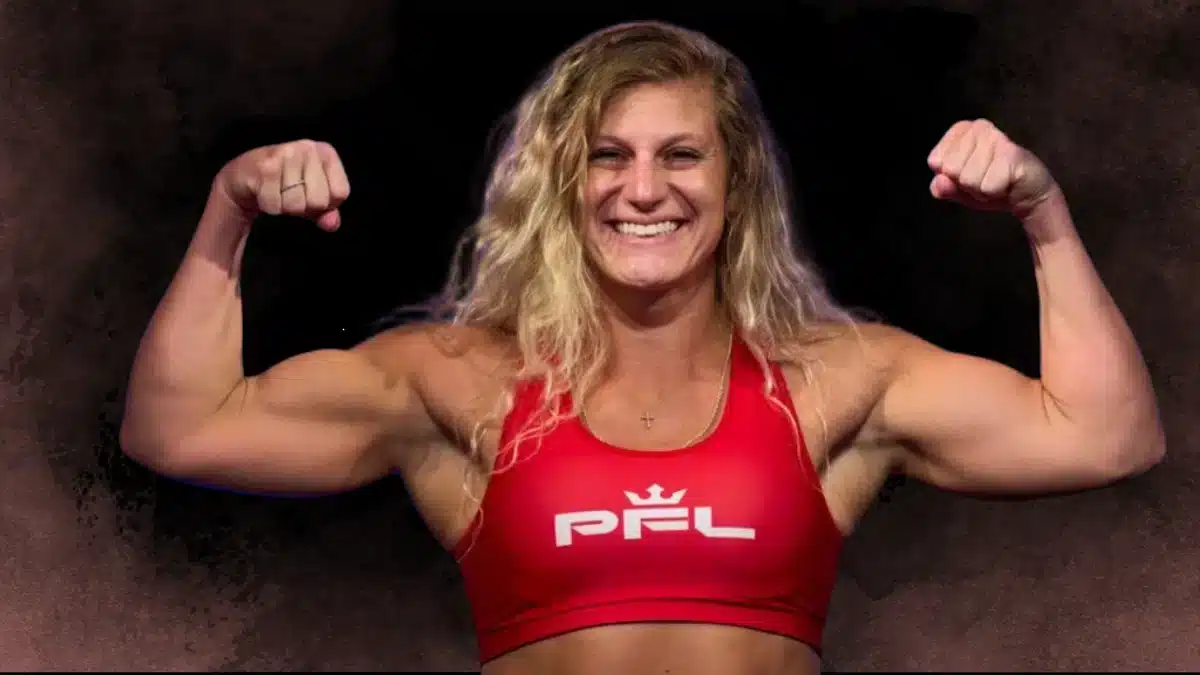
Today, the UFC Women’s Bantamweight division is experiencing a significant resurgence — and ironically, it is being led by another two-time Olympic judo gold medalist. Kayla Harrison’s arrival in the UFC completely disrupted the 135-pound hierarchy, drawing inevitable comparisons to the fighter who first put the division on the map.
Harrison’s path to the title culminated at UFC 316 on June 7, 2025. Facing Julianna Peña in Newark, New Jersey, she showcased world-class ground control and grappling that echoed Rousey’s early dominance. Despite a demanding weight cut to hit the 135-pound limit, Harrison secured a second-round kimura submission to become the undisputed champion.
🏆 The New Era: Kayla Harrison is the first female fighter in history to win both an Olympic gold medal and a UFC championship — a historic combination that places her in a very short line of fighters who have reached the summit of both Olympic and professional MMA competition. The judo tradition that shaped Rousey now shapes her successor.
Harrison’s coronation immediately drew Amanda Nunes out of retirement, setting up a blockbuster title defense at UFC 324 in early 2026. The division that Rousey built is now hosting the most technically advanced and high-profile matchups in its history — proof that the foundation she laid was strong enough to outlast her own presence in the sport.
Beyond Bantamweight: The Expansion of Women’s MMA
While the 135-pound belt remains the marquee prize, the true testament to Rousey’s impact is how women’s MMA has expanded well beyond a single weight class. The full scale of Ronda Rousey’s UFC legacy becomes clearest when you look beyond the 135-pound belt. The UFC now features multiple active female divisions, each with deep rosters of elite international talent that would have been unimaginable when Rousey first stepped into the Octagon in 2012.
The Strawweight (115 lbs) and Flyweight (125 lbs) divisions consistently produce fight-of-the-year contenders. Elite strikers, submission specialists, and dominant wrestlers now populate every corner of the women’s roster. The sport has decisively moved beyond relying on a single crossover star to carry it.
Rousey walked away from a sport she dragged into the mainstream by sheer force of will — through her devastating submission finishes, her crossover celebrity, and her willingness to carry the entire weight of women’s MMA on her back at a time when most people in the industry were not sure the experiment would work. When she returns on May 16 against Carano, she won’t be fighting to prove women belong in the cage. She won that battle a decade ago. This fight is something else entirely: a closing of the circle, on her own terms.
Read more about Ronda Rousey’s UFC Legacy
Frequently Asked Questions About Ronda Rousey’s UFC Legacy
Why did Ronda Rousey really leave the UFC?
Ronda Rousey left the UFC at the end of 2016 primarily due to an extensive history of concussions that dated back to her Olympic judo career. In public statements and in her 2024 memoir Our Fight, she described keeping her neurological trauma largely secret — including from regulators — in order to continue competing and protect her fighting license. She has stated that acknowledging the extent of her concussion history would have put a target on her and risked her medical clearance. Her departure was a medical necessity, not a loss of competitive will.
Who is the current UFC Women’s Bantamweight Champion?
As of 2026, the UFC Women’s Bantamweight Champion is Kayla Harrison. She won the title by submitting Julianna Peña with a second-round kimura at UFC 316 in Newark, New Jersey on June 7, 2025. Harrison is the first female fighter in history to hold both an Olympic gold medal and a UFC championship.
Did Amanda Nunes come out of retirement?
Yes. Following Kayla Harrison’s championship victory at UFC 316, former two-division champion Amanda Nunes came out of her 2023 retirement to challenge Harrison for the bantamweight title. Their fight was scheduled for UFC 324 in early 2026.
Who held the bantamweight title after Rousey?
Following Ronda Rousey’s reign — in which she set the divisional record with six successful title defenses — the UFC Women’s Bantamweight Championship has been held by Holly Holm, Miesha Tate, Amanda Nunes (two separate reigns), Julianna Peña, Raquel Pennington, and currently Kayla Harrison, who won the title at UFC 316 in June 2025.
Does Kayla Harrison have a judo background like Rousey?
Yes. Kayla Harrison is a two-time Olympic judo gold medalist (2012, 2016), making the comparison to Rousey — herself an Olympic bronze medalist in judo — highly relevant. Both fighters brought elite-level judo grappling into the bantamweight division, and Harrison’s UFC title run draws direct stylistic parallels to Rousey’s dominant early championship reign. Read more about the judo tradition that shaped both fighters in our guide to the judo belt system.
What is Ronda Rousey’s UFC title defense record?
Ronda Rousey holds the UFC Women’s Bantamweight divisional record with six successful title defenses. She became the inaugural champion in 2012 when the division was created and remained undefeated in the UFC until her knockout loss to Holly Holm at UFC 193 in November 2015.