
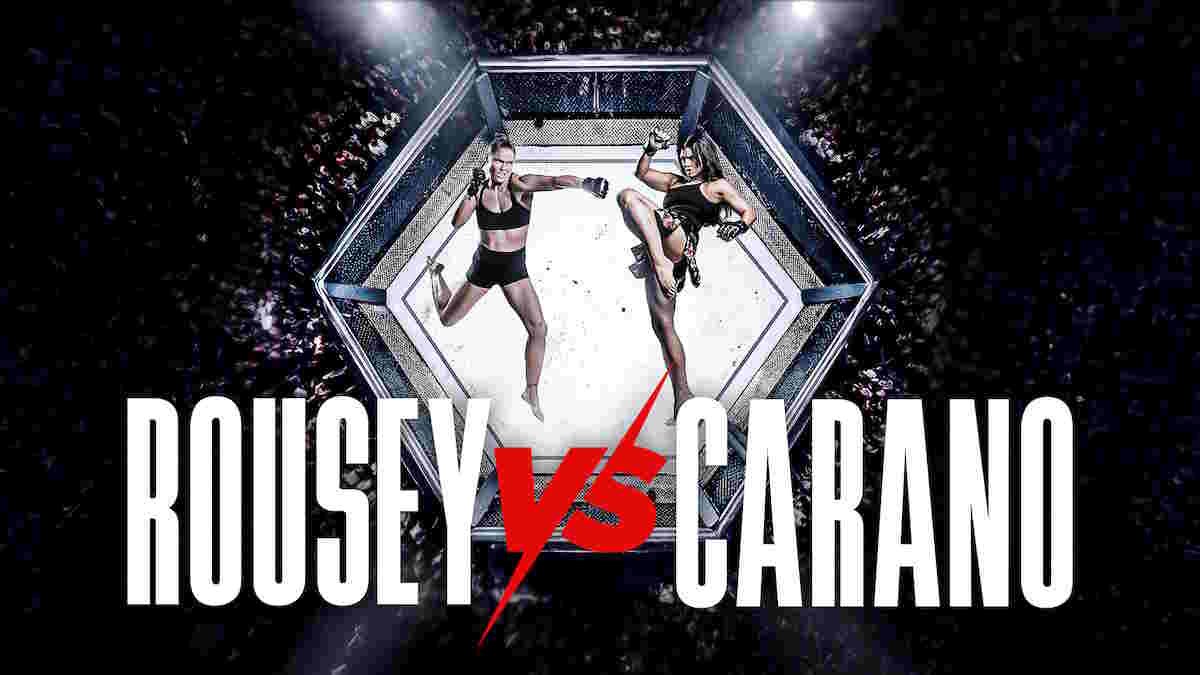
On May 16, 2026, Ronda Rousey returns and walks back into a professional MMA cage for the first time in nearly a decade. Her opponent is Gina Carano. The venue is the Intuit Dome in Inglewood, California. The broadcaster is Netflix. But the story behind this fight stretches back much further — to a pink gi, a rear-naked choke in Salt Lake City in 1963, and the man Rousey called “Uncle Gene.”
This is not simply a nostalgia superfight. It is, in a very real sense, the closing of a generational arc that Gene “Judo Gene” LeBell — the Godfather of Grappling — spent his entire life opening. To understand what Rousey vs. Carano truly means, you have to understand the man who made Rousey possible.
⚡ Quick Facts: Rousey vs. Carano
Ronda Rousey Returns
The Fight the Sport Always Wanted
For nearly two decades, Rousey vs. Carano existed only in the imagination of women’s MMA fans. Carano was the sport’s first genuine crossover star — a fighter whose charisma and skill convinced mainstream audiences that women in a cage could sell tickets. When she retired in 2009, just as the sport was exploding, she left behind an unfinished story, and now Ronda Rousey Returns.
Rousey picked up that baton and ran with it until she was headlining pay-per-views, appearing on magazine covers, and starring in Hollywood films. She turned the UFC’s women’s division from an experiment into an institution. But the one fight she always wanted — the one she called “the only fight I’d come back for” — never happened under the UFC banner.
Now it is happening. And it is happening on the biggest new stage in combat sports history: Netflix’s first-ever professional MMA broadcast, promoted by Jake Paul’s Most Valuable Promotions. Whatever you think about the competitive stakes, the cultural weight of this event is undeniable.

The LeBell Connection: The Armbar Has a Family Tree
Most mainstream coverage of this fight will focus on the Netflix deal, the nostalgia factor, and the Jake Paul promotional machine. What it will almost certainly miss is the lineage that produced Ronda Rousey as a martial artist — and the man at the root of that lineage.
Gene LeBell — “Judo Gene,” the Godfather of Grappling, the man who proved grapplers could finish boxers thirty years before UFC 1 — was not simply Rousey’s mentor. He was her family. She called him “Uncle Gene.” He was in her corner throughout her UFC career. He had known her since birth, because he first trained her mother, AnnMaria De Mars, who became the first American to win a World Judo Championship.
🥋 The LeBell Lineage: Gene LeBell trained AnnMaria De Mars (World Judo Champion and Rousey’s mother) → AnnMaria raised Ronda in the judo tradition → LeBell then directly mentored Rousey throughout her UFC career → Rousey’s signature armbar became the most feared finish in women’s MMA history. The submission that built a dynasty has a family tree.
In her autobiography My Fight / Your Fight, Rousey wrote that LeBell was “the only person allowed to hit me” during training. His mental toughness drills — which included striking her during live grappling exchanges — helped forge the competitive ferocity that made her nearly untouchable in her prime. The armbar that finished opponent after opponent in under a minute was not just technique. It was philosophy: a judo-rooted belief that the fight ends on the ground, and that the fighter with better technique always wins.
That philosophy traces directly to LeBell, who held a 10th degree red belt in Judo and a 9th degree black belt in Jiu-Jitsu, and who demonstrated the effectiveness of submission grappling against a professional boxer in 1963 — an era when the idea that a grappler could beat a striker was considered laughable. LeBell didn’t argue the point. He choked Milo Savage unconscious with a rear-naked choke in the fourth round and let the result speak for itself.
Sound familiar? It should. That is exactly how Rousey fought for most of her UFC career.
What Gene Would Have Said About This Moment
Gene LeBell passed away peacefully on August 9, 2022, at the age of 89. The combat sports world felt his absence immediately, and it still feels it. Tributes poured in from Triple H, Joe Rogan, The Iron Sheik, and Rousey herself, who had lost not just a mentor but a member of her family.
“Gene LeBell remained a towering figure in the history and expansion of mixed martial arts and sports entertainment. A teacher to many of the sport’s greats, his influence is felt throughout WWE to this day.”
— Triple H, on the passing of Gene LeBell
If LeBell were here to see Rousey walk to the cage again — on Netflix, headlining the biggest women’s MMA fight ever made — he would almost certainly have cut through all the business politics and debate with something blunt, funny, and perfectly correct. He would have said: Put the two of them in there and let’s see what happens.
That was always his approach. He spent sixty years proving that grappling works, that technique outlasts athleticism, that the finish is the ultimate statement a martial artist can make. Rousey spent the peak of her career proving him right. On May 16, she gets one more opportunity to do it again — and to do it on a stage LeBell himself never could have imagined.
If Rousey steps into that hexagon and finishes Carano with an armbar, it will be one of the most emotionally complete moments in this sport’s history. A technique passed down through a family line — from a man in a pink gi who choked out a boxer in Salt Lake City in 1963, to the most dominant women’s champion the sport has ever produced.
Netflix, Jake Paul, and the UFC’s Missed Moment
There is a difficult but fair question sitting at the center of this story: why is this fight not happening inside the UFC?
Rousey has been open about reaching out to UFC CEO Dana White to make a Carano matchup happen under the UFC banner, and that it simply “didn’t work out.” The promotion that once marketed her as the reason women’s MMA exists — and built pay-per-view events around her name — passed on hosting her legacy fight.
Jake Paul’s Most Valuable Promotions and Netflix stepped in, and are now cashing in on a cultural moment the UFC largely created and then chose not to capitalize on. That is a business decision the UFC is entitled to make, and there are defensible arguments on their side — both fighters are well past their competitive peaks, the matchup has no bearing on any current ranking, and the risk-reward calculus may simply not have worked for them.
But for the fans who remember being told “Ronda is the reason women are in the UFC,” it stings. And in a broader sense, it represents exactly the kind of opportunity that alternative promoters and streaming platforms will continue to exploit as long as established promotions leave legacy moments on the table.
📺 History in the Making: The Rousey vs. Carano card marks Netflix’s first professional MMA broadcast. The streaming giant has already made major inroads into live boxing via the Paul vs. Tyson event. This MMA expansion is a significant moment for the sport’s media landscape.
The Carano Question: Nostalgia vs. Reality
It would be dishonest not to address what is going to be the loudest criticism of this fight: Carano is 43 years old, and last competed in MMA in 2009. Rousey is 38 and last competed in 2016. This is not a title eliminator. Nobody wins this fight and steps into a world championship picture.
Those are facts, and they matter. What we will see on May 16 is a reflection of what these two women were at their peaks, not necessarily what they are capable of today. The competitive stakes are limited, and anyone expecting a fight that reshapes the current women’s featherweight landscape is going to be disappointed.
But nostalgia fights are not inherently dishonest — as long as everyone is clear about what they are watching. The framing from Most Valuable Promotions has been “for the fans, past, present, and future.” That is at least an honest framing. This is a celebration, not a sporting contest with championship implications. As long as the audience understands that distinction going in, there is genuine room to enjoy the moment for what it is.
And what it is, at its core, is the completion of something that was left unfinished — the fight women’s MMA always deserved to have.
Rousey’s Complicated Exit — and Why This Return Matters
Rousey’s departure from MMA was not clean. Her losses to Holly Holm and Amanda Nunes were sudden and devastating, and the way public opinion turned on her almost immediately after those defeats revealed something uncomfortable about how the sport treats its own stars once the invincibility is gone.
Since leaving the UFC, she has been direct about her frustrations — pointing at commentators she felt were “just fans with a microphone” rather than genuine experts, and expressing disappointment at how quickly the narrative around her shifted. There is a legitimate edge to those feelings. She carried an entire division on her back, normalized the idea that women could headline major MMA events, and became one of the few combat sports figures to cross over into mainstream pop culture genuinely. When the losses came, the fall was steep, and the critics were loud.
That she is choosing to come back at all — and to do it on her own terms, in the one fight she always said she wanted — is a quiet but meaningful act of self-determination. This return is not the UFC writing her story. This is Rousey writing it herself.
Gene LeBell would have understood that instinct completely. He spent his entire career refusing to let anyone else define what he was or what he was worth. He wore a pink gi when everyone told him it was disrespectful. He choked out a boxer when everyone said grapplers couldn’t beat strikers. He chopped with a mischievous grin at every question about Steven Seagal and let the legend speak for itself.
There is a direct line between that stubbornness and the fighter Rousey became. And there is a direct line between the fight she chooses to have on May 16 and the values Uncle Gene spent 90 years embodying.
Two Truths to Hold at Once
Combat sports journalism at its best honestly confronts contradictions. So here are the two truths about Rousey vs. Carano that deserve to sit side by side.
Truth one: This is a genuinely special moment. Netflix’s first professional MMA event, headlined by two of the women who built this sport’s foundation, is a crossover spectacle that women’s MMA simply did not get in its formative years. It is a belated but large acknowledgment of the debt the sport owes to both fighters.
Truth two: the questions are fair. Why did it take an outside promoter and a streaming platform to give Rousey this send-off? What does it say about the UFC’s relationship with its own history? And what will the actual athletic product look like between two fighters with a combined seven-year gap from professional competition?
Hold both. Neither cancels the other out. And remember, as you watch Rousey walk to the cage, that the grappling philosophy she carries into that hexagon was planted in her long before she ever signed a UFC contract — by a man in a pink gi who never needed anyone’s permission to prove his point.
🎙️ Watch With Us Tonight on Ringside Report MMA
We are breaking down everything — the Rousey vs. Carano announcement, the Gene LeBell legacy angle, the Netflix deal, the UFC’s decision to pass, and what this fight means for the future of women’s MMA — LIVE tonight on the Ringside Report MMA YouTube show.
👉 Join us live here: https://youtube.com/live/_SdVP26Fa58
Bring your takes. This is going to be a big conversation.
Ronda Rousey Return FAQs
When is Ronda Rousey’s MMA return fight?
Ronda Rousey returns to professional MMA on May 16, 2026, headlining a five-round featherweight main event against Gina Carano at the Intuit Dome in Inglewood, California. The event will be broadcast live on Netflix and is promoted by Jake Paul’s Most Valuable Promotions.
What are the rules for Rousey vs. Carano?
The fight is scheduled for five rounds at featherweight (145 lbs) under the Unified MMA Rules with four-ounce gloves, in a hexagonal cage. It is a professional MMA contest, not an exhibition.
What was Gene LeBell’s connection to Ronda Rousey?
Gene LeBell was Ronda Rousey’s mentor, trainer, and a family friend she called “Uncle Gene.” He first trained her mother, AnnMaria De Mars, who became the first American to win a World Judo Championship. LeBell was in Rousey’s corner throughout her UFC career and is widely credited with helping develop the mental toughness and grappling philosophy that made her dominant. Rousey wrote in her autobiography that he was “the only person allowed to hit me” during training. LeBell passed away on August 8, 2022, at the age of 89.
Why is the Rousey vs. Carano fight not in the UFC?
Rousey has stated that she reached out to UFC CEO Dana White about staging the Carano fight under the UFC banner and that “it didn’t exactly work out with the UFC.” Most Valuable Promotions, backed by Jake Paul, stepped in to promote the event. The UFC has not publicly commented in detail on why it passed on the matchup.
Is this Netflix’s first MMA event?
Yes. The Rousey vs. Carano card on May 16, 2026, is Netflix’s first professional MMA broadcast. Netflix had previously entered combat sports with boxing events, including the Paul vs. Tyson card in November 2024.
When did Gina Carano last fight in MMA?
Gina Carano’s last professional MMA fight was in January 2009, a loss to Cris Cyborg. She retired from the sport after that fight and moved into acting, most notably in the Mandalorian series. The Rousey fight in 2026 marks her return to MMA competition after a 17-year absence.