
When a cop panics during a physical encounter, everything goes wrong. Heart rate spikes, fine motor skills disappear, and suddenly, you’ve got an officer reaching for their taser or gun because they don’t know what else to do. For decades, law enforcement has relied on “pain compliance” techniques—wrist locks, pressure points, strikes—that sound good in the academy but fail spectacularly when someone’s drunk, mentally ill, or just bigger and stronger than the officer.
Here’s the thing: police BJJ training statistics from departments across the US and UK are now proving what combat sports fans have known since UFC 1—technique beats panic every single time. When you give officers the confidence that they can physically control someone without weapons, they stop reaching for weapons. The data isn’t just impressive. It’s undeniable.
We’re talking about a 59% reduction in use-of-force incidents in Marietta, Georgia. An 86% decrease in officers striking suspects in St. Paul, Minnesota. And the most rigorous scientific study to date in the UK, showing statistically significant reductions in force with zero increase in officer injuries. That’s the thing about grappling—it doesn’t just make officers safer. It makes everyone safer.
Why Traditional Police Training Creates the Problem
The compliance-based model that most departments still use is built on a flawed assumption: that pain forces people to cooperate. Come on. Anyone who’s watched an MMA fight knows that adrenaline, drugs, or mental illness can override pain responses completely. When pain doesn’t work, untrained officers hit what we call in combat sports the “panic threshold.
Their heart rate spikes past 145 beats per minute. Fine motor skills degrade. And suddenly, the officer who practiced perfect technique in the training room is flailing in the street because they’ve never experienced what happens when someone actually resists. What do you expect? Traditional defensive tactics training gives cops maybe 8-16 hours per year. That’s not enough to develop muscle memory under stress.

Here’s the reality: when an officer doesn’t trust their hands, they reach for tools. Taser, baton, or worse. Not because they want to—because they’re terrified.
The Physiology of Control: Why Grapplers Don’t Panic
Understanding police BJJ training statistics requires understanding why grappling works differently from striking. In MMA, we talk about “gassing out”—that moment when a fighter dumps their adrenaline in the first minute and becomes helpless by the second. Untrained suspects experience the same metabolic crash when a trained officer establishes positional control.
The beauty of BJJ isn’t submissions. It’s exhaustion. When an officer secures side control or mount, they’re not fighting—they’re cooking. The suspect has to carry the officer’s weight while trying to escape. Within 60-90 seconds, most people hit a wall. Their muscles flood with lactic acid. They stop because they’re exhausted, not because they’re in pain.
Brother, I’ve covered enough combat sports to recognize this pattern. The officer who knows they can control someone without striking stays calm. Calm officers make better decisions. Better decisions mean fewer injuries on both sides.
The Data: What Actually Works
Marietta Police Department (Georgia): The Gold Standard
The Marietta PD study remains the most cited police BJJ training statistics in the United States. In 2019, they made Brazilian Jiu-Jitsu mandatory for recruits and incentivized veteran officers to train. The results from 2019-2021 aren’t just good—they’re transformative:
59% reduction in use-of-force incidents. Officers with BJJ training were significantly less likely to use force at all. Confidence allowed them to de-escalate verbally before things went physical.
48% drop in officer injuries. Trained officers were nearly half as likely to get hurt during arrests.
53% drop in suspect injuries. Because officers used control holds instead of strikes or tasers, suspects were far less likely to need hospitalization.
$66,752 saved in workers’ comp claims in the first year alone. That’s just the direct costs—it doesn’t account for lawsuit prevention or reduced sick time.
That’s the thing about these numbers—they’re not marginal improvements. They’re complete system changes.
St. Paul Police Department (Minnesota): The Long Game
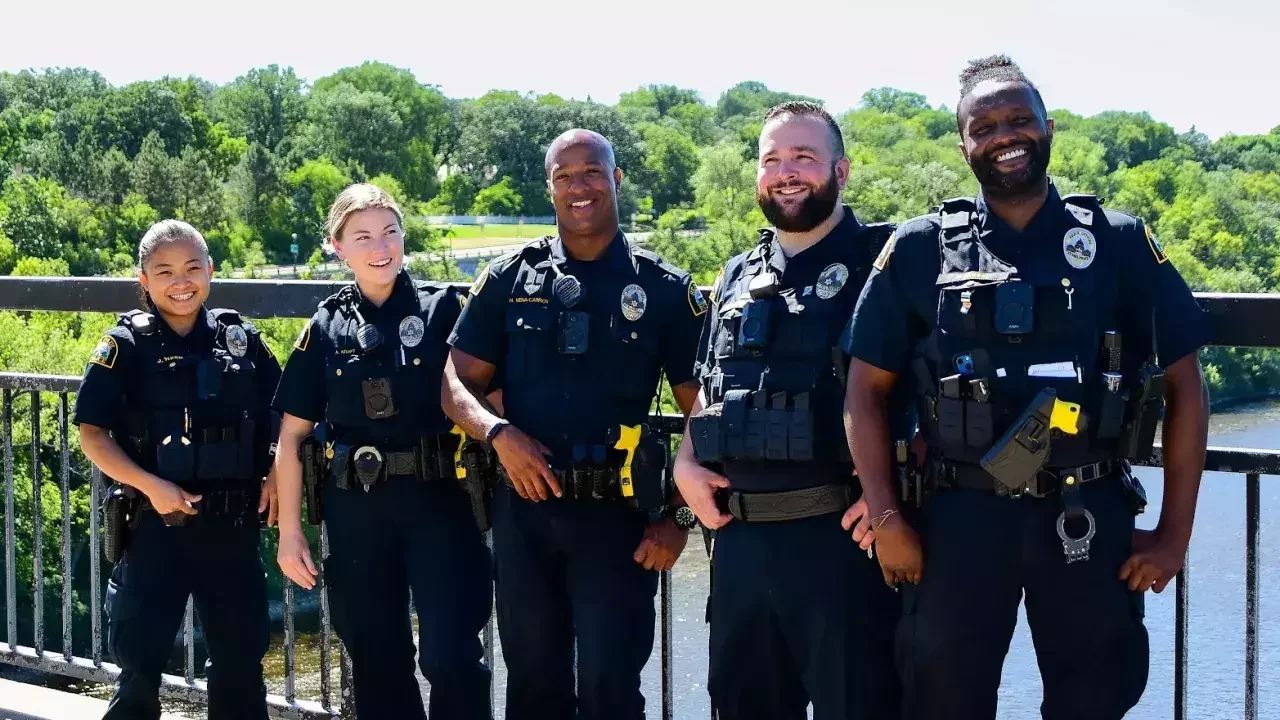
Between 2014 and 2020, St. Paul PD integrated BJJ concepts through the STORM Training Group curriculum. Six years of data produced police BJJ training statistics that should make every department pay attention:
37% reduction in overall use-of-force incidents across the department.
86% decrease in strikes. This is the metric that matters most for public perception and civil rights lawsuits. Officers stopped punching and kicking to gain compliance. They started grappling to gain control.
Six years. Not a pilot program. Not a trial. A sustained, measurable improvement that proves this isn’t a fad—it’s a fundamental shift in how policing can work.
UK “Stepped Wedge” Trial (2024): The Scientific Proof
Published in late 2024, this study involving 1,843 officers provided the most scientifically rigorous police BJJ training statistics to date. Researchers used a randomized controlled design—the gold standard for proving causation, not just correlation.
10.9% reduction in the propensity to use force in any given week for trained officers.
Zero increase in officer injuries. Critics always claim that grappling puts officers at greater risk. The data proves they’re wrong.
Statistically significant results. Not anecdotal. Not cherry-picked. Rigorous peer-reviewed science showing that BJJ training reduces force while maintaining officer safety.
The “But What About Weapons?” Argument
Come on, I know what the critics are thinking. “Sport BJJ doesn’t account for guns. You can’t pull guard on the street. Someone could grab your weapon.” They’re not entirely wrong—sport jiu-jitsu and police jiu-jitsu aren’t the same thing.
But here’s where understanding police BJJ training statistics matters: effective law enforcement programs don’t teach sport techniques. They teach modified grappling focused on weapon retention and positional control.
Retention-based grappling keeps the officer’s gun side protected at all times. Team tactics teach officers to coordinate—one controls legs, one controls the upper body—rather than the chaotic “dog pile” that leads to friendly-fire incidents. Positional dominance without hunting submissions keeps officers safe and in control.
The Gracie Survival Tactics curriculum, the STORM method, and similar programs aren’t teaching cops to be ADCC champions. They’re teaching mechanical control that works when someone’s wearing 20 pounds of gear and needs to keep a weapon secure.
Where I Might Be Wrong
Here’s the reality: not every department has the budget, time, or political will to implement mandatory BJJ training. The Marietta results are impressive, but Marietta isn’t Chicago or New York. Scaling these programs to major metropolitan departments with union contracts, budget constraints, and political pressure creates complications that the data doesn’t capture.
There’s also selection bias to consider. Officers who volunteer for BJJ training might already have better temperament and decision-making skills. Maybe the training improves outcomes, or maybe departments are just identifying officers who were already less likely to use excessive force.
I don’t have comprehensive data on these variables, and I should acknowledge that. But the UK study’s randomized design addresses some of these concerns, and the consistency across multiple departments suggests we’re seeing real effects, not just statistical noise.
My Bold Prediction: This Becomes Standard Within 10 Years
Here’s what I think will happen by 2035: BJJ training will become as standard in police academies as firearms qualification. Not because departments suddenly care about martial arts, but because insurance companies and city attorneys make it financially suicidal not to train officers properly.
The police BJJ training statistics are too clear. The prevention of lawsuits alone justifies the investment. When the next major excessive force case hits national news, plaintiffs’ attorneys are going to point to this data and ask: “Why didn’t your department implement proven training that reduces use-of-force by 59%?”
Departments that ignored this data will face massive civil liability. Departments that adopted BJJ training will have evidence that they took reasonable steps to prevent harm. That’s not a combat sports argument. That’s a legal and financial argument that municipal risk managers understand perfectly.
What Happens Next
The era of pain compliance is ending, and police BJJ training statistics from Marietta to the UK are writing its obituary. You can’t beat suspects into submission safely—but you can control them into safety. The data proves it. The science supports it. And the financial incentives are finally aligning.
For the combat sports community, this is validation of what we’ve known since Royce Gracie choked out bigger, stronger opponents in 1993. Technique conquers size. Control conquers chaos. The principles that work in the cage work everywhere—you just have to adapt them intelligently.
Brother, when officers are better trained, communities are safer. When suspects aren’t getting beaten or shot during arrests, trust increases. When both officers and civilians go home uninjured, everyone wins. That’s not a political argument. That’s just reality backed by the numbers.
The police BJJ training statistics don’t lie: grappling saves lives. The only question now is how long each department will take to figure that out.