
⚔ The Combat Sports Authority
Ringside Report Network — Judo vs Muay Thai in MMA | Combat Sports Analysis Series
In This Article
When analysts compare judo vs Muay Thai in MMA, the conventional take is that Muay Thai is the dominant stand-up system and judo is a useful but secondary grappling complement. That framing tells an incomplete story. Both disciplines have proven themselves at the highest levels of mixed martial arts — but they create very different problems for opponents, and understanding those differences reveals a lot about how modern MMA actually works.
This article breaks down what each art contributes to MMA, where they conflict and complement each other, and what the evidence from high-level competition shows about their relative effectiveness when they meet in the cage.
Key Takeaways
- Different threat profiles: Muay Thai generates damage through strikes, elbows, and knees. Judo generates danger through explosive throws that can end a fight on impact before any ground work begins.
- The clinch is contested ground: Muay Thai’s plum clinch is highly effective against other strikers. Judo’s clinch control, built around off-balancing and throwing, creates problems that purely striking-based clinch work does not address well.
- Surface matters: Judo throws are significantly more dangerous on canvas over hard flooring than on dojo mats. The MMA cage considerably amplifies the finishing potential of throwing techniques.
- Cross-training has blurred the lines: Elite fighters no longer arrive with a single base. Most championship-level competitors have developed meaningful competency in both striking and grappling, making pure style comparisons less predictive than they once were.
- Olympic judo rule changes create a growing gap: Restrictions on leg grabs and certain throwing techniques in Olympic competition may limit how well future judoka translate their sport skills to MMA.
Understanding Each Discipline
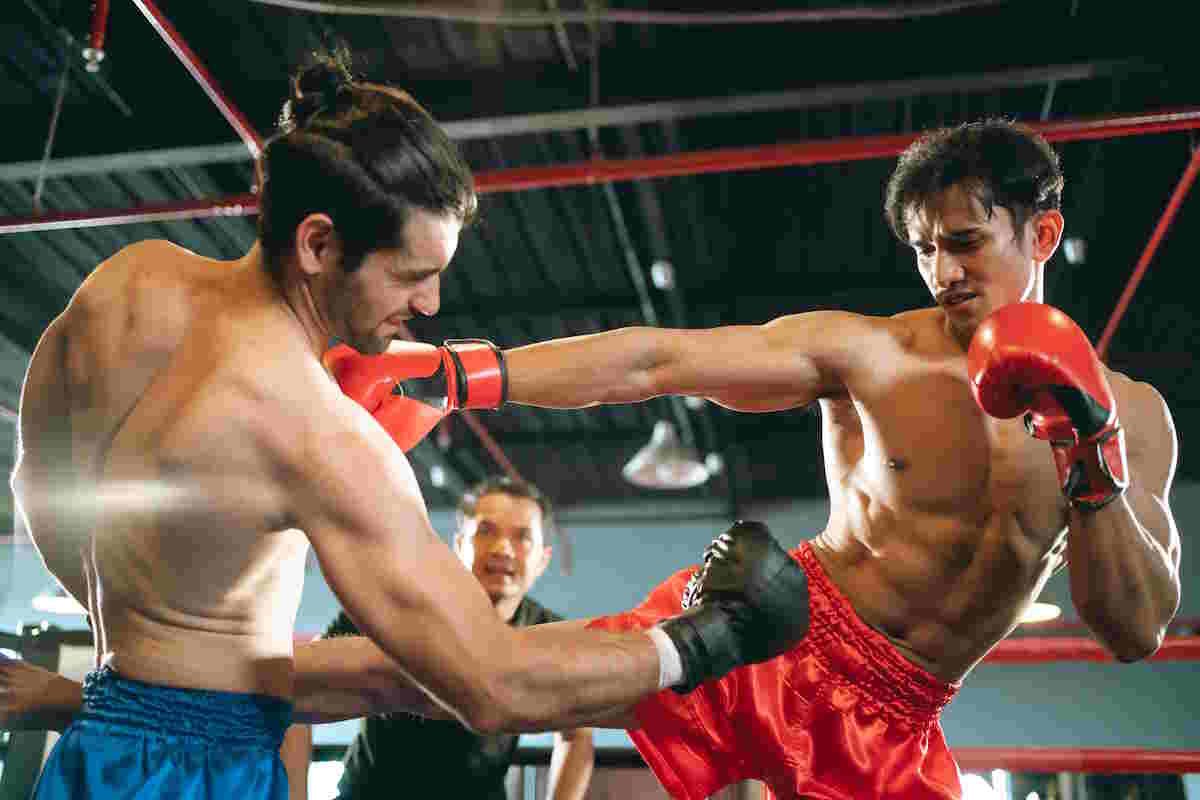
Muay Thai is a striking art from Thailand built around eight weapons — fists, elbows, knees, and shins — and a clinch game designed to create damage in close quarters. Its offensive toolkit is among the most complete in stand-up combat sports. Fighters trained in Muay Thai develop exceptional striking range management, powerful leg kicks that compromise an opponent’s base, and a plum clinch position that delivers knees to the body and head with significant force. Defensively, Muay Thai teaches fighters to check kicks, roll with punches, and use footwork to manage distance.
Judo is a Japanese grappling art built around throws, trips, and takedowns — primarily executed from a standing clinch position — followed by ground control, pins, and submission holds. Its competitive focus on throwing technique has produced some of the most explosive and technically precise takedown artists in combat sports. The core judo principle of seiryoku zen’yo — maximum efficiency with minimum effort — means its throws are designed to use an opponent’s momentum and balance against them rather than relying purely on strength.
Both arts have produced UFC champions and title contenders. Neither is inherently superior in MMA. What matters is how each creates problems the other must solve — and those problems are genuinely different in character.

The Clinch: Where the Styles Collide
The most direct conflict between judo and Muay Thai in MMA happens in the clinch. This is where both arts are designed to operate, and their objectives in that range are fundamentally incompatible.
Muay Thai’s plum clinch — both hands controlling behind the opponent’s head, pulling them into knee strikes — is highly effective when an opponent is trying to strike back or break free. The plum requires head control and assumes the opponent is attempting to maintain an upright posture. Against other strikers, this is exactly the situation that arises, and the resulting knee strikes can be devastating.
The problem for Muay Thai practitioners is that a trained judoka is not trying to maintain upright posture in the clinch — they are actively seeking to off-balance the opponent and create a throwing entry. Judo’s clinch work is built around disrupting balance, redirecting momentum, and generating the brief moment of instability needed to execute a throw. The plum clinch grip that works beautifully against a resisting striker can become a liability when a judoka uses that same grip position as leverage for a hip toss or a shoulder throw.
This does not mean Muay Thai’s clinch game is ineffective — it means the two systems are solving different problems in the same space, and fighters transitioning between them need to understand which mode they are operating in at any given moment.
Throws on Hard Surfaces: The MMA Multiplier
One of the most underappreciated factors in the judo vs Muay Thai discussion is what happens to a judo throw when it lands on canvas over plywood rather than on a padded tatami mat.
In a judo dojo, a clean ippon throw ends the match — and the loser lands on a thick mat specifically designed to absorb that impact. In the MMA cage, that same throw lands on a surface with significantly less give. The physical consequence is a harder, more jarring impact that can produce knockouts, concussions, or at minimum a severe disruption of the opponent’s ability to defend themselves — before any ground-and-pound or submission attempts begin.
This is not a minor technical distinction. It fundamentally changes the finishing potential of throwing techniques. A Muay Thai fighter who can absorb a clean throw in sparring on padded mats and immediately scramble back to their feet may find that same throw in competition leaves them significantly less functional. The harder surface amplifies the danger in every throwing exchange, shifting the risk calculation for both fighters considerably.
Striker vs Grappler: What the Pattern Shows
The broader striker-versus-grappler question has a long track record in MMA. The earliest UFC events were partly designed as style-versus-style tests, and the results consistently showed that elite grapplers could neutralize elite strikers by removing the fight from the striking range where those skills were most effective.
This pattern has moderated over time as fighters cross-train more systematically. A Muay Thai specialist at the championship level today has generally developed enough takedown defense to make a grappler’s job considerably harder than it would have been in the 1990s. Conversely, many elite grapplers have developed striking that is dangerous enough to win fights before their grappling is ever needed.
What persists from that early pattern is a structural reality: a Muay Thai fighter whose striking is neutralized — either by takedowns, clinch control, or simple distance management — has fewer fallback options than a judo-based fighter whose throws are being defended. The judoka still has ground control and grappling options to work with. The pure striker whose stand-up game has been shut down is operating outside their trained skill set.
Judo in MMA: Real-World Examples
Several of the most technically accomplished fighters in MMA history have had significant judo backgrounds that directly shaped their competitive style.
Ronda Rousey brought judo to mainstream MMA attention during her dominant run in the UFC. Her ability to close distance, secure a grip, and execute a throw in the time it took opponents to throw a single strike was a direct product of Olympic-level judo training. Her armbar finishes frequently, beginning with a throwing entry rather than a ground-based setup.
Karo Parisyan was one of the first fighters to demonstrate systematically what a judo-based approach could look like in the UFC’s early years, using hip throws and foot sweeps to take down wrestlers and strikers alike.
Fedor Emelianenko, while primarily known for his striking and sambo, incorporated significant judo throwing technique — sambo and judo share substantial overlap — in transitions that set up his dominant ground-and-pound game.
Satoshi Ishii, an Olympic judo gold medalist, demonstrated both the potential and the limitations of a pure judo base in MMA — exceptional throwing technique combined with an initially underdeveloped striking game.
Muay Thai in MMA: Real-World Examples
Muay Thai has produced some of the most devastating and technically complete strikers in MMA history.
Anderson Silva used Muay Thai-based striking to dominate the UFC middleweight division for years, combining precise timing, evasive movement, and elite clinch work in a style that remains one of the most studied in the sport.
Jose Aldo built his featherweight dominance around the combination of elite leg kicks from a Muay Thai-influenced base with tight wrestling defense — a template that showed how effectively Muay Thai translates to MMA when combined with defensive grappling.
Joanna Jedrzejczyk brought highly technical Muay Thai to the women’s strawweight division, demonstrating that volume striking and movement could control fights at the highest level, even against opponents with significant grappling credentials.
What these fighters had in common, beyond their Muay Thai base, was supplementary grappling training that allowed them to defend takedowns well enough to keep fights in the striking range where their primary skills were most effective.
The Olympic Rules Problem for Judo
One genuinely complicating factor for judo’s future MMA translation is the ongoing evolution of Olympic judo rules. Over the past two decades, the International Judo Federation has progressively restricted leg grab techniques — including the single-leg and double-leg entries that overlap most directly with MMA takedown offense. Certain throwing combinations that were standard in earlier generations have also been modified or penalized.
The practical consequence is that judoka trained entirely under modern Olympic rules may arrive in MMA with a narrower throwing repertoire than fighters from earlier generations. The leg-grab restrictions in particular remove some of the most direct bridges between judo and the wrestling-based takedown defense that MMA fighters typically train against.
This does not eliminate judo’s value as an MMA base — hip throws, foot sweeps, shoulder throws, and body drops remain fully available and highly effective. But it does mean that future judo-to-MMA transitions may require more supplementary wrestling training to fill the gaps created by Olympic rule changes.
What the Complete Fighter Looks Like
The judo vs Muay Thai debate is ultimately most useful not as a question of which art wins, but as a framework for understanding what each art contributes to a complete MMA skill set — and what each leaves unaddressed.
A fighter with a strong judo base needs to develop striking that is dangerous enough to make opponents respect the stand-up range — otherwise, opponents can simply keep distance and pick them apart from outside throwing range. They also need to develop guard work and ground defense for situations where a throw is defended, and the fight ends up on the mat in a less dominant position.
A fighter with a Muay Thai base needs functional takedown defense — not elite wrestling, but enough defensive grappling to make throws and takedowns difficult — and needs to develop at minimum a defensive ground game for the situations where takedowns land despite their best efforts. The fighters who have succeeded most consistently with a Muay Thai base in MMA are those who have addressed these gaps systematically rather than relying solely on striking.
The fighters who combine genuine throwing ability with dangerous stand-up — using each to set up the other — create problems that are genuinely difficult to prepare for. The threat of a throw makes opponents hesitant to commit to strikes. The threat of strikes makes opponents hesitant to simply back away from clinch range. That combination of threats is what the most effective grappler-strikers in MMA have learned to weaponize.
Frequently Asked Questions
Is judo or Muay Thai better for MMA?
Neither is objectively better — both have produced UFC champions and title contenders. Muay Thai provides a more complete striking system; judo provides explosive takedown and throwing capability. The most effective MMA fighters typically combine meaningful competency in both areas rather than relying on either discipline in isolation.
Why are judo throws more dangerous in MMA than in competition judo?
Judo competition is conducted on thick, padded tatami mats specifically designed to absorb the impact of throws. MMA cage floors are canvas over plywood with minimal padding. The harder surface means a clean judo throw in MMA carries significantly greater finishing potential — the impact of landing can produce knockouts or severe disorientation before any ground work begins.
What is the biggest weakness of Muay Thai in MMA?
Traditionally, the biggest weakness has been limited ground defense. Muay Thai training is almost entirely stand-up focused, which means pure Muay Thai practitioners often lack the grappling skills to defend takedowns effectively or to defend submissions once the fight reaches the mat. Elite Muay Thai-based MMA fighters have addressed this through systematic cross-training in wrestling and BJJ.
What is the biggest weakness of judo in MMA?
Judo’s primary gaps in MMA are striking and ground submissions. Traditional judo competition focuses on throwing technique and basic pins; it does not develop the boxing, kicking, or BJJ-style submission game that MMA requires. Additionally, Olympic rule changes restricting leg grabs have narrowed the throwing repertoire of modern judoka compared to earlier generations.
Which MMA fighters have the best judo in UFC history?
Ronda Rousey is the most prominent example, having won an Olympic bronze medal and used judo throws as primary tools for ending fights in her UFC run. Karo Parisyan was one of the first fighters to systematically showcase judo in the UFC. Fedor Emelianenko, while primarily known for sambo, incorporated significant judo-based throwing techniques throughout his career.
Conclusion
The judo vs. Muay Thai debate in MMA does not yield a clear hierarchy. Both arts have produced dominant champions. Both have genuine structural advantages that create real problems for the other. And both have clear gaps that become liabilities when opponents are prepared for them.
What the evidence from high-level MMA consistently shows is that neither art is sufficient on its own — but both remain highly valuable as primary bases when the gaps are addressed through intelligent cross-training. The clinch is genuinely contested between the two systems. Hard surfaces do amplify judo’s finishing potential. And the complete fighter is one who can threaten both throws and strikes from the same entry points, making defense against either genuinely difficult.
Understanding how these systems interact — where they conflict, where they complement, and where each leaves gaps — is fundamental to understanding modern MMA strategy at any level of the game.
⚔ MMA Fight IQ Series