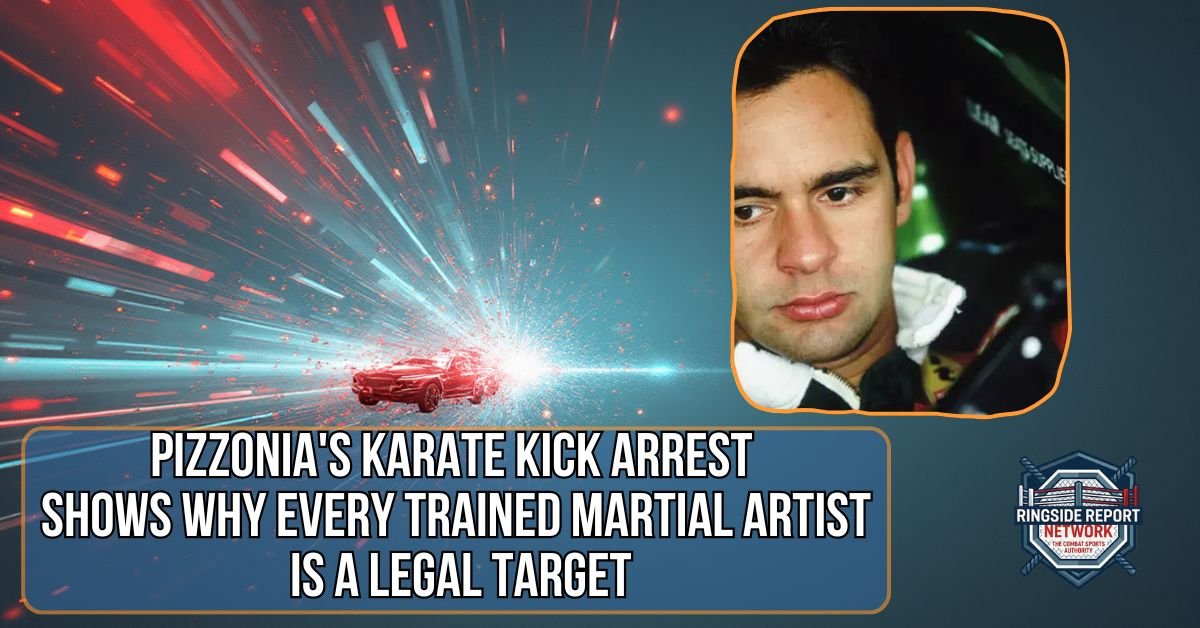

When a video surfaced of former F1 driver Antonio Pizzonia delivering a flying kick at a man during a dispute at his son’s karting event in Texas, social media immediately labeled it a “karate kick.” The 45-year-old former Williams and Jaguar driver was arrested by Montgomery County Police, spent time in a Texas jail, and had his mugshot released before being freed. He’s since posted an Instagram statement acknowledging he “would have reacted in a different way” today.
Whether Pizzonia has any formal martial arts training is unknown—reports describe the kick based on how it looked rather than on documented fighting credentials. But the incident raises a question the combat sports community has grappled with for decades: what happens legally when someone with actual documented fighting skills does the same thing?
That’s where this gets real. For trained martial artists—professional fighters, competitive grapplers, anyone with verifiable combat sports backgrounds—the legal consequences of physical altercations are genuinely different. And that distinction matters more than most people realize until they’re sitting across from a prosecutor.
The “Trained Fighter” Problem Nobody Wants to Discuss
Here’s the reality: when you’re trained in martial arts, the legal system views you differently than some random drunk throwing wild haymakers. That karate training? That MMA background? In court, prosecutors will argue your body is a weapon, and they’re not entirely wrong. The F1 driver in question reportedly used a precise karate kick—not a shove, not a punch, but a trained technique. That specificity matters in ways most people don’t understand until they’re sitting across from a prosecutor.
What makes this particularly interesting from our perspective at Ringside Report is how this mirrors situations we’ve seen with actual combat sports athletes. The difference? Professional fighters usually know better because they’ve been warned about this their entire careers. This driver apparently didn’t get that memo.

Why Courts Treat Martial Artists Differently
The legal concept is straightforward but brutal: if you’ve trained to strike effectively, you’re held to a higher standard of restraint. Courts reason that you understand the potential damage your techniques can cause. A regular person throwing a punch might catch an assault charge. A trained martial artist throwing the same punch? That’s assault with a deadly weapon in some jurisdictions. It’s complicated because, on the one hand, yes, trained fighters understand force better. On the other hand, that training also teaches control and de-escalation, which is exactly what prosecutors will hammer you on. “You knew how to walk away. You knew how dangerous that kick was. You did it anyway.”
Let’s Look at the Combat Sports Precedent
This isn’t new territory. We’ve covered situations like this for years, and the pattern is consistent: when fighters use their skills outside the cage or ring, the legal system comes down hard.
Remember when War Machine (Jon Koppenhaver) got into that altercation? Life sentence. Now, that case involved far more serious circumstances, but the prosecution heavily emphasized his MMA training as evidence of intent and capability. Or look at what happened to UFC fighter Abel Trujillo, who was arrested multiple times, with his fighting background used against him in court proceedings.
The Jon Jones Factor
Let’s talk about Jon Jones for a second. Multiple legal issues, and every single time, his status as one of the greatest fighters ever played a role in the proceedings. The hit-and-run? His athletic ability was mentioned. The domestic incidents? His training came up. That’s the thing—once you’re known as someone who can hurt people professionally, every altercation gets viewed through that lens.
Even in less serious cases, we’ve seen fighters face enhanced charges. Tank Davis, the boxing champion, faced serious legal consequences partly because prosecutors emphasized his professional fighting status. The courts don’t care that boxing and street fighting are completely different contexts. They see “trained to punch people,” and that’s enough.
Here’s My Bold Take: This Gets Worse Before It Gets Better
I’m going to make a prediction that might sound extreme, but I believe it: within five years, we’ll see mandatory legal liability training become standard for all combat sports athletes, from karate tournaments to UFC contracts. Insurance companies and athletic commissions will require it, not because they care about the athletes, but because the legal exposure is becoming too expensive.
What do you expect when more people train in martial arts than ever before? The statistical likelihood that trained martial artists are involved in altercations increases. Each case creates legal precedent. Each precedent makes the prosecution of the next case easier. We’re building toward a tipping point where having a black belt or professional fighting record becomes a significant legal liability in any physical confrontation, justified or not.
The Self-Defense Paradox
Here’s where it gets really messy: a trained martial artist often has BETTER claims to self-defense because they can articulate threat assessment and proportional response.. But courts are skeptical. They assume your training means you could have de-escalated or escaped. It’s a catch-22 that’s fundamentally unfair but legally consistent.

Let’s Be Honest About What This Means for Athletes
The Pizzonia incident won’t end a racing career that’s already in the rearview mirror. But his mugshot is now public, his Instagram is full of explanations, and any future business ventures just got more complicated. That’s the hidden cost.
But this extends beyond one driver’s poor decision. Every athlete with martial arts training needs to understand: your dojo, your gym, your coach should teach you that walking away isn’t cowardice—it’s the only smart, legal move. I’ve trained, I’ve been around fighters my entire career covering combat sports, and the best ones all say the same thing: avoid street confrontations at all costs.
Where My Prediction Might Be Wrong
I could be completely off base about mandatory legal training becoming standard. The combat sports world moves slowly on safety and liability issues. It took decades to get proper medical protocols in place. Maybe this stays a case-by-case warning rather than a systematic change. Maybe insurance companies don’t care enough to force the issue. I’m acknowledging that possibility.
What Happens Next
For this specific driver, expect a legal battle that focuses heavily on the karate training aspect. Prosecutors will bring in experts to testify about the force and precision of trained kicks. His defense will argue it was a reaction in a chaotic situation. The truth, as always, will be somewhere in between.
For the broader combat sports community, this serves as another reminder: your training is a responsibility, not just a skill. Whether you’re a world champion fighter or a weekend karate student, the moment you use those techniques outside of sanctioned competition or legitimate self-defense, you’re entering dangerous legal territory. The law doesn’t care about your belt rank or your professional record—it cares that you knew what you were doing when you threw that strike.
That’s the thing nobody wants to hear, but everyone needs to understand: being a trained martial artist means you’re held to a higher standard, fair or not. This F1 driver just learned that lesson the hardest way possible.