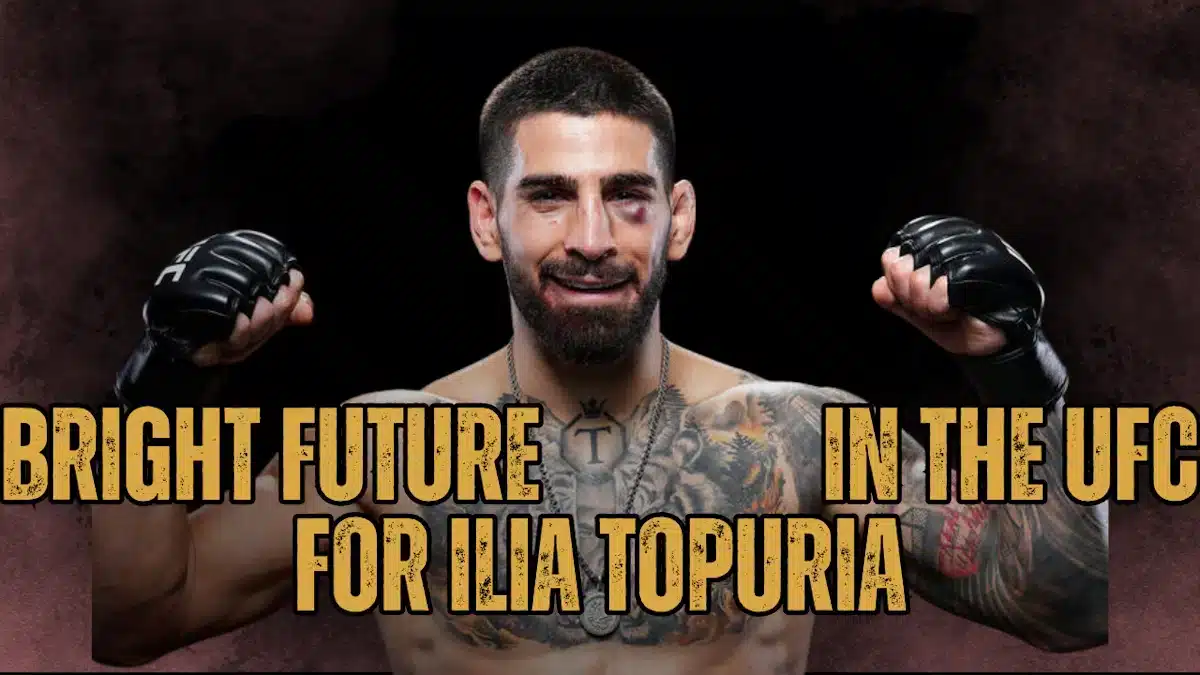
Ilia Topuria just said something that sounds absolutely insane on the surface: he’s going to submit Islam Makhachev in front of Khabib Nurmagomedov. Not outbox him. Not knock him out. Submit him. The undefeated Dagestani grappling machine who’s never been submitted in his professional career. And he’s going to do it while Islam’s mentor—arguably the greatest lightweight of all time—watches from cageside.
The reality is, most people hearing this immediately dismiss it as typical fighter trash talk. Championship-level posturing. The kind of thing you say to sell a fight that might never happen. But here’s what matters: Topuria isn’t some delusional striker making wild claims. He’s a legitimate black belt who’s already proven he can hang with elite grapplers. This deserves serious analysis, not knee-jerk dismissal.
The Psychological Warfare Behind the Callout
What’s often overlooked in Topuria’s statement is the layered psychological attack he’s launching. The Topuria Makhachev callout isn’t just challenging Islam’s skills—he’s directly targeting the Dagestani mystique that’s dominated lightweight and welterweight divisions for years. By specifically mentioning Khabib’s presence, Topuria is trying to add pressure that Islam has never faced before.
Think about what he’s actually saying: “I’m so confident in my grappling that I’ll beat you at your own game, in your own domain, with your legendary mentor forced to watch.” That’s not just confidence—that’s calculated mental warfare designed to plant seeds of doubt. Islam has to hear that and at least consider: what if this guy actually believes he can do it? What if he’s seen something in my game that others haven’t?
The Khabib Factor Changes Everything
Here’s the thing about having Khabib cornering you: it’s simultaneously the biggest advantage and the heaviest burden in MMA. You get the tactical genius who never lost a round in his prime. But you also carry the weight of living up to that legacy every single time you step in the octagon. Topuria knows this. He’s specifically trying to turn Islam’s greatest asset into a pressure point.

The psychological impact of potentially getting submitted while your undefeated mentor watches? That’s the kind of scenario that can creep into a fighter’s head during training camp. It’s a masterclass in getting inside an opponent’s mental space before the fight even gets booked.
Why This Isn’t as Crazy as It Sounds
Topuria’s Grappling Evolution Is Real
The reality is that Topuria’s ground game has been criminally underrated because of his knockout power. Everyone remembers him starching Max Holloway and Alexander Volkanovski, but they forget he’s got legitimate submission wins on his record. His guillotine against Jai Herbert was technical perfection. His rear-naked choke finish of Bryce Mitchell—a guy known for his own grappling—showed he can compete with specialists.
What makes Topuria dangerous on the ground isn’t just technique—it’s his physical strength relative to his size. He’s a naturally thick, powerful athlete who generates tremendous pressure in grappling exchanges. That matters against someone like Islam, who relies on positional dominance and gradual advancement. If Topuria can create scrambles and explosive moments, he’s got a puncher’s chance on the ground.
Islam’s Submission Defense Has a Flaw
This is where I might be completely wrong, but I’ve noticed something about Islam’s grappling that doesn’t get discussed enough: he’s almost too methodical. His approach is about control and advancement, not necessarily about defending sudden submission attempts from bottom position. We haven’t seen him tested by someone who combines elite grappling with the kind of explosive athleticism Topuria brings. For a deeper look at what makes Islam’s grappling so suffocating—and why it’s actually judo, not sambo, that creates most of his control—check out our technical breakdown.
Alexander Volkanovski exposed some openings in Islam’s game during their first fight—moments where Islam was vulnerable to sweeps and scrambles. Volk couldn’t capitalize because he’s a smaller fighter working at a size disadvantage. Topuria wouldn’t have that problem. He’s naturally bigger than Volk, and if he moves up to lightweight, he’d be one of the thicker, more powerful fighters in the division.
The Technical Path to Victory
How Topuria Could Actually Pull This Off
If Topuria vs Makhachev happens and Topuria is serious about hunting a submission, here’s the specific scenario that makes sense: he needs to hurt Islam on the feet first. Not knock him out, but land something significant that compromises Islam’s wrestling entries. Then, when Islam inevitably shoots—because that’s what Dagestani fighters do when they’re hurt—Topuria needs to time a guillotine or front choke perfectly.
The other path is even more audacious: actually accepting bottom position and working for submissions from guard. Topuria’s got the kind of closed guard that generates threats, and Islam has shown a willingness to work from a top position rather than immediately advancing. If Topuria can create enough threats to force Islam into defensive reactions, scrambles become possible. And in scrambles, anything can happen.
The Historical Precedent That Matters
We’ve seen this movie before, just not with this exact cast. Charles Oliveira was supposed to get ragdolled by Islam’s grappling. Instead, he created enough submission threats to make Islam respect his ground game. The difference? Oliveira is a pure submission specialist without Topuria’s knockout power. Topuria represents a different problem: a guy who can hurt you standing AND threaten you on the ground.
That combination—legitimate knockout power mixed with high-level grappling—is historically the blueprint for beating Dagestani wrestlers. The threat of the knockout makes them hesitant on entries. The grappling skill makes them cautious in top position. It creates the kind of mental chess match where mistakes happen.
My Bold Prediction: The Fight Gets Made
Here’s what I actually think happens: Topuria Makhachev gets booked for late 2026, assuming Topuria successfully defends his featherweight title one more time and Islam gets past whoever’s next. The UFC loves this kind of stylistic matchup—the knockout artist who claims he can submit the submission specialist. It’s promotional gold.
But here’s my specific prediction, and I’ll probably look stupid for making it: if this fight happens, Topuria doesn’t get the submission. What he does instead is become the first person to clearly win rounds against Islam on the scorecards through a combination of takedown defense and striking. Islam wins a decision, but Topuria exposes that the Dagestani dominance isn’t invincible. He becomes the blueprint for how to compete with that style, even if he doesn’t get the finish he’s predicting.
What Happens Next
The reality is that talk is cheap until both guys are standing across from each other in the octagon. Topuria needs to handle business at featherweight first. Islam needs to continue his lightweight dominance. But what’s often overlooked is that this kind of callout—specific, technical, and psychologically loaded—is exactly how you build the biggest fights in the sport.
Whether Topuria can actually submit Islam Makhachev in front of Khabib remains to be seen. What’s undeniable is that he’s planted the seed, created the narrative, and given us all something to think about. In a sport where mental warfare matters as much as physical skill, that might be the smartest move he could make.
And honestly? Part of me wants to see if he’s crazy enough to actually try it.