
Breaking down the media consolidation bombshell and separating panic from reality in professional wrestling’s streaming future
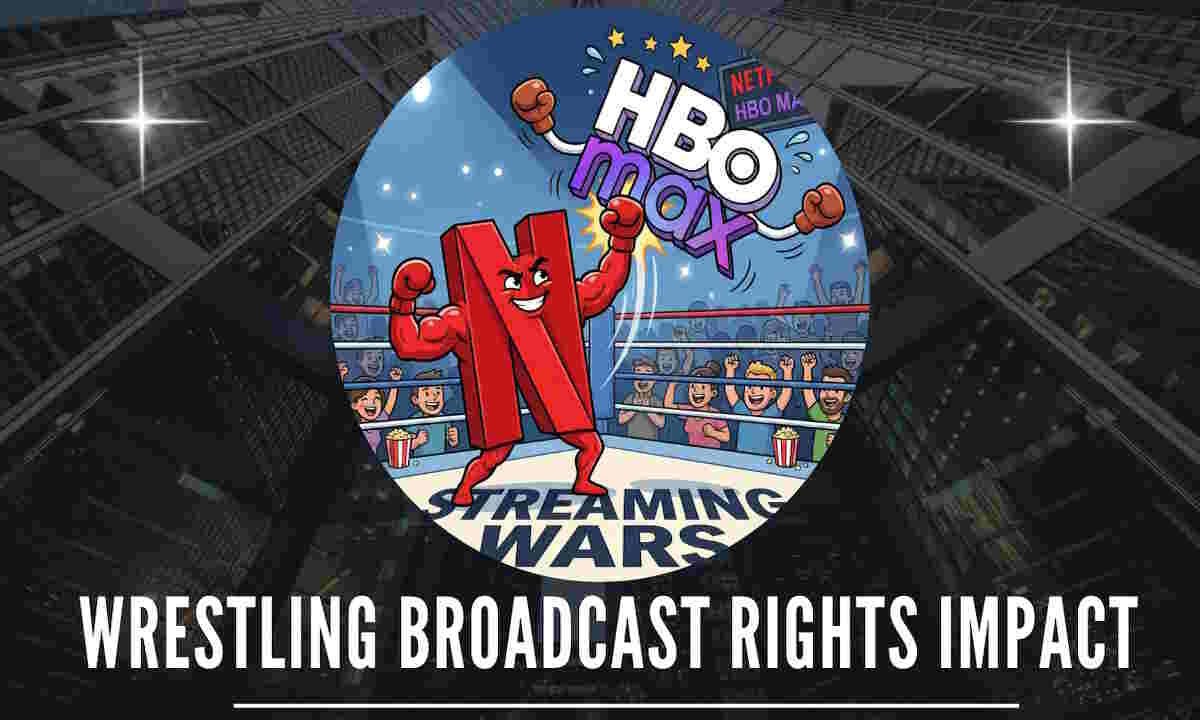
The situation involving Netflix, Warner Bros., and AEW has wrestling fans in a panic. Netflix’s acquisition of Warner Bros. Discovery’s content assets (Warner Bros. Studios, HBO Max) represents the most significant media industry shakeup in decades, with Warner Bros. Discovery’s linear cable networks (TNT, TBS) spinning off into a new independent entity temporarily dubbed “Discovery Global.” The wrestling world immediately erupted with speculation about what this means for AEW and WWE broadcast rights. Still, the reality is far more nuanced than the doomsday scenarios flooding social media.
The proposed deal creates an unprecedented landscape for pro wrestling broadcasting rights across multiple platforms and territories. While AEW faces legitimate questions about its streaming future, WWE emerges strengthened, and the actual timeline for any significant changes extends well beyond 2025. Here’s what’s actually happening, what’s speculation, and what the future might hold for combat sports in the streaming era.
The Core Conflict: AEW’s “Split Custody” Situation
The most immediate impact falls on All Elite Wrestling, which currently holds rights deals with both the streaming platform (HBO Max) and linear networks (TBS/TNT), with those deals being split between two different companies.
Streaming Component: HBO Max to Netflix
Under the proposed deal, Netflix would acquire HBO Max, becoming the new owner of AEW’s streaming platform while simultaneously serving as the exclusive global home of WWE programming (Raw, SmackDown, NXT, and Premium Live Events). The conflict seems obvious: Why would Netflix promote or even host AEW content that directly competes with their massive WWE investment?
The deal structure creates a politically awkward situation where AEW’s streaming presence could vanish from its current home, forcing the company to seek a new streaming partner immediately. Options include Amazon Prime Video (which already carries AEW pay-per-views in some markets), Peacock (though owned by NBCUniversal, WWE’s former home), or potentially launching a standalone app similar to WWE Network’s original model.
Linear Television: TBS/TNT Under “Discovery Global”
AEW’s cable television rights would transfer to the spun-off “Discovery Global” entity. This new company, stripped of the profitable Warner Bros. studio engine and HBO’s premium content, would operate with significantly reduced budgets and market leverage compared to the current Warner Bros. Discovery structure.
The financial squeeze could pressure Discovery Global to reduce rights fees or seek cheaper programming alternatives. While AEW’s current deal (signed in October 2024) runs through 2027, the company’s changed corporate structure creates uncertainty about renewals and its long-term cable home.
The Timeline Reality Check
Despite the immediate panic, AEW signed a three-year, $555 million deal with Warner Bros. Discovery starting January 2025. This contract covers Dynamite and Collision through 2027, meaning AEW has approximately two full years of guaranteed cable television presence regardless of corporate ownership changes.
The 2028 rights negotiations will occur in a transformed media landscape, but predicting that landscape based on 2025 deal structures is at best speculative. The linear television model itself may look radically different in three years, potentially rendering current concerns about specific network owners moot.
WWE: Consolidated Dominance and Antitrust Questions
WWE emerges from this deal with a strengthened market position. The company already secured its massive Netflix deal (reportedly $5 billion over 10 years for Raw, plus international rights) before this acquisition, giving WWE the anchor-tenant position on the world’s largest streaming platform.
The Netflix Monopoly Scenario
If Netflix acquires HBO Max and allows AEW’s streaming deal to lapse, WWE becomes the only major professional wrestling product on the world’s dominant streaming service. This consolidated position raises several concerns:
Market Dominance: WWE would control the vast majority of mainstream professional wrestling content available on major streaming platforms, particularly in international markets where Netflix is the primary entertainment portal.
Competition Suppression: Without major media backing, AEW’s ability to compete for talent, production resources, and audience attention would diminish significantly. The “monopoly” wouldn’t be absolute—AEW would still exist—but WWE’s competitive advantages would expand dramatically.
Antitrust Implications: Regulators might scrutinize whether the deal effectively eliminates AEW’s distribution, creating an anti-competitive environment. However, wrestling’s classification as “entertainment” rather than “sport” complicates traditional antitrust analysis. Additionally, AEW’s existence as a viable competitor (even if weakened) might satisfy basic competition requirements.
WWE’s Strategic Position
The timing of WWE’s Netflix deal (finalized before the Warner Bros. acquisition) was fortuitous. The company locked in guaranteed distribution and massive rights fees without knowing its largest English-language competitor would face immediate distribution uncertainty.
TKO Group Holdings (WWE and UFC’s parent company) benefits from corporate separation that insulates it from direct merger complications. WWE’s content remains with Netflix regardless of what happens to Warner Bros.’ other properties, while the potential elimination of AEW’s streaming presence removes a direct competitor from the same platform.
The United States Perspective: Monopoly vs. Scramble
For American audiences, the wrestling landscape could be split into a dominant force and a scrambling alternative.
WWE’s American Dominance
- Netflix Presence: Starting January 1, 2025, Raw moves to Netflix, joining SmackDown (currently on USA Network) and NXT (on The CW) in WWE’s multi-platform American strategy.
- Reduced Competition: Without HBO Max’s presence, AEW loses easy access for casual viewers who might stumble upon wrestling content while browsing Netflix.
- International Advantage: Netflix’s global reach gives WWE unprecedented international distribution, particularly in markets where access to traditional cable wrestling was limited.
AEW’s American Challenges
The “orphan risk” is real but manageable. AEW loses its streaming growth engine if Netflix declines to continue hosting content, but several viable alternatives exist:
Amazon Prime Video: Already carries AEW pay-per-views internationally and has demonstrated interest in live sports content. The Friday Night Dynamite slot could fit Amazon’s sports strategy.
Apple TV+: Aggressively pursuing sports content, though typically focused on major leagues (MLS, MLB). Wrestling’s classification as entertainment might complicate this fit.
YouTube TV/Standalone Streaming: AEW could expand its existing YouTube presence into a premium streaming service, similar to WWE Network’s original model. This requires significant infrastructure investment but offers complete control.
Paramount+: Owned by Paramount Global, which carries SmackDown on the USA Network. A Paramount+ streaming deal could create synergies, though likely at rates lower than Warner Bros. Discovery was paying.
The Discovery Global linear networks (TBS/TNT) provide stable short-term revenue. Whether this continues beyond 2027 depends entirely on Discovery Global’s financial performance and strategic direction as an independent entity.
The Canadian Perspective: Insulated from American Chaos
Canada’s regional rights structure creates a dramatically different scenario than the American market.
WWE in Canada: The Netflix Monopoly
As of January 1, 2025, Netflix Canada serves as the exclusive home for all WWE content, including Raw, SmackDown, NXT, and Premium Live Events. This complete Netflix control eliminates the American multi-platform complexity.
Rogers Communications’ Sportsnet, which previously carried WWE programming, lost all WWE content to Netflix. The traditional cable model for WWE is effectively dead in Canadian markets, representing a complete streaming transition that American audiences won’t see for years (if ever, given SmackDown and NXT’s traditional broadcast/cable deals).
AEW in Canada: The Bell Media Fortress
All Elite Wrestling remains with Bell Media (TSN and the newly branded USA Network Canada), creating stability absent from the American situation.
The “USA Network” confusion deserves explanation: Bell Media is rebranding its Discovery Channel to “USA Network Canada” on January 1, 2025. This creates the unusual situation where:
- In the United States, USA Network airs WWE SmackDown
- In Canada, USA Network airs AEW Collision
This regional variation highlights how international rights deals operate independently of American corporate drama. Bell Media’s direct agreement with AEW isn’t affected by Warner Bros. Discovery ownership changes because Canadian broadcast rights were negotiated separately.
Canadian fans are significantly more insulated from the Netflix/Warner Bros. chaos than American viewers. As long as AEW produces shows, Bell Media will air them under the terms of its existing contract. However, if American production falters due to distribution/funding issues stemming from the Warner Bros. sale, Canadian content quality could suffer indirectly.
Rogers Sportsnet and TNA: Filling the WWE Void
With WWE moving to Netflix, Rogers Sportsnet signed Impact Wrestling (TNA) to fill the wrestling programming slot on its SN360 channel. This move significantly elevates TNA’s visibility in Canada, potentially making Canada TNA’s strongest global market.
The Canadian wrestling broadcast landscape now features three distinct companies across different networks:
- WWE exclusively on Netflix
- AEW on TSN and USA Network Canada (Bell Media)
- TNA on Sportsnet 360 (Rogers)
This fragmentation prevents any single company from monopolizing Canadian wrestling attention, even as WWE consolidates its American streaming presence.
Separating Panic from Reality: The Economics
Social media reactions to the Netflix/Warner Bros. news immediately jumped to “AEW is finished” conclusions. Dave Simon, host of Wrestling Uncensored, pushed back forcefully against this narrative during the December 5, 2025, episode.
The Coke and Pepsi Argument
“If I buy Coca-Cola, I’m Netflix. I bought a Coke. WWE is a Coke, right? I just bought the WWE. It’s a Coke. But I also want to go to the store and put in my fridge a Pepsi,” Dave explained. “When people come to my house, I say you want a Coke or a Pepsi. You can have both. You could watch WWE or AEW on my streaming platform, in my fridge. I have Coke and Pepsi because I bought those things.”
The analogy highlights Netflix’s business model. The streaming giant features multiple comedians competing for audience attention and ticket sales. It features various action movies that compete for viewership. Why couldn’t it carry two wrestling companies that, while competitive, serve slightly different audience segments?
The Price Point Reality
AEW’s three-year deal: $555 million (approximately $185 million per year for Dynamite and Collision combined)
WWE’s Netflix deal: $5 billion over 10 years (approximately $500 million per year for Raw plus international rights)
“$555 million for three years of AEW TV is a straightforward purchase for Netflix, which paid $5 billion for 10 years of WWE Raw alone,” Dave noted. “You could get three years of AEW for half a billion. So you could get 10 years of AEW for a billion and a half, two billion.”
This price differential makes AEW affordable for virtually any major streaming platform:
- Amazon Prime Video: Manageable within existing sports content budget
- Apple TV+: Easily absorbed given Apple’s content spending
- Paramount+: Affordable even for a smaller streaming service
- Max (if independent from Netflix): Natural fit if HBO Max spins off rather than integrates
The notion that no company would want AEW content at these prices strains credulity. The question isn’t whether someone will pay for AEW rights in 2028—it’s who will pay and how much.
The “Low Cost Operation” Factor
“They’re doing fine with AEW. It’s a low-cost operation, and they’re getting their return on their investment,” Dave assessed regarding Discovery Global’s current position. “Let’s get through 2025 first and chill out here.”
From Warner Bros. Discovery’s (and future Discovery Global’s) perspective, AEW provides:
- Guaranteed programming two nights per week (Dynamite Wednesday, Collision Saturday)
- Live content that drives real-time viewership and advertising
- Younger demographic appeal (particularly valuable as traditional cable ages)
- Production costs are covered entirely by AEW/TKO’s side
The deal makes financial sense even for a reduced-budget Discovery Global, though the 2028 renewal might come at lower rates than AEW hopes.
Potential Outcomes: Four Scenarios
Scenario 1: Status Quo Plus (Probability: Medium)
Netflix agrees to carry both WWE and AEW, potentially even marketing them as complementary products for wrestling fans. AEW remains on Discovery Global’s linear networks. The Canadian arrangement continues unchanged.
This outcome maximizes Netflix’s wrestling content offering while AEW maintains cable presence. WWE remains the flagship, but AEW provides additional programming at a fraction of the cost.
Obstacles: WWE’s contract might include language preventing the presence of direct competitors on Netflix. Corporate politics could make simultaneous hosting awkward, even if legal.
Scenario 2: AEW Migrates to Alternative Streaming (Probability: High)
Netflix declines to continue AEW’s streaming presence after HBO Max integration. AEW signs new streaming deal with Amazon Prime Video, Apple TV+, or builds a standalone service. Linear cable continues on Discovery Global through 2027, then potentially migrates to a different network.
This outcome reflects most industry speculation. AEW loses HBO Max distribution but finds an adequate replacement, maintaining viability, though potentially at reduced rights fees than hoped.
Obstacles: Streaming alternatives may offer lower rights fees than Warner Bros. Discovery paid. Migration disrupts viewing habits, potentially leading to the loss of casual viewers.
Scenario 3: Discovery Global Doubles Down (Probability: Low-Medium)
Spun-off Discovery Global, needing content for TBS/TNT, renews AEW early and aggressively, potentially adding a streaming component if Max remains separate from Netflix. Linear cable becomes AEW’s strength rather than weakness.
This contrarian outcome assumes Discovery Global views live wrestling as valuable enough to compete for retention. A new streaming service built around Discovery networks could position AEW as flagship sports-entertainment content.
Obstacles: Discovery Global’s reduced budget may prevent competitive rights offers. The company might pivot away from premium content toward cheaper programming.
Scenario 4: Fragmentation and Decline (Probability: Low)
Netflix refuses AEW content, Discovery Global drops AEW or drastically reduces rights fees, Amazon/Apple show no interest, forcing AEW to smaller platforms (YouTube Premium, FITE TV exclusive). The company survives, but at a significantly reduced scale.
This worst-case scenario represents the “AEW is finished” narrative. The company continues operating but loses mainstream distribution, becoming a niche product for hardcore fans.
Obstacles: AEW’s existing fan base and Tony Khan’s financial backing make a complete collapse unlikely. Multiple streaming platforms need content, making total distribution failure improbable.
Beyond Wrestling: Cultural Implications
The Netflix acquisition of Warner Bros. represents more than wrestling distribution politics. Warner Bros. stands as one of the oldest Hollywood studios, producing cinematic classics from Casablanca to The Dark Knight. HBO defined premium television from The Sopranos to The Wire.
Netflix, by contrast, operates on an algorithm-driven model prioritizing viewership data over artistic legacy. The streaming giant produces massive quantities of content, most of which disappears from cultural conversation within weeks. Very few Netflix originals achieve lasting cultural significance comparable to Warner Bros.’ historical output.
“Warner Bros. has produced some of the finest pieces of cinematic art in history. Netflix has made some shit,” Dave Simon argued during Wrestling Uncensored. “I don’t think Netflix respects art. They respect streams, algorithms, clicks, and money. And art doesn’t factor into any of those things.”
The consolidation represents a broader shift from art-driven to data-driven entertainment production. Classic films and television shows were greenlit by executives making creative judgments; Netflix content often emerges from predictive algorithms suggesting what audiences might watch based on viewing patterns.
“There’s no replay value on anything they make,” Dave continued. “That’s a sign of a lack of art. A good movie you can watch many, many times, and sometimes you’ll catch something new. Outstanding movies exist like that. But then other stuff’s made where you just go, I’ve seen it, now it’s over. And I never need to see that again. And I feel like that’s mostly what’s made now.”
Professional wrestling exists somewhere between art and entertainment. At its best, wrestling creates memorable moments that resonate for decades (Austin/McMahon, Hogan slamming Andre, The Montreal Screwjob). At its worst, wrestling produces forgettable content designed to fill television time.
The Netflix era may push wrestling further toward the “content” model—producing maximum output optimized for metrics rather than memorability. Whether this matters for wrestling (which has always been partly disposable entertainment) remains to be seen.
The Regulatory Question
Does Netflix owning both WWE content and the platform that once hosted AEW create antitrust concerns?
Traditional monopoly analysis focuses on market control and consumer harm. Netflix’s position doesn’t meet technical monopoly definitions:
- Multiple streaming platforms exist (Amazon, Apple, Paramount+, Peacock)
- AEW can migrate to an alternative distribution
- Wrestling represents “entertainment,” not “sport,” limiting competitive protections
- Consumer prices aren’t directly affected by which platform carries which wrestling company
However, the Federal Trade Commission (FTC) and Department of Justice (DOJ) have shown increased skepticism toward media consolidation under the Biden administration. This deal’s timing (late 2025) coincides with potential regulatory scrutiny absent during earlier streaming mergers.
Key regulatory considerations:
- Does Netflix control access to wrestling audiences? If regulators determine Netflix represents the primary path to mainstream wrestling viewership, blocking AEW could constitute anti-competitive conduct.
- Are there meaningful alternatives? The existence of Amazon Prime Video, YouTube, and other platforms as viable homes for AEW argues against monopolistic control.
- Does WWE benefit from eliminating AEW distribution? If internal documents show a Netflix/WWE collaboration to suppress AEW, regulatory concerns increase.
- International implications: Global media consolidation might face different regulatory frameworks in the EU, the UK, and other markets.
Most legal analysts predict regulatory approval despite theoretical concerns. Media mergers typically pass with minor concessions, and wrestling’s ambiguous status (entertainment? sport? performance art?) complicates regulatory classification.
What Actually Happens Next?
Despite the speculation and analysis, the reality is straightforward:
Immediate Term (2025-2026):
- AEW continues on TBS/TNT under the existing contract
- WWE content migrates to Netflix January 1, 2025
- Canadian distribution remains stable across all companies
- No significant changes to wrestling availability or format
Medium Term (2026-2027):
- AEW likely loses HBO Max presence as Netflix integration completes
- Alternative streaming arrangements announced for AEW
- Discovery Global clarifies long-term strategy for linear networks
- International rights negotiations intensify as streaming wars continue
Long Term (2028+):
- AEW renegotiates broadcast rights in transformed media landscape
- Linear cable importance continues declining across all content
- Streaming consolidation potentially creates three major platforms (Netflix, Amazon, Apple) plus niche services
- Wrestling potentially fragments across multiple platforms based on rights deals
The panic about AEW’s immediate future is overblown. The concern about wrestling’s long-term position in a consolidated streaming landscape is legitimate but far from resolved.
The Bottom Line
Netflix buying Warner Bros. Discovery creates legitimate questions about AEW’s future streaming home, but it doesn’t represent an extinction-level event for the company. AEW has two years remaining on its current deal, time to negotiate alternative arrangements, and multiple platforms that could accommodate its content at the current price point.
WWE benefits from the consolidation by becoming Netflix’s exclusive wrestling offering (if AEW is dropped), but this advantage doesn’t translate into AEW’s demise—only into a more difficult competitive environment.
Canadian fans should worry least, as their regional rights deals insulate them from American corporate drama. American fans face the highest likelihood of disruption, though probably not until 2027-2028 when current contracts expire.
The bigger story extends beyond wrestling to fundamental questions about media consolidation, art versus algorithm, and whether streaming platforms will prioritize cultural legacy or content churn. Wrestling survives these transitions because it’s always adapted to distribution changes (territories to national cable to pay-per-view to streaming). The quality and cultural impact of that wrestling—that’s the real question Netflix’s Warner Bros. acquisition raises.
As Dave Simon concluded, “Let’s get through 2025 first and chill out here. Let’s enjoy the holidays, brother.”
The sky isn’t falling. It’s just being repainted by algorithms and balance sheets.