Fight IQ: Pro Wrestling Glossary
A push in wrestling is a promotion’s deliberate vote of confidence in a performer: more wins, higher-profile opponents, championship opportunities, and the creative spotlight needed to become a star.
This guide covers what a push actually means, how it works in practice, the biggest success stories and cautionary failures in wrestling history, and what separates the pushes that create legends from the ones that quietly disappear.
Guide to the Push
What Is a Push in Wrestling?
In professional wrestling, “getting a push” signifies a deliberate effort by a promotion to elevate a wrestler’s status: moving them up the card and into the spotlight. A push in wrestling means the company starts featuring them prominently in storylines, booking them to win more matches, and positioning them for main events or championship opportunities. Essentially, a wrestler receiving a push is being presented as strong and important, a strategic decision to transform them into a major star attraction.
The term comes from the idea of a promotion actively pushing a performer forward rather than letting them find their own level organically. A push in wrestling is always a company decision, and like any investment, it can pay off spectacularly or be quietly written off when the returns don’t materialize. Understanding how a push works, why some succeed, and why others fail is central to understanding how professional wrestling functions as both a performance art and a business.
How a Push Works and Why It’s Done
When a wrestler receives a push in wrestling, the changes are evident across multiple dimensions of their presentation. They climb from opening matches to the mid-card, then toward headlining events. They defeat higher-profile opponents rather than serving as enhancement talent, and they often capture championships as the culmination of the momentum they have built. The creative team crafts compelling storylines to showcase their talent and personality, giving them the opportunity to demonstrate their skills week after week to a growing audience.
Promoters initiate pushes for several reasons: to cultivate new stars, to replace aging veterans, to respond to audience demand for a specific performer, or to expand into new markets where a particular persona might resonate. A successful wrestling push creates the next fan-favorite hero or compelling villain, boosting attendance and ratings while ensuring the promotion’s long-term health and its ability to sell main events.
However, a push in wrestling does not guarantee success. The wrestler must genuinely “get over” with the audience, meaning the crowd must organically invest in them regardless of how heavily the company promotes them. If a push feels forced or the wrestler is not yet ready for the spotlight, fans may reject it. That rejection can be difficult to recover from, as audiences who have been asked to accept a performer they don’t believe in can become actively hostile rather than simply indifferent.
Success Stories: When a Push Creates a Star
The most successful pushes in wrestling history share a common thread: the performer was ready, the timing was right, and the audience was already reaching toward them before the company fully committed. Well-executed pushes have propelled many wrestlers to legendary status.
- Hulk Hogan (1980s WWF): Handpicked by Vince McMahon, Hogan was booked as an unbeatable hero. His swift WWF Championship win ignited “Hulkamania,” making him the face of wrestling’s 1980s boom and a pop culture icon whose mainstream reach transformed the entire industry.
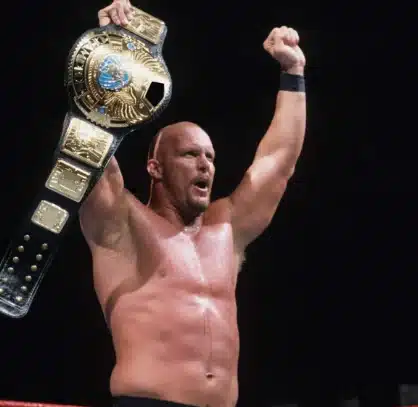
- “Stone Cold” Steve Austin (1990s WWF): Austin’s anti-hero persona resonated powerfully, particularly in his rivalry with Mr. McMahon, which tapped into a cultural moment of anti-authority sentiment. His push in wrestling led the “Attitude Era,” cementing him as a cultural phenomenon and transforming the WWF’s commercial fortunes when the company needed it most.
- The Rock (late 1990s WWF): After an initial failed babyface attempt that the audience rejected, a repackaged “Rock” exploded with charisma that could not be manufactured or forced. His successful wrestling push led to multiple world titles and an unparalleled crossover career in Hollywood, proof that the right push meets a performer who can seize the opportunity.
- Goldberg (late 1990s WCW): Goldberg’s undefeated streak, famously recorded as 173–0, and menacing intensity quickly established him as an unstoppable force and WCW’s top star, selling out arenas and creating immense excitement at a time when WCW needed a homegrown star to match the WWF’s momentum.
When Pushes Fail: Promoted But Not Propelled
Not every push in wrestling yields the desired results. Sometimes the audience connection simply isn’t there, or the booking surrounding the push undermines what it is trying to build.
- Lex Luger (1993 WWF): Despite a massive patriotic push following Hulk Hogan‘s departure, including a cross-country bus tour and a high-profile SummerSlam title match, Luger’s anticlimactic results and lack of genuine fan connection led to his push fizzling out before it ever fully ignited.
- Roman Reigns (2014–2018 WWE): WWE’s initial attempts to establish Reigns as a top babyface met significant fan rebellion and persistent crowd hostility. It took years and a complete character overhaul, the villainous “Tribal Chief” persona, for him to truly connect with audiences and deliver on the potential the company had always seen in him.
- Jinder Mahal (2017 WWE): Mahal’s sudden ascent to WWE Champion was perceived as too abrupt and unconvincing, lacking the necessary build-up for fans to accept him as a credible main-eventer. The push never found an audience willing to invest in his title reign, and it served as a reminder that a push in wrestling cannot manufacture credibility where the foundation has not been laid.
Why Some Pushes Succeed, and Others Fail
The success of a pro wrestling push hinges on several critical factors that determine whether the company’s investment translates into genuine audience investment.
- Authenticity and Timing: A push in wrestling must align with audience sentiment and feel organic to the moment. Austin and The Rock connected with the late ’90s cultural zeitgeist in ways that felt inevitable in retrospect: their pushes accelerated something that was already happening, rather than trying to create something from nothing. Luger’s more manufactured hero push never found that same organic energy.
- Talent and Charisma: A pushed wrestler needs the genuine talent and magnetic charisma to capitalize on the spotlight being directed at them. Without it, a wrestling push can actually expose weaknesses rather than hide them, as more screen time and higher-stakes matches demand more from a performer, not less.
- Storyline Quality and Follow-Through: The booking must be compelling and internally consistent. Goldberg’s undefeated streak was expertly managed, with each victory serving the larger narrative and building anticipation for the eventual loss. Jinder Mahal’s title reign lacked the same storytelling infrastructure, leaving it feeling purposeless rather than historic.
- Fan Feedback: Promotions that respond intelligently to crowd reactions, merchandise data, and audience engagement can adjust a push in real time. Strong fan investment, such as the groundswell of support behind Kofi Kingston’s 2019 “KofiMania” run, can turn a mid-card performer’s opportunity into a genuine WrestleMania moment. Persistent rejection, conversely, forces recalibration or abandonment.
The Push in Context
A push in wrestling is ultimately an orchestrated upward trajectory: a company’s explicit vote of confidence in a performer’s potential to become a star. Icons like Hulk Hogan, Stone Cold Steve Austin, and The Rock achieved superstardom through well-timed, well-constructed pushes that leveraged company backing into legendary careers and, in some cases, mainstream cultural crossover success that extended far beyond the wrestling business.
But a push in wrestling is merely an opportunity: genuine popularity must still be earned in front of a live crowd that has not been told what to think. Fans’ reactions are the ultimate determinant. A push can position a wrestler for success by providing the spotlight, the storylines, and the championship moments, but if the talent, the booking, and the audience’s appetite do not align, even the most heavily invested push can become a cautionary tale. Ultimately, in professional wrestling, the audience’s response writes the final script on who truly makes it to the top.
Level Up Your Fight IQ
A push is only the beginning: explore the full language of professional wrestling:
Frequently Asked Questions
What does it mean to get a push in wrestling?
Getting a push in wrestling means a promotion has deliberately elevated a performer’s status: booking them to win more matches, placing them in higher-profile feuds, and positioning them for championship opportunities. A push in wrestling is the company’s way of signalling to the audience that a performer matters and deserves their attention and emotional investment. The term comes from the idea of a promotion actively pushing a performer up the card rather than allowing them to find their level without company support.
What is the difference between a push and getting over in wrestling?
A push in wrestling is a top-down decision made by the promotion: the company chooses to feature a performer prominently and gives them the booking, the storylines, and the wins to support that presentation. Getting over is a bottom-up phenomenon: the audience decides to genuinely invest in and react to a performer, regardless of how heavily the company promotes them. The two ideally work together: a company pushes a performer who then gets over with the audience, creating a genuine star. When they work against each other, a company pushing a performer the audience has rejected, or an audience trying to get behind someone the company won’t feature, the result is usually friction and frustration on both sides.
What is a burial in wrestling, and how does it relate to a push?
A burial is the direct opposite of a push in wrestling: instead of being elevated, a performer is deliberately or accidentally diminished, usually through a series of losses, weak booking, or creative decisions that undermine their credibility. Where a push builds a performer up, a burial tears them down, either as a deliberate creative choice (sometimes used against performers who have fallen out of favor with management) or as an unintentional consequence of poor booking decisions. The Roman Reigns babyface years are sometimes cited as an example where the crowd’s rejection effectively turned a push into a perceived burial of other performers the audience preferred.
Can a wrestler ask for a push in wrestling?
Wrestlers can and do advocate for themselves in conversations with bookers and promoters: requesting more prominent placement, pitching storyline ideas, or pointing to merchandise numbers and crowd reactions as evidence that they are ready for a bigger opportunity. However, the decision to execute a push in wrestling remains entirely with the promotion. A performer who pushes too aggressively for their own elevation without the political capital to back it up risks being seen as difficult, which can have the opposite effect. The wrestlers who have historically been most successful at earning pushes are those who made themselves impossible to ignore through their performance, rather than through lobbying.
How long does a push in wrestling typically last?
The duration of a push in wrestling varies widely depending on how well it is received and the promotion’s long-term plans. A push can last a few weeks, a brief elevation to test audience reaction, or it can span years, as in the case of Roman Reigns’ ‘Tribal Chief’ run that extended across multiple WrestleMania main events. Pushes that generate strong audience reactions tend to be extended and built upon, while those that fail to connect are typically quietly wound down without explicit acknowledgement. Some of wrestling’s most successful long-term booking involves maintaining a push consistently over years despite periodic setbacks, allowing the performer’s character to evolve and deepen.