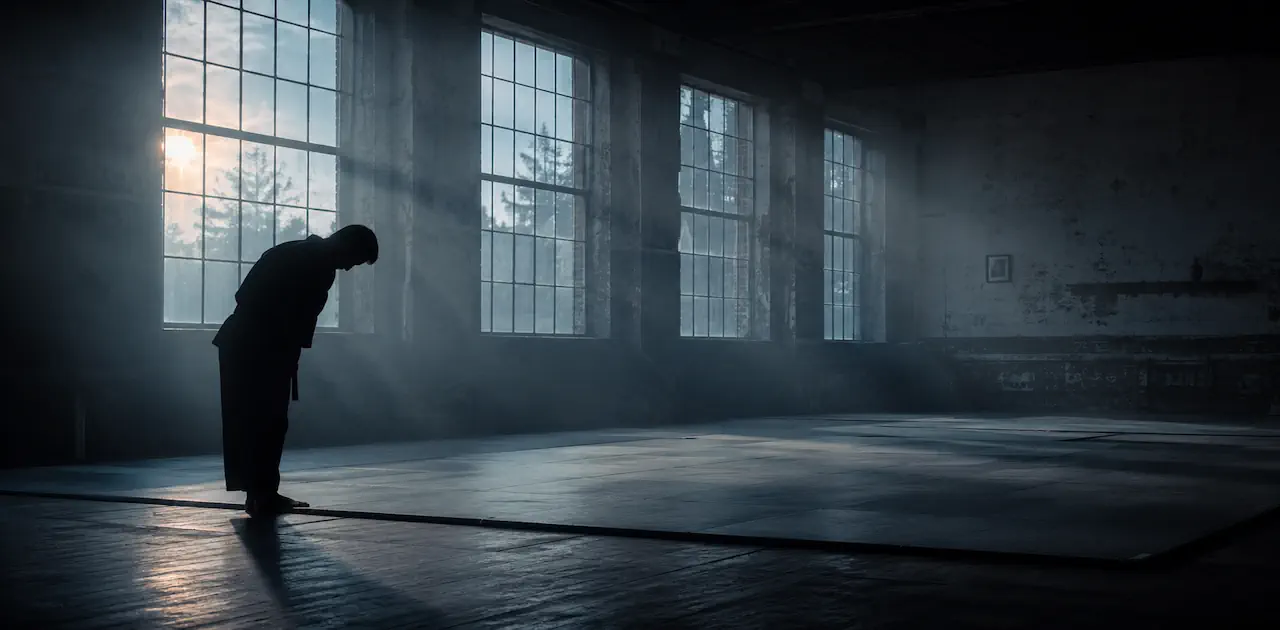

There is a moment that comes for every longtime fan when you look at the thing you love and quietly ask whether you still recognize it. After the UFC White House card, that moment has arrived for a lot of us who came up worshiping mixed martial arts. The fights themselves were good. The production looked incredible. And yet everything around it left a taste that is hard to wash out.
When you have been covering this sport for nearly two decades, and you find yourself dreading the broadcast more than anticipating it, that is not a phase. That is a reckoning. The honest question on the table is no longer who is fighting next, but whether the modern UFC still deserves the time and the loyalty of the people who built their fandom on it.
None of this comes from hating the sport. Just the opposite. The love of martial arts runs deep here, deep enough to still be on the jiu-jitsu mats every week, deep enough to keep believing in what combat sports can be at their best. That is exactly why the current direction stings. You do not get this disappointed about something you do not care about.
Key Takeaways
- The fights were good, the wrapping was not: The UFC White House card delivered in the cage but alienated longtime fans with everything surrounding it.
- Respect and honor have faded: The era of Georges St-Pierre, Lyoto Machida, and Demian Maia prized sportsmanship in a way today’s product no longer reliably rewards.
- Mainstream cuts both ways: By going fully mainstream, the UFC has invited the same scrutiny that every major sports league faces, without the accountability structures those leagues have.
- Tying to one side is a long-term risk: Political alignment that pays off today can become a liability when the pendulum swings.
- MMA coverage is evolving, not ending: Ringside Report Network’s MMA show is on a summer hiatus and will return retooled, likely as a broader combat-and-sports conversation.
The UFC White House Card and the Death of Respect in MMA
The Era Of Respect And Honor Is Gone
Think back to the fighters who pulled a generation into this sport. Randy Couture and Chuck Liddell carried themselves like professionals. Georges St-Pierre bowed. Lyoto Machida head-kicked Mark Munoz into oblivion and then rushed to check on him before the referee could even wave it off.
Demian Maia built an entire identity around the idea that the most badass thing you can do is win without hurting your opponent, taking your back, securing the tap, and sending you home without a scratch so you could train the next day again. That was the culture. If you said something racist, sexist, or homophobic, the company reprimanded you, and the fans wanted to see you get your comeuppance in the cage.
The cleanest example of how the culture used to police itself is Chael Sonnen and Anderson Silva. Sonnen talked an enormous amount of trash, much of it ugly and aimed at the Nogueira brothers and Brazilian culture, and he was not celebrated for it. He was vilified.
The whole appeal of that pay-per-view was the hope that Anderson Silva would shut him up, and when Silva did, the audience roared, because respect for the Brazilian people and the art they gave the sport meant something. Compare that to now, where the loudest, cruelest voice in the room often gets rewarded with the next title shot. The throughline of honor that defined those all-time great UFC fighters has thinned out, and for anyone who believes in martial arts as a discipline, that loss is real.
The Conor McGregor Effect
It is hard to pinpoint exactly when the dam broke, but Conor McGregor is the most honest answer. McGregor was encouraged, never meaningfully reprimanded, for the things he said about Khabib Nurmagomedov, Khabib’s family, and Khabib’s religion. The lesson a generation of fighters absorbed was simple: if Conor is allowed to do it, and it makes him the biggest star in the sport, then this must be the way to the top. Before McGregor, the Chael Sonnen archetype was the villain. After McGregor, that archetype became the blueprint.
You can see the residue everywhere now. Pre- and post-fight promos that lean on insults to families, faith, and identity. Fighters cutting bargain-bin 1980s wrestling promos about how they are going to knock you out, except without the wink that made old-school wrestling fun. It is genuinely hard to root for the top of the card.
The trick McGregor pulled is that he was a transcendent talent who could mostly back it up, which made the act intoxicating to imitate. The imitators, by and large, cannot, so what you are left with is the noise without the genius. For more on where the McGregor story itself has wandered, our piece on the enigma of Conor McGregor’s next move traces the arc.
When The UFC Went “Mainstream, Mainstream”
For most of its life, the UFC fought to be taken seriously. It was a fringe spectacle, then a respected sport, then a genuine mainstream property. The UFC White House card pushed it into a different tier entirely, what you might call mainstream, mainstream. When daytime talk shows are discussing your event and the President of the United States is being asked by real political reporters to respond to something a fighter said in a post-fight speech, you are no longer operating in the sports section. You are in the national conversation, with everything that comes with it.
The fights at UFC Freedom 250 backed up the spectacle. Justin Gaethje pulled off a stunning upset of Ilia Topuria to claim the lightweight title, and Ciryl Gane knocked out Alex Pereira to grab the interim heavyweight strap. Gane, for what it is worth, is one of the few near the top who has not said anything ugly, and he remains easy to like.
But the conversation barely lingered on the results. It moved instead to Josh Hokit’s distasteful comment about Michelle Obama in his post-fight interview, to the bizarre spectacle of the President’s family courting the cameras, and to the wall-to-wall political pageantry that turned a fight card into a campaign rally. The fights were the smallest part of the night, and that is the whole problem in one sentence. For the backdrop on how stars got pulled into this orbit, see our coverage of Jon Jones returning for the White House event.
Did You Know?
Back in 2009, boxing promoter Bob Arum dismissed UFC events as gatherings for “beer-drinking skinhead white guys.” At the time, with Machida and Georges St-Pierre carrying the banner, it read as an ignorant insult from a rival promoter. Seventeen years later, with the sport’s image increasingly defined by its loudest and ugliest voices, that line lands very differently, and our look at the artistry of high-level grappling is a reminder of what the sport is supposed to be about.
The Brand Has Swallowed The Fighters
Here is the part that should worry the company more than any single bad headline. Going mainstream, mainstream means inviting mainstream scrutiny, and the UFC has not built the accountability machinery that the NFL, the NBA, or Major League Baseball carry. In those leagues, a player who says something genuinely offensive faces a process: fines, suspensions, a players’ association, and a commissioner who has to answer for it. In the UFC, a fighter can say almost anything, and nothing happens. That asymmetry was fine when the sport was a niche curiosity. As a national property, it is a structural liability waiting to be exposed.
There is also a real long-term gamble in cozying up so tightly to one political side. Power in this country runs in cycles. It always swings back. A regulatory environment that feels like a blank check today, with talk of dismantling protections like the Muhammad Ali Act, can flip the moment a different administration takes over, and then the company that planted its flag so firmly on one bank of the river finds itself on the wrong side.
The mess around figures like Daniel Cormier being roped into defending dubious behavior, and the steady drip of betting and integrity questions, only adds to the sense of a sport whose brand has grown faster than its judgment. When the wrapping becomes more important than the fighters inside it, the fighters lose, and eventually so does the sport.
The Future Of Live MMA Coverage On Ringside Report Network
So what does all of this mean for how we cover the sport? The honest answer is that the dedicated Thursday MMA show is on summer hiatus and will not return exactly as it was. Part of that is simple life logistics; the kids are home, the crew needs a breather, summer is summer. But a bigger part is philosophical. Dedicating an entire weekly show to a product that increasingly feels unclean to be associated with is a hard sell when you no longer see yourself in it. Loving the sport and being able to spend hours every week promoting the current version of the UFC are two different things.
What comes next is a retool, not a retreat. The plan is to keep talking MMA in some form on the Ringside Report Network, just not in a way that would require building a show around parts of the UFC that have become hard to defend. Picture a broader combat-and-sports conversation, MMA as one item on the agenda alongside the Yankees, hockey, the wrestling business, and whatever else is actually worth talking about, rather than a program that has to genuflect to a single promotion every week. The crew is not going anywhere.
The voices you know are staying. The format is what is changing, so that the coverage can be honest about the sport’s highs without being chained to its lows. Because once that bell rings, MMA is still the best, most compelling combat there is. The Gane–Pereira fight was cool. Gaethje–Topuria was excellent. It is everything before and after the bell that has gotten exhausting, and a smarter format lets us celebrate the first part without drowning in the second.
The Bottom Line
For most of a lifetime, the job was defending pro wrestling to people who thought it was beneath them. Now the script has flipped. Wrestling has earned a reputation as fun, campy, inclusive entertainment, while the UFC has tied itself to so many things that being a public fan of cage fighting suddenly requires an asterisk. That reversal says everything about where the two products have drifted. The sport of MMA did not change.
The way it is packaged, promoted, and politicized did, and that packaging is turning off exactly the kind of lifelong fans it should be courting. There is even a real argument that it stunts the sport’s growth, because none of this is built for families or for the next generation of kids who might fall in love with martial arts the way previous generations did. For the ongoing debate about the legacies caught in this shift, our breakdown of the GSP legacy debate captures how complicated it has become.
So the UFC White House card was not a turning point so much as a confirmation of a turn that has been underway for years. The fights still deliver. The sport is still great. But the company carrying it has chosen a path that makes it increasingly difficult to stand fully behind it, and that choice has consequences. Ringside Report Network will continue to cover combat sports honestly, including MMA, on terms that respect both the art and the audience. That is the whole point of being the combat sports authority: telling you the truth about the thing, even when the truth is that the thing has lost its way. It is complicated, and we are going to keep talking about it.
Frequently Asked Questions
What happened at the UFC White House card?
The UFC White House card, billed as UFC Freedom 250, took place on the South Lawn on June 14, 2026. Justin Gaethje upset Ilia Topuria for the lightweight title, and Ciryl Gane knocked out Alex Pereira for the interim heavyweight title, but the night was overshadowed by political pageantry and a controversial post-fight comment from Josh Hokit.
Why are longtime fans turning away from the UFC?
Many longtime fans feel the era of respect and honor embodied by fighters like Georges St-Pierre, Lyoto Machida, and Demian Maia has been replaced by a culture that rewards the loudest and most offensive voices, with the UFC White House card crystallizing that frustration.
Is the Ringside Report Network MMA show canceled?
No. The dedicated weekly MMA show is on a summer hiatus and will return in a retooled format, likely as a broader combat and sports conversation rather than a program built solely around the UFC.
What is the ‘Conor McGregor effect’ in MMA?
The Conor McGregor effect refers to the way McGregor’s rise, fueled by trash talk that was never meaningfully reprimanded, taught a generation of fighters that being the loudest and most provocative voice is the fastest path to stardom, shifting MMA’s culture away from sportsmanship.
Why is the UFC’s mainstream success also a risk?
Going fully mainstream invites the same scrutiny major sports leagues face, but the UFC lacks comparable accountability structures. Tying the brand closely to one political side also creates long-term risk if the political climate shifts.