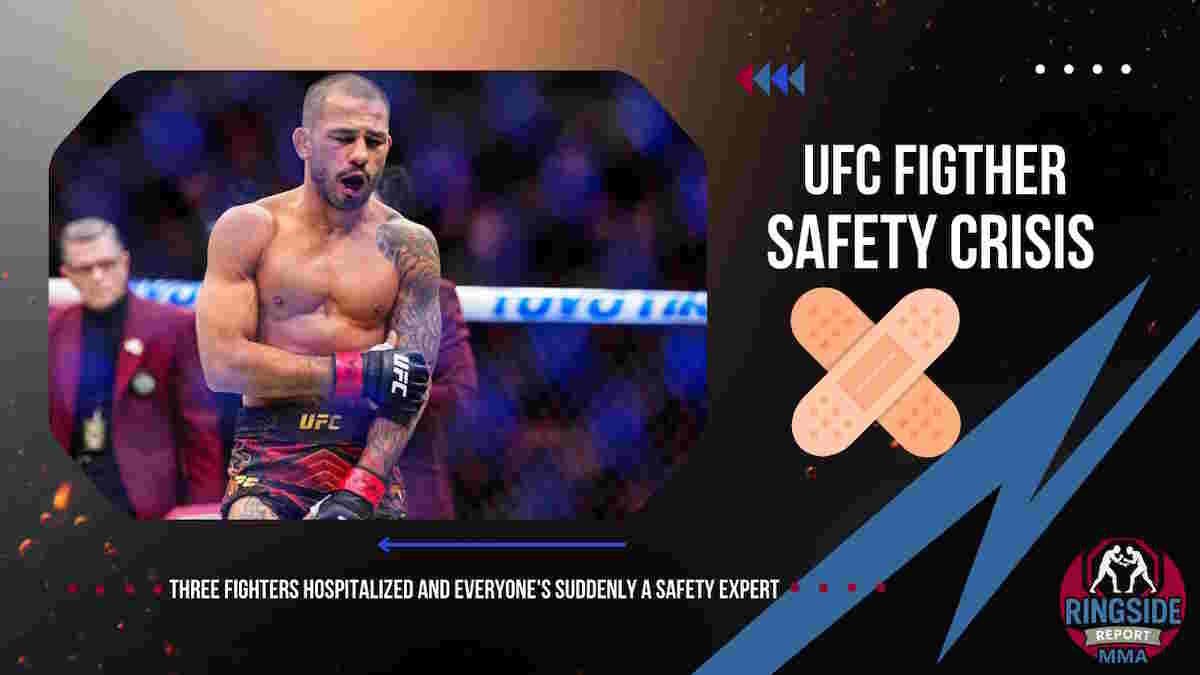

UFC 323 sent three fighters to the hospital — including two former champions — and now everyone with a Twitter account is a combat sports safety consultant. The timeline is predictable: injuries happen, social media erupts, and serious conversations about UFC fighter safety get drowned out by people who can’t explain the unified rules. Come on. This is cage fighting built on controlled violence. What exactly did you think was going to happen? But here’s the thing: this conversation isn’t happening in a vacuum. The November 22-23 weekend became one of the darkest in modern combat sports when Isaac Johnson died following his Eagle FC bout, and hours later, three UFC Qatar fighters were hospitalized.
Come on. This is cage fighting. Two highly trained athletes enter an octagon and try to knock each other unconscious or break their limbs until someone submits. The sport is literally built on controlled violence. What exactly did you think was going to happen?
But here’s the thing: this conversation isn’t happening in a vacuum. The weekend of November 22-23, 2025, became one of the darkest in modern combat sports history when Isaac Johnson died following complications from his Eagle FC bout, and just hours later, three UFC Qatar fighters were hospitalized. That weekend changed everything — it exposed the systemic failures in fighter safety that we can no longer ignore.
So before we dismiss the current outrage as just another Twitter cycle, let’s actually examine what happened at UFC 323, whether the officiating failed, and what — if anything — rule changes could prevent similar tragedies. Because if you’ve been reading Ringside Report, you know we don’t just react to every controversy. We break down whether the outrage is justified or just social media doing what it does best: overreacting.
What Actually Happened: The Hospitalizations Explained
Former Champions Aren’t Invincible
Two former champions getting hospitalized from the same card sounds catastrophic until you add context. Were these stoppages too late? Did the referees miss obvious signs? Or did the damage accumulate despite proper officiating? That distinction matters.

Here’s the thing: if referees stopped fights at the first clean shot, we’d never see comebacks. We’d never see fighters recover from adversity and turn fights around. The sport would become glorified sparring where one good punch ends everything. That’s not what fans tune in for, and more importantly, that’s not what fighters sign up for.
These are professional athletes who chose this career, understanding the risks. They train specifically to absorb and recover from damage. They have teams of coaches, managers, and medical staff advising them. They’re not victims — they’re competitors who accepted the terms of engagement.
The Third Hospitalization Nobody Mentions
The third fighter who got hospitalized barely registers in the outrage cycle, which tells you everything about how selective this concern actually is. If we’re genuinely worried about fighter safety, every hospitalization should matter equally. But when the discourse focuses only on former champions, it reveals that this is about star power, not safety protocols.
That selective concern undermines the entire argument. Either fighter safety is the priority — all fighters, regardless of name value — or this is just performative outrage about big names getting hurt.
And that’s exactly what happened at UFC Qatar: Dan Hooker, Jack Hermansson, and Tagir Ulanbekov were all hospitalized for precautionary CT scans. The difference? They got immediate medical attention, advanced imaging, and were released after proper evaluation. The UFC’s system worked. Isaac Johnson didn’t get that same system. That’s the problem.
The UFC Fighter Safety Reality Check: What Rule Changes Could Actually Accomplish
Most proposed safety reforms either already exist in the unified rules or would fundamentally break what makes MMA work. Let’s go through the usual suggestions:
Shorter rounds? We already have three-minute rounds for non-title fights. Championship rounds are five minutes because title fights require championship endurance. That’s intentional design.
More doctor stoppages? Ringside physicians already have unilateral authority to stop fights. They can wave it off any time they see a fighter who’s compromised. That power exists.
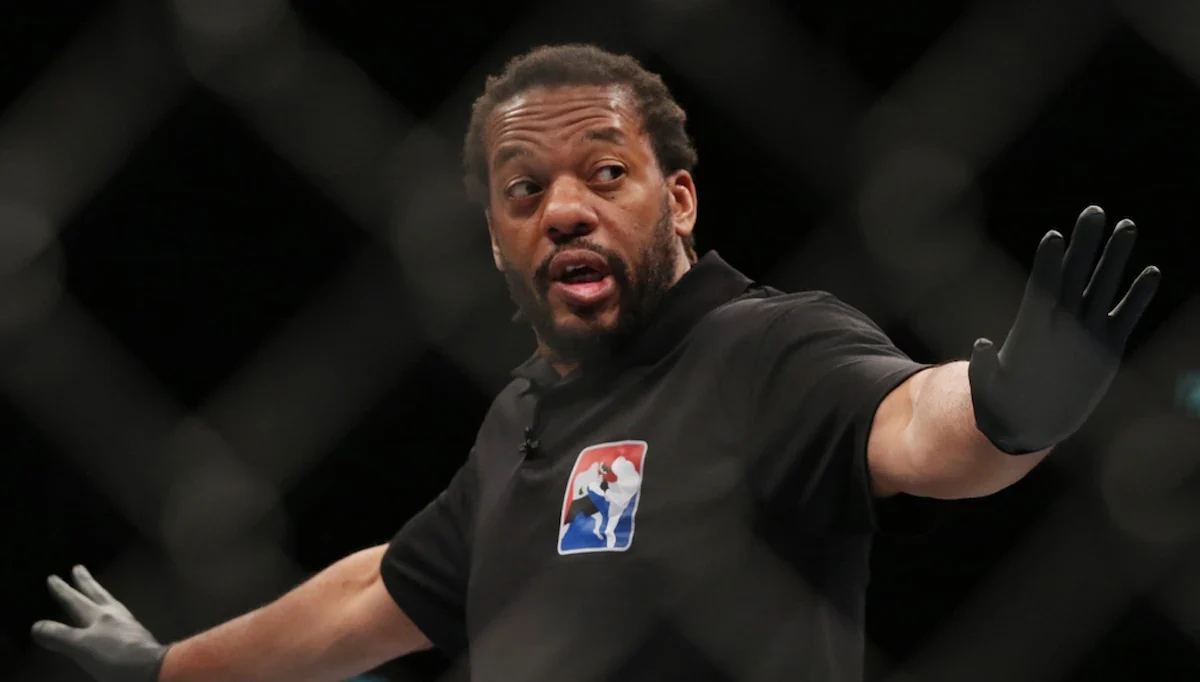
Stricter referee intervention? This is entirely subjective. We’d just shift the controversy from “stopped too late” to “stopped too early.” Remember Herb Dean letting fighters recover versus Mario Yamasaki’s early stoppages? The fanbase couldn’t agree on which approach was correct.
The Standing Eight Count Fantasy
Every few years after bad injury cards, someone suggests importing boxing’s standing eight count to MMA. This reveals a fundamental misunderstanding of how the sport works.
The standing eight-count works in boxing because you’re defending against punches from one angle while standing. In MMA, a fighter recovering from a knockdown is immediately defending takedowns, submissions, and ground strikes from multiple positions. You can’t implement a time-out in a sport where positional dominance matters.
It’s like suggesting hockey adopt basketball’s three-second rule in the paint. The sports are different. The rules reflect those differences.
The Real Fighter Safety Problem Everyone Ignores: Weight Cutting
You want to know what actually endangers fighters more than anything else? Weight cutting. Bar none.
Fighters dehydrate themselves to dangerous levels — sometimes dropping 20-25 pounds in a week — then rehydrate and fight 24 hours later with compromised brain function and reduced chin durability. The science on this is clear. Dehydration affects neurological function. Rapid rehydration doesn’t fully restore it. Fighters are entering the cage with reduced ability to absorb impacts.
I’ve said this before, and I’ll keep saying it: more fighters get seriously hurt because they cut massive weight than because referees let fights go an extra 30 seconds. But weight cutting is so embedded in combat sports culture that suggesting its elimination gets you labeled unrealistic.
As we detailed when covering the Isaac Johnson tragedy and UFC Qatar hospitalizations, the great divide between major promotions and regional circuits isn’t just about medical staff — it’s about fighters cutting dangerous amounts of weight without proper monitoring, then competing under substandard safety conditions. Johnson’s death underscores how these economic realities produce fatal consequences.
The UFC could implement same-day weigh-ins tomorrow. They could require hydration testing. They could restructure weight classes to reduce incentives to cut. But they won’t, because it would create competitive advantages for fighters who adapt faster, mess with their carefully constructed divisional hierarchies, and face resistance from fighters who’ve built careers around size advantages.
That’s the thing — the UFC talks about fighter safety when convenient, but won’t address the most dangerous practice in the sport because it’s too disruptive to the business model.
What Actually Happens Next: Cosmetic Changes That Change Nothing
Here’s my prediction, and I’m pretty confident about this one: The UFC announces a new “fighter safety initiative” within two weeks. Enhanced medical screening. Additional ringside physicians. Maybe some neurological testing protocol. Dana White does a press conference emphasizing how fighter safety has always been their top priority. Commentators mention the new protocols during broadcasts for three months. And absolutely nothing about actual fight outcomes changes.
Why? Because the current unified rules represent decades of evolution, finding the balance between safety and sport. These rules weren’t created arbitrarily — they incorporated lessons from Vale Tudo brutality, from early UFC cage fighting with minimal rules, from athletic commission oversight, from international regulations, from countless iterations across organizations.
The rules we have now exist because every alternative was tried and found wanting. Too permissive? The fighters got destroyed. Too restrictive? The sport became non-competitive. The current system, while imperfect, actually works.
Where I Could Be Wrong About This
Look, there’s a scenario where I’m completely off base. Isaac Johnson’s death has already changed the conversation. When a 30-year-old fighter dies at an Eagle FC event, and three more fighters are hospitalized at UFC Qatar in the same weekend, everything shifts. Insurance companies could force immediate changes. State athletic commissions could mandate reforms the UFC can’t ignore. International governing bodies could create regulations that fragment the sport.
The systemic failures we documented in our Isaac Johnson coverage — inadequate medical oversight, undertrained referees, toothless commission regulations — aren’t going away with press releases. If public pressure reaches critical mass, we could see federal legislation establishing baseline safety requirements. That would fundamentally change regional MMA overnight.
But barring sustained pressure and concrete legislative action, the financial incentives favor maintaining the current rules. The sport’s popularity has exploded under these rules. Fighter pay (even with all the legitimate criticisms about the percentage) has increased. Athletic commissions across 49 states have signed off. Changing the rules requires convincing multiple stakeholders that the current system is sufficiently broken to warrant the unknown consequences of major reforms.
That’s a heavy lift, especially when the sport is more popular and profitable than ever.
The Great Divide: Major Promotions vs. Regional MMA
Here’s what UFC 323’s hospitalizations actually demonstrate: the system working as intended at the major promotion level. Three fighters received immediate medical evaluation. Precautionary CT scans. Professional medical staff. They were released after proper evaluation.
Compare that to the regulatory Wild West of regional MMA where Isaac Johnson competed. Many regional shows rely on a single ringside physician who may lack specialized training in combat sports. Some events rely on EMTs or volunteers with basic first-aid certification. Multiple regional promotions have been caught operating without proper medical staff, depending on local emergency services that may be minutes away rather than seconds.
When a fighter suffers traumatic brain injury, those minutes determine whether they recover or become another statistic.
Eagle FC, founded by Khabib Nurmagomedov, generally maintains professional standards. But the circumstances surrounding Johnson’s fight will be subjected to intense scrutiny to determine whether additional safety measures might have prevented this tragedy. The question isn’t whether Eagle FC failed specifically — it’s whether the entire regional circuit operates under fundamentally inadequate safety protocols.
The Uncomfortable Truth About Combat Sports
In two weeks, another UFC card will happen. Fighters compete. Some get hurt — that’s the nature of fighting. If nobody gets hospitalized, this controversy disappears until the next bad injury night. If someone else gets seriously hurt, we have this exact same conversation with different names.
Combat sports have always existed in this moral gray area. We’re entertained by people hurting each other. Then we feel guilty when the damage becomes visible. Then we rationalize it by saying they’re consenting adults getting paid. Then someone gets really hurt, and the cycle starts again.
But Isaac Johnson’s death broke that cycle. At least temporarily. His tragedy forced the MMA community to confront uncomfortable truths about the systemic failures plaguing regional MMA — failures that have been festering for decades while everyone looked the other way.
I’m not saying we shouldn’t examine fighter safety. We absolutely should scrutinize every aspect of how the sport operates. But let’s be honest about what we’re actually willing to sacrifice.
Are fans ready to accept more early stoppages and fewer dramatic comebacks? Are you prepared to see referees wave off fights the second a fighter gets wobbled, eliminating those legendary recoveries we celebrate? Because you can’t have both maximum safety and maximum drama.
Are fighters willing to give up weight-cutting advantages? If same-day weigh-ins become mandatory, some fighters lose the size advantage they’ve relied on for their entire careers. They’ll resist that change regardless of safety benefits.
Are promoters prepared to restructure entire weight classes and accept the competitive chaos that follows? To deal with fighters who can no longer make certain weights? To rebuild divisional hierarchies from scratch?
Until we’re ready to address those systemic issues — weight cutting, financial incentives for fighting hurt, inadequate fighter healthcare outside fight night — rather than react emotionally to individual incidents, these hospital visits will keep happening.
The Path Forward: Learning From Tragedy
The reforms we outlined in our Isaac Johnson coverage aren’t optional anymore. They’re necessary:
Uniform Medical Standards: Every MMA event, regardless of size or location, must require qualified ringside physicians with combat sports training and immediate access to neurological assessment tools. If UFC can transport three fighters for precautionary CT scans in Qatar, regional promotions should provide comparable care domestically.
Referee Certification Standardization: A national registry of qualified officials with mandatory continuing education would ensure consistent standards across all jurisdictions. No fighter should face an undertrained referee because they’re competing on a regional card.
Commission Reform: States without dedicated combat sports oversight should meet minimum regulatory standards or forfeit the right to sanction MMA events. Federal legislation establishing baseline safety requirements could eliminate the race-to-the-bottom regulatory environment.
Insurance-Driven Compliance: Mandatory insurance policies with premiums tied to safety compliance would create financial incentives for comprehensive protective measures.
Technology Integration: Portable CT scanners and rapid neurological assessment tools are becoming increasingly affordable. These technologies could bridge the gap between major promotion resources and regional event capabilities.
The Cycle Can Be Broken
Maybe we’ve already found the best compromise between safety and sport that’s realistically achievable. It’s not perfect. It never will be. People will still get hurt. Occasionally, people will get hurt badly enough to be hospitalized.
But Isaac Johnson’s death proved the current system isn’t good enough. Not for regional fighters. Not for developmental prospects. Not for anyone who steps into the cage trusting that basic safety protocols are in place.
The UFC 323 hospitalizations — while concerning — actually show what proper safety protocols look like: immediate evaluation. Precautionary imaging. Professional medical staff. The system worked. Every fighter deserves that system, regardless of where they compete or how much they’re getting paid.
That’s the thing about combat sports reform: every generation thinks they can make it perfectly safe. Every generation learns that you can only make it safer. There’s a difference.
And yeah, maybe I’m being too cynical. Maybe this time is different. Maybe Isaac Johnson’s death, combined with three UFC 323 hospitalizations, creates the momentum for real change. But I’ve been covering this sport long enough to know that institutional change requires more than social media outrage. It requires pressure from insurance companies, athletic commissions, and fighters themselves.
Until that pressure materializes and produces concrete reforms, expect press releases, minor protocol adjustments, and the same sport we’ve been watching for years.
For better or worse, that’s where we are. The question is whether we’re finally ready to do something about it.