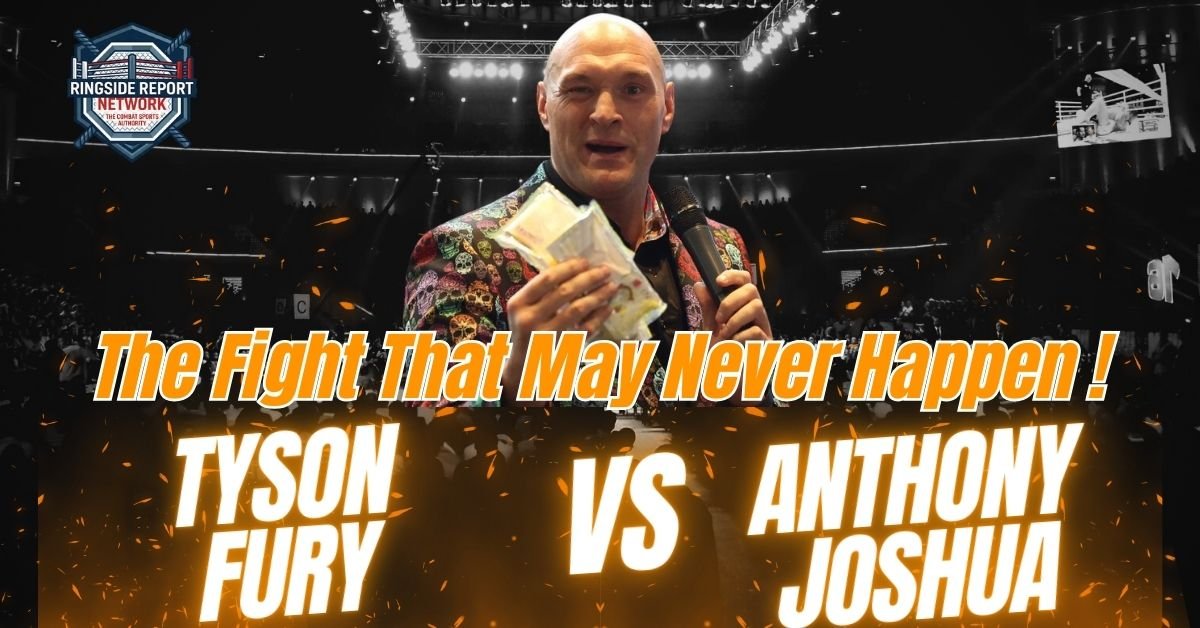

Tyson Fury is fighting Arslanbek Makhmudov on April 11th. Netflix is streaming it. The UK gets another heavyweight spectacle. And absolutely nobody is talking about the Fury vs Joshua fight everyone actually wants to see.
That’s the thing—we’ve been waiting for Fury vs Joshua since 2017. We’ve watched negotiations collapse more times than I can count. We’ve seen step-aside deals, promotional warfare, and enough Twitter beef to fill Wembley Stadium twice. And here we are in 2026, with Fury at 37 years old, coming off back-to-back losses to Oleksandr Usyk, and the biggest fight in British boxing history still feels like a mirage.
Why Fury vs Joshua Keeps Slipping Away
So instead of the superfight, we’re getting Fury versus a relatively unknown heavyweight in Makhmudov. And Fabio Wardley—the British heavyweight who just stopped Joseph Parker in October—might be another option for a domestic dust-up. Smart tune-up fight? Or is Fury playing with fire after getting schooled twice by Usyk?
Here’s the reality: This situation is more complicated than anyone wants to admit.
Let’s be honest about what’s happening with Anthony Joshua. His future in boxing has question marks all over it, and that’s not just promotional spin. When a fighter’s next move becomes this unclear, it’s usually because something fundamental has shifted—either in their head, their team, or their bank account.
Fury can’t wait forever. He’s 37. He just lost twice to the same guy. He announced retirement after his second Usyk defeat in late 2024, only to reverse course for this Netflix comeback. The “Gypsy King” aura that made him boxing’s most entertaining heavyweight? Damaged. The lineal championship mystique? Gone.
What do you expect when you lose back-to-back fights and then briefly step away from the sport? The leverage disappears. Suddenly, Joshua doesn’t need the fight as badly as Fury does. And if Joshua’s having doubts about his own future—whether that’s motivation, physical wear, or just being tired of the circus—then Fury’s sitting there waiting for a phone call that might never come.
Wardley: More Than a Tune-Up Problem
This is where the Wardley conversation gets dangerous for Fury.
Fabio Wardley isn’t some domestic-level opponent you can sleepwalk through. He’s 20-0-1 with 19 knockouts—a legitimate puncher with momentum. His TKO victory over Joseph Parker on October 25th, 2025, earned him a WBO-linked heavyweight title and announced him as a serious threat in the division. This isn’t the soft touch some people assume.
Think about the pattern. When a top heavyweight needs to shake off ring rust, rebuild confidence, or stay active while waiting for a mega-fight, they typically take a domestic opponent who brings a title, a crowd, and minimal risk. Wardley fits the profile on paper—but his knockout power and recent form make him genuinely dangerous.
My prediction: If Fury fights Wardley instead of sticking with Makhmudov, he wins inside eight rounds. Wardley brings pressure and carries real power, but Fury’s size, experience, and ring IQ—even diminished Fury—should be enough. The real question isn’t whether Fury wins. It’s whether this fight does anything for his legacy or just makes him look desperate.
Because that’s the gamble here. Fury could look brilliant against a domestic champion, and everyone shrugs. Or he could struggle, and suddenly the narrative becomes: “He can’t even handle the British champion cleanly. What happens when he faces a real contender again?”
The Historical Pattern That Should Terrify Fury
Here’s where it gets uncomfortable. History isn’t kind to aging heavyweights who lose their marquee fights and then try to rebuild against lesser opposition.
Look at the pattern: Champions lose their edge. They take “safe” fights to prove they’ve still got it. Sometimes it works—they steamroll the opponent and buy themselves another big payday. But more often? They look slow. They look hittable. And the vultures start circling.
Fury’s already 37. He’s already lost twice to Usyk. He’s already done the retirement dance. Taking a fight against Wardley—or even Makhmudov—isn’t rebuilding. It’s treading water while hoping Joshua changes his mind.
And what if Joshua never does? What if we’re sitting here in 2027, and Fury’s fought two or three domestic-level guys, and the Fury vs Joshua superfight just… never happens? That’s the nightmare scenario for everyone involved.
Come on. We’ve seen this movie before. It rarely has a happy ending.
What the Failed Fury vs Joshua Saga Means for British Boxing
The Fury vs Joshua fight was supposed to be the coronation. Two British heavyweight champions, both with legitimate world-level credentials, fighting for everything in front of 90,000 people at Wembley. It was supposed to be the kind of event that transcends boxing and becomes a cultural moment—the kind of fight that brings casual fans back to the sport.
Instead, we’re talking about Fury fighting Makhmudov on Netflix and maybe Wardley after that. It’s not terrible. It’s just… smaller. And that’s the tragedy here.
British boxing deserves better than this. Fury deserves better than this. Hell, even Joshua deserves better than watching from the sidelines while Fury takes tune-up fights and everyone pretends the mega-fight is still possible.
Here’s my take: The window is closing. Not just for Fury vs Joshua, but for Fury as a relevant heavyweight force. He’s got maybe one more year where people care about his comeback story. After that? He’s just another aging former champion fighting on streaming platforms.
The Uncomfortable Truth Nobody Wants to Hear
I could be completely wrong about this. Maybe Joshua wakes up tomorrow and decides he wants the Fury fight. Maybe they announce Fury vs Joshua for September, and we get the spectacle we’ve been waiting for since 2017. Maybe Fury looks incredible against Makhmudov or Wardley and reminds everyone why he was the lineal champion.
But I don’t think that’s happening. I think we’re watching the slow fade of a potential superfight, replaced by a series of increasingly irrelevant tune-ups that satisfy nobody.
Fury’s fighting Makhmudov on April 11th because Joshua isn’t available. If Wardley becomes the backup plan, it’s because Joshua still isn’t available. And if we’re having this same conversation in 2027, it’s because Joshua was never going to be available.
That’s the reality. Fury can take all the domestic fights he wants. He can stay active, stay relevant, keep the Netflix checks coming. But without Joshua, without a real marquee opponent, he’s just killing time until everyone stops caring.
And in heavyweight boxing? That happens faster than you think.