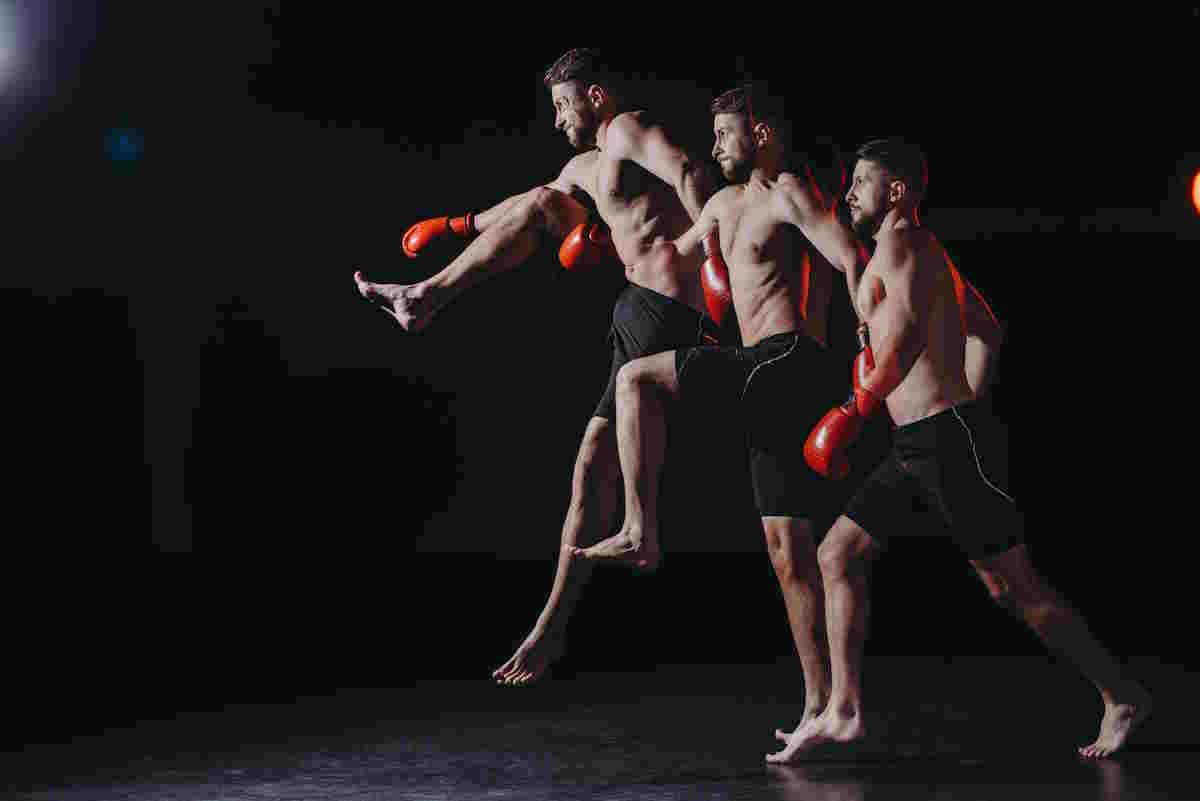

In This Boxing Footwork Guide
Boxing footwork is the single most overlooked skill among beginners, yet it is the foundation on which every other technique — punching, defense, ring control — is built. A fighter with average hands but great footwork will beat a fighter with great hands and no footwork almost every time. Distance management, angle creation, and the ability to control where a fight takes place all flow from how a boxer moves their feet. This guide breaks down the mechanics from the basic step-drag through advanced ring-cutting, with specific drills and fighter examples at every level.
Why Boxing Footwork Matters More Than Punching Power
Most fighters who step into a boxing gym for the first time fixate on punching power — the knockout, the highlight reel, the crowd roar. That fixation is understandable, but it misses the deeper truth that separates good boxers from great ones.
Boxing footwork is the actual engine of the sport. Muhammad Ali’s genius wasn’t his hands — it was his ability to hover just outside punching range, then explode forward before opponents could react. Power itself is generated from the ground up; without proper foot positioning, even the hardest puncher bleeds force before the fist lands.
Boxing movement controls distance, and distance controls everything. A fighter with average hands and elite footwork will consistently outperform a heavy-handed opponent who can’t manage space. If you’re still building the foundational stance and punch mechanics that footwork supports, our boxing basics guide covers those fundamentals in detail.
The Step-Drag: Boxing’s Fundamental Movement Pattern
At the foundation of every boxing movement pattern sits one deceptively simple mechanic: the step-drag. The execution is straightforward — step with the foot closest to the direction of travel, then slide the trailing foot to restore stance width. Moving forward, backward, or laterally, the pattern never changes. This consistency is the entire point.

Proper boxing foot positioning requires fighters to stay on the balls of their feet throughout, maintaining stance width at all times. Crossing the feet or bringing them together — even briefly — kills balance and opens the fighter to counters. It is a mistake coaches correct endlessly in boxing footwork drills because the instinct to cross-step feels natural until someone capitalizes on it.
Among beginners, this single mechanic separates composed movers from fighters who simply chase their opponents around the ring. The step-drag doesn’t look impressive, and that’s partly why beginners skip it — but Floyd Mayweather Jr. used this exact pattern to maintain defensive distance across a 50-0 career. Every retreat, every angle, every pull-counter he threw started with a step-drag that put him in exactly the right position.
Pivoting and Angling: Intermediate Footwork
Where the step-drag keeps a fighter safe, the pivot makes them dangerous. Plant the lead foot, rotate on the ball, and suddenly the entire angle of engagement shifts. Opponents’ punches miss. New attacking lanes open. It sounds simple — it is not. This is the move that separates fighters who understand boxing footwork for beginners from those who have genuinely learned to improve it at an intermediate level.
Nobody has weaponized the pivot more completely than Vasyl Lomachenko. He doesn’t just evade; he repositions into scoring positions simultaneously, throwing combinations from angles that opponents never trained to defend. The pivot also serves a second, defensive purpose: rotating off the ropes when cornered, denying opponents the wall they were counting on. Same mechanics, entirely different intent. Recognizing that distinction is what intermediate footwork actually means.
Pernell Whitaker was another master of angular footwork, using subtle half-pivots to make opponents miss by inches while staying in perfect counter-punching range. His defensive movement looked almost lazy until you realized he was never where the punch arrived — and always where he needed to be to fire back.

Cutting the Ring: Controlling Space Against a Moving Opponent
Chasing a moving opponent across the ring is a trap — and pressure fighters who fall into it burn energy, lose positioning, and look frustrated doing it. The smarter play is interception. Move laterally to cut off the escape route rather than chasing in a straight line. Ring cutting is about angles and anticipation, not raw speed.
Gennady Golovkin is the textbook example. He doesn’t chase — he moves to where his opponent is going, shrinking the available canvas until nowhere is safe. That discipline separates elite pressure fighters from wild ones. Golovkin’s ability to close the ring without sprinting or lunging allowed him to maintain devastating output through 12 rounds without gassing out.
The key principle is lateral interception: if your opponent is circling to their left, you step to your right to cut off the escape route, forcing them into a smaller and smaller working area. When the ring shrinks, your combinations become harder to avoid and your opponent’s footwork options narrow to backing straight up — exactly where a pressure fighter wants them.
Boxing Footwork Drills You Can Practice Anywhere
Understanding ring-cutting principles is one thing — building the footwork to execute them is another matter entirely. The good news is that boxing footwork requires no gym membership to develop.
Agility ladder drills sharpen coordination and foot speed simultaneously. Cone drills train directional changes, teaching the body to shift angles without losing balance. Shadowboxing sessions focused purely on movement — not punches — reinforce stance integrity while mobile. The box step pattern, moving in a square while maintaining proper stance alignment, builds spatial awareness that translates directly to ring movement.
Line drills, stepping forward and backward along a straight path, develop rhythmic balance under pressure. These aren’t filler exercises. Fighters who commit to deliberate solo footwork work — even ten minutes daily — build the mechanical foundation that separates competent movement from genuinely threatening ring control. Pair this footwork practice with your combination drilling and the two skills reinforce each other: better feet create better punching angles, and better punching requires better recovery footwork.
Common Boxing Footwork Mistakes
Five mistakes account for the majority of footwork failures seen at every level of boxing, from local gyms to world-title fights. Staying flat-footed — weight sinking into the heels rather than balanced on the balls of the feet — kills reaction time instantly. Excessive bouncing wastes energy that should be preserved for later rounds.
Wide steps shatter the stance, leaving the fighter momentarily exposed and off-balance. Dropping the hands while concentrating on foot positioning is an invitation most opponents will gleefully accept. Finally, circling toward the opponent’s power hand rather than away from it is perhaps the costliest habit of all — it feeds the fighter directly into danger.
Each error carries a specific tactical price. A flat-footed fighter can’t slip punches. An over-bouncer telegraphs their rhythm. A wide-stepper gets caught mid-transition. Recognizing these patterns in your own movement — and being honest about which ones you carry — is the first step toward fixing them.
How Boxing Footwork Translates to MMA and Self Defense
Most of what makes boxing footwork effective transfers cleanly into other combat contexts — and that transferability is exactly what makes it worth studying beyond the sweet science itself. Distance management, angling, and ring-cutting are universal principles that apply whether someone is throwing hands in a gym or navigating a real street confrontation.
In MMA, however, the calculus shifts. A heavily bladed boxing stance invites leg kicks and becomes a liability when takedown threats enter the picture. Fighters who understand striking in MMA learn to square up slightly and drop their center of gravity accordingly. The sprawl-and-brawl approach used by many MMA strikers is essentially boxing footwork adapted for the wrestling threat — maintaining distance to keep the fight standing while using the same angles and exits that work in the boxing ring.
For self defense, boxing footwork’s core value is straightforward: it teaches people to control space, avoid being cornered, and dictate the terms of an uncomfortable encounter. A few months of dedicated footwork training gives you the ability to maintain distance from a threat, angle away from aggression, and position yourself near exits — skills that matter far more in a real confrontation than any punch you could throw. Fighters looking to develop the broadest possible skill set can explore how combat sports cross-training layers boxing movement with grappling and kicking disciplines.
Frequently Asked Questions
How can I improve my boxing footwork at home?
Shadowboxing focused on movement rather than punching is the most effective home drill. Add agility ladder work for foot speed, cone drills for directional changes, and the box step pattern (moving in a square while maintaining your stance) for spatial awareness. Even ten minutes of dedicated footwork practice daily produces measurable improvement within a few weeks. The key is staying on the balls of your feet and maintaining stance width throughout every drill.
What is the most important footwork skill in boxing?
The step-drag is the most important footwork skill because every other movement pattern builds on it. Maintaining proper stance width while moving in any direction keeps you balanced, protects your defensive position, and ensures you can generate power from your punches at any point during movement. Pivots and angles are more advanced, but they are useless without a reliable step-drag foundation underneath them.
How long does it take to develop good boxing footwork?
With consistent training at two to three sessions per week, most beginners develop functional footwork within three to six months. The step-drag and basic lateral movement become comfortable within the first month. Pivoting and angling take three to four months of regular sparring to apply under pressure. Cutting the ring effectively is an advanced skill that typically takes a year or more to develop instinctively. The timeline shortens significantly with dedicated solo footwork drilling outside of regular training sessions.
Should I stay on my toes when boxing?
Stay on the balls of your feet, not your toes. There is an important distinction: being on your toes creates instability and limits your ability to generate power from your legs. Being on the balls of your feet — the padded area just behind your toes — keeps you light enough to move quickly while grounded enough to throw powerful punches and absorb impacts without losing balance. Think of it as staying ready to move in any direction at any moment.
What boxing footwork drills do professionals use?
Professional boxers rely on the same fundamental drills as beginners, just at higher speed and with greater precision. Shadow boxing with movement emphasis, agility ladder patterns, cone drills, and mirror work are universal across all levels. What separates professional footwork drilling is the addition of partner-based exercises: having a training partner pressure you while you work lateral movement and pivots, and sparring rounds focused entirely on positioning rather than scoring. Pros also study film of elite movers like Lomachenko and Mayweather to internalize timing and rhythm patterns.