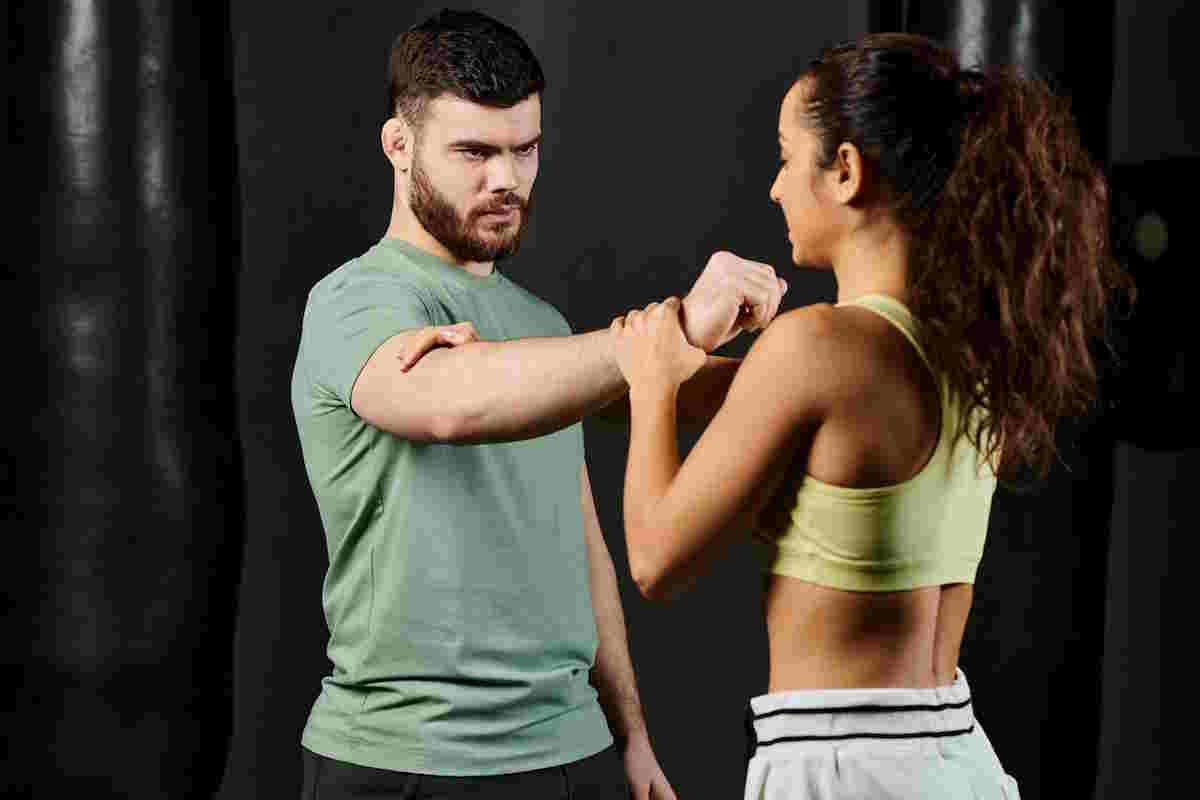

What is the best form of martial arts for self defense? The answer depends on one critical factor: what kind of threat you’re most likely to face. A striking art won’t save you once a fight hits the ground, and a grappling art alone won’t help you avoid a haymaker in a parking lot. The five disciplines in this guide, Brazilian Jiu-Jitsu, Muay Thai, Krav Maga, Judo, and Karate, each solve a different piece of the self defense puzzle. Understanding their strengths is the first step toward building real-world protection skills.
In This Guide to the Best Form of Martial Arts for Self Defense
Why Choosing the Right Martial Art Matters
Self-defense situations are chaotic, unpredictable, and nothing like a controlled sparring session. Research into real-world altercations consistently shows that most street fights involve a combination of wild striking at close range and eventual grappling on the ground. That means the best martial art for self-defense needs to prepare you for both phases of a confrontation, or at least make you dominant in one of them.
The martial arts world broadly divides into two families: striking disciplines (punches, kicks, elbows, knees) and grappling disciplines (takedowns, throws, submissions, and positional control). Some systems, like Krav Maga, attempt to bridge both worlds. The best choice for you depends on your body type, your fitness level, and whether your primary concern is escaping a dangerous situation quickly or controlling an aggressor until help arrives.
What follows is an honest breakdown of the five most effective martial arts for self-defense, drawn from what actually works in MMA competition, law enforcement training, and documented self-defense scenarios.
Head-to-Head: Comparing the Five Arts for Self-Defense
Before the full breakdown, here is how the five arts stack up directly against each other on the factors that matter most in a real confrontation.
| Martial Art | Best For | Learning Curve | Training Injury Risk | Multiple Attackers / Weapons |
|---|---|---|---|---|
| Brazilian Jiu-Jitsu | Ground control, submissions | Moderate; functional in 6-12 months | Low (controlled rolling) | Weak; not designed for it |
| Muay Thai | Stand-up striking, clinch range | Moderate to high; serious conditioning demands | Moderate (full-contact sparring) | Weak; one-on-one focused |
| Krav Maga | Scenario-based threats, weapons, multiple attackers | Fast; techniques are deliberately simple | Low; limited full-speed sparring | Strong; built specifically for this |
| Judo | Throws, close-range grabs | Moderate; efficient for smaller defenders | Low (controlled randori) | Weak; one-on-one focused |
| Karate (full-contact) | Distance striking, first-strike defense | Varies widely by school | Varies; depends on contact level | Weak; one-on-one focused |
Brazilian Jiu-Jitsu: Ground Control and Submissions
Brazilian Jiu-Jitsu (BJJ) is widely considered the single most effective martial art for one-on-one self-defense, and MMA competition has spent three decades proving why. When Royce Gracie dominated opponents twice his size at UFC 1 in 1993 using little more than positional control and chokeholds, it demonstrated a principle that remains true today: technique and leverage can neutralize raw strength.
BJJ specializes in what happens after a fight goes to the ground, and studies suggest the majority of real-world altercations end up there. The discipline teaches you to control an aggressor from dominant positions like mount and back control, then apply joint locks or chokes to end the confrontation. Techniques like the rear naked choke, the most common finishing submission in UFC history, allow a defender to incapacitate a threat without throwing a single punch. Our breakdown of the most popular submissions in MMA shows just how consistently these techniques end fights at the highest level of competition.
The practical self-defense value of BJJ extends beyond competition. Law enforcement agencies that have adopted BJJ training report measurable reductions in officer injuries and use-of-force incidents, and healthcare workers are increasingly training BJJ to manage violent patients safely. The BJJ belt progression system is rigorous, expect three to five years to reach purple belt, but even six months of consistent training gives you a meaningful advantage over an untrained attacker. For those curious about the no-gi side of the art, the 10th Planet system offers a competition-focused alternative with its own ranking structure.
Muay Thai: Devastating Striking for Real-World Defense
If BJJ is the king of ground fighting, Muay Thai is the gold standard for stand-up self-defense. Known as “The Art of Eight Limbs,” Muay Thai trains practitioners to strike with fists, elbows, knees, and shins, giving you eight weapons instead of the two that boxing provides. In the tight quarters where most real-world confrontations happen, that versatility is a massive advantage.
What separates Muay Thai from other striking arts is its emphasis on clinch work, the standing grappling range where you can control an aggressor’s posture, land devastating knee strikes, and prevent them from closing distance on their terms. The Thai clinch is one of the most practical self-defense tools in any martial art because it directly addresses the grabbing, shoving, and close-range chaos that defines real street encounters.
Muay Thai’s conditioning demands also build the kind of functional toughness that matters in a self-defense scenario. Practitioners spar regularly against resisting opponents, which develops the composure and timing that kata-based training alone cannot replicate. Innovators like Aliff Sor Dechapan are pushing Muay Thai’s defensive capabilities forward by borrowing head-movement techniques from boxing, making the art even more well-rounded. If your primary self-defense concern is ending a threat before it reaches the ground, Muay Thai is hard to beat.
Krav Maga: Military-Grade Self-Defense for Civilians
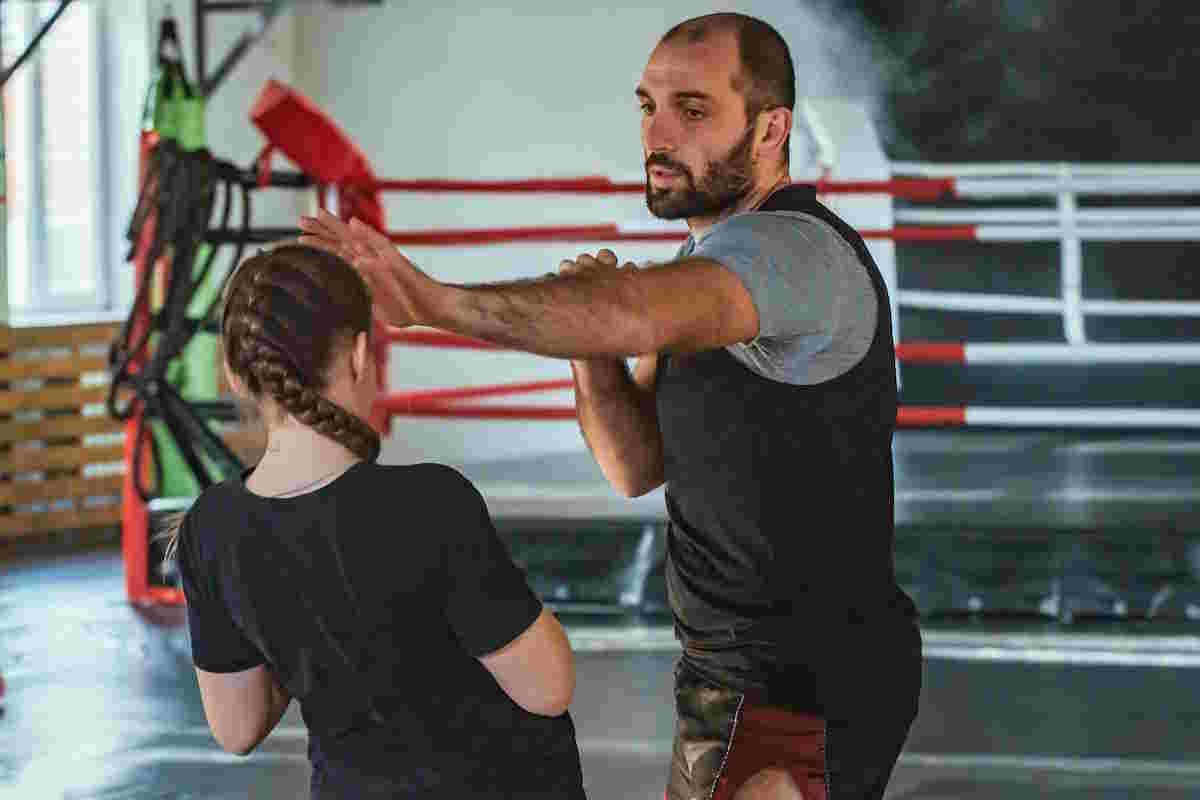
Krav Maga occupies a unique position on this list because it was never designed as a sport or competitive martial art. Developed for the Israel Defense Forces, Krav Maga’s entire philosophy is built around one objective: neutralize real-world threats as quickly and brutally as possible, then escape. There are no weight classes, no rules, no referees, and no points: just survival.
Where sport-based martial arts train you to win within a ruleset, Krav Maga trains you to handle the scenarios that fall outside those rules: defending against knife attacks, escaping chokes from behind, dealing with multiple attackers, and fighting in confined spaces like stairwells and elevators. The techniques are deliberately simple, relying on gross motor movements (palm strikes, groin kicks, eye gouges) that work under the adrenaline dump of a genuine threat, when fine motor skills deteriorate.
The trade-off is that Krav Maga lacks the pressure testing that defines BJJ, Muay Thai, and Judo. Because the techniques are designed to cause serious injury, full-contact sparring against a resisting opponent is limited. This means a Krav Maga practitioner may drill a knife defense hundreds of times but never truly test it against someone fighting back at full speed. For pure self-defense awareness and scenario-based preparation, Krav Maga is excellent. For developing combat-tested reflexes, it should ideally be supplemented with a sparring-heavy art.
Judo: Using an Attacker’s Force Against Them
Judo is arguably the most underrated self-defense martial art. The ability to take an aggressive person who has grabbed you and slam them onto concrete is, in practical terms, one of the most decisive fight-ending skills you can possess. A single clean throw on a hard surface ends most real-world encounters immediately.
Founded by Jigoro Kano in 1882, Judo’s core principle, “maximum efficiency, minimum effort,” makes it particularly effective for smaller defenders. The art teaches you to use an attacker’s momentum and aggression against them through hip throws, foot sweeps, and sacrifice techniques. Georgian judoka transitioning to MMA have demonstrated how devastating judo’s grip fighting and explosive throws are against even elite-level fighters. Beyond throws, Judo includes ground control techniques, pins, armlocks, and chokeholds that complement its standing game.
The judo belt ranking system provides a clear progression path, and the art’s Olympic status means quality instruction is available worldwide. For anyone weighing the grappling arts against each other, our Jiu-Jitsu vs. Judo comparison breaks down the key differences and how to choose between them.
Karate: Traditional Striking With Modern Applications
Karate’s reputation as a self-defense art has been complicated by decades of commercialization, but the right style of Karate remains genuinely effective. The keyword is “style”: there is an enormous difference between a tournament-focused Shotokan school and a full-contact Kyokushin dojo where students regularly spar under pressure.
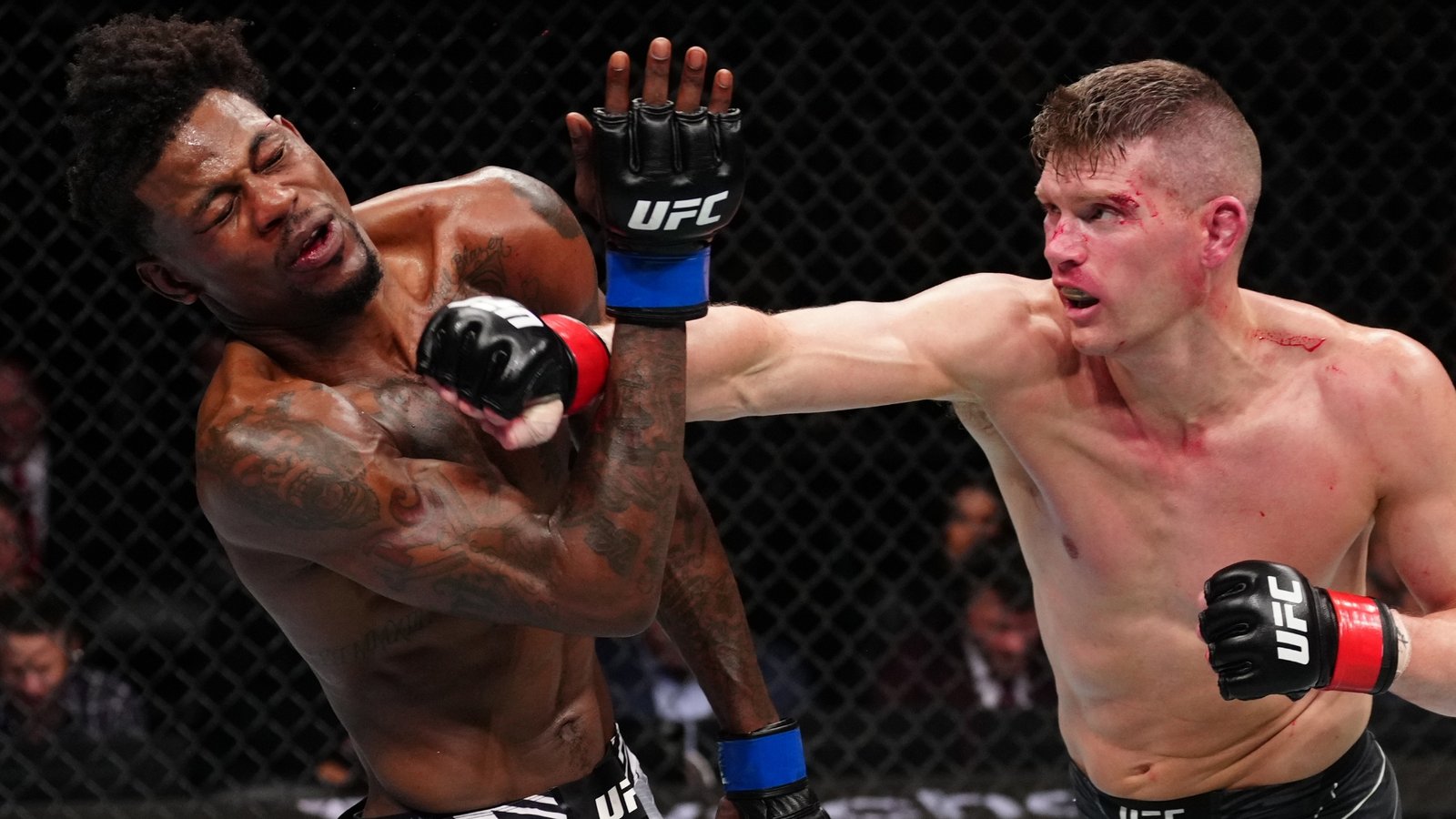
At its best, Karate teaches explosive striking from distance, including powerful straight punches, front kicks, and the kind of blitzing combinations that have made karate-based fighters like Lyoto Machida and Stephen “Wonderboy” Thompson so dangerous in MMA. Karate’s emphasis on maintaining distance and firing from angles gives practitioners an advantage in the opening seconds of a confrontation, the phase where most self-defense encounters are decided.
The karate belt order system provides structured progression, and the discipline’s focus on kata (pre-arranged forms) develops muscle memory for defensive reactions. The caveat in self-defense is that many traditional karate schools prioritize point sparring over full-contact training, which can create a false sense of preparedness. If self-defense is your goal, seek out a school that emphasizes heavy bag work, full-contact kumite, and realistic scenario drilling. Karate’s massive global infrastructure means quality schools exist in nearly every city: you just need to choose carefully.
Which Is the Best Form of Martial Arts for Self Defense for You?
There is no single best form of martial arts for self defense: there is only the best art for your situation. If you are smaller than most potential aggressors and want the ability to control someone without striking, BJJ is your best bet. If you want to end a confrontation on your feet before it ever reaches the ground, Muay Thai delivers the most proven striking toolkit. If scenario-based awareness against weapons and multiple attackers is your priority, Krav Maga fills a gap that sport-based arts don’t address.
Judo is the most practical art for anyone whose self-defense concerns involve being grabbed or rushed: a single throw on the pavement changes everything. And Karate, when practiced in a full-contact environment, builds the speed, distance management, and explosive power that are critical in the first seconds of a threat.
The most effective self-defense practitioners cross-train. Combining a grappling base (BJJ or Judo) with a striking system (Muay Thai or Karate) is exactly the formula that MMA has validated for decades. Even the sprawl-and-brawl approach used by MMA fighters demonstrates how blending defensive grappling with aggressive striking creates a more complete fighter. The transition from gi-based training to no-gi is another natural progression for grapplers who want their skills to transfer more directly to real-world clothing scenarios.
How to Start Training
Visit local schools and watch a class before signing up. The quality of the instructor matters far more than the specific style of the sign outside. Look for schools where students spar regularly against resisting partners: this is the single biggest predictor of whether the techniques will actually work under pressure. Ask about the instructor’s competitive or professional background, and don’t be afraid to try multiple introductory classes across different disciplines before committing.
If you’re starting from zero, BJJ and Judo are particularly beginner-friendly because the risk of injury during controlled rolling and randori (sparring) is lower than in striking arts. Muay Thai gyms are also welcoming to newcomers, though you should expect a serious conditioning curve in your first month. For those researching the best training environments, our guide to the best BJJ gyms in North America is a solid starting point for grapplers.
Consistency beats intensity. Two sessions per week for a year will give you more reliable self-defense ability than a six-month burst followed by burnout. Set realistic expectations, trust the process, and remember that even basic competence in any of these five arts puts you miles ahead of someone with no training at all. If striking is your starting point, our boxing basics guide walks you through everything from stance to your first 90 days of training.
FAQs Regarding the Best Form of Martial Arts for Self Defense
What is the best Form of martial Arts for self defense for beginners?
Brazilian Jiu-Jitsu and Judo are generally the most beginner-friendly self-defense arts because controlled sparring (rolling and randori) carries a lower injury risk than full-contact striking. BJJ in particular allows practitioners to train at high intensity without the head trauma associated with boxing or Muay Thai, while still developing practical skills that work against larger, stronger opponents.
Is Krav Maga better than BJJ for self-defense?
They solve different problems. Krav Maga excels at scenario-based preparation: defending against weapons, escaping chokes from behind, and dealing with multiple attackers. BJJ is superior for one-on-one ground control and has been extensively pressure-tested in MMA competition. Ideally, training both gives you the broadest self-defense capability.
Can Muay Thai work in a real street fight?
Muay Thai is one of the most effective striking arts for real-world self-defense because it trains clinch work, knee strikes, and elbow strikes, the tools most useful in the close-quarters chaos of an actual confrontation. Its emphasis on full-contact sparring means practitioners have experience hitting and being hit under pressure, a critical advantage over arts that rely solely on forms or light-contact training.
How long does it take to learn self-defense from martial arts?
With consistent training (two to three sessions per week), most people develop functional self-defense ability within six months to one year in any of the disciplines listed here. You won’t be a black belt, but you’ll have reliable fundamentals that put you far ahead of an untrained attacker. BJJ blue belt (typically 1.5 to 2 years) is widely considered the point where practical grappling competence becomes reliable.
Should I cross-train in multiple martial arts for self-defense?
Yes, if your schedule allows it. The most effective self-defense skillset combines a grappling base (BJJ or Judo) with a striking system (Muay Thai or Karate). This is the same formula that MMA competition has validated for over 30 years. Start with one discipline, build a solid foundation over 6 to 12 months, then add a second art to round out your capabilities.