
Fight IQ: 10th Planet Jiu-Jitsu
10th Planet Jiu-Jitsu is Eddie Bravo’s no-gi grappling system, built from the ground up around body mechanics instead of clothing grips, and it has become one of the most influential styles in modern MMA.
This is the complete guide: what the system actually is, how it differs from traditional BJJ, the Rubber Guard and belt system that define it, the drills that build it, and the gyms where you can learn it in person.
In This Guide
What Is 10th Planet Jiu-Jitsu?
10th Planet Jiu-Jitsu is a no-gi grappling system created by Eddie Bravo, a black belt under the legendary Jean-Jacques Machado. Every technique in the curriculum is built to work without a gi, using body mechanics, overhooks, underhooks, and hip control instead of the collar and sleeve grips that define traditional Brazilian Jiu-Jitsu.
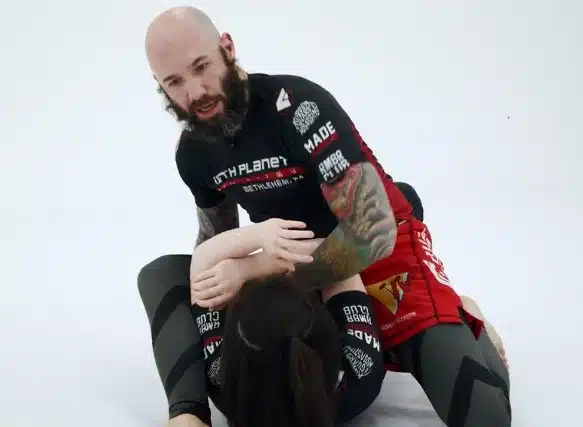
Bravo’s breakthrough moment came at the 2003 ADCC Submission Wrestling World Championship, where he, still a brown belt, submitted the legendary Royler Gracie with a triangle choke. That win validated his belief that no-gi grappling could be just as sophisticated as gi-based BJJ, and it gave him the platform to open the first 10th Planet school in Los Angeles with a radical premise: no collar chokes, no sleeve controls, no pant grabs. Just body mechanics that translate directly to MMA and real-world grappling.
What started as one school has grown into a global network of more than 100 affiliated academies across the United States, Canada, Australia, Brazil, the Netherlands, the United Kingdom, and dozens of other countries, all running the same standardized curriculum, technique names, and warm-up system. A practitioner can walk into any 10th Planet school in the world and immediately recognize the system.
10th Planet vs. Traditional BJJ
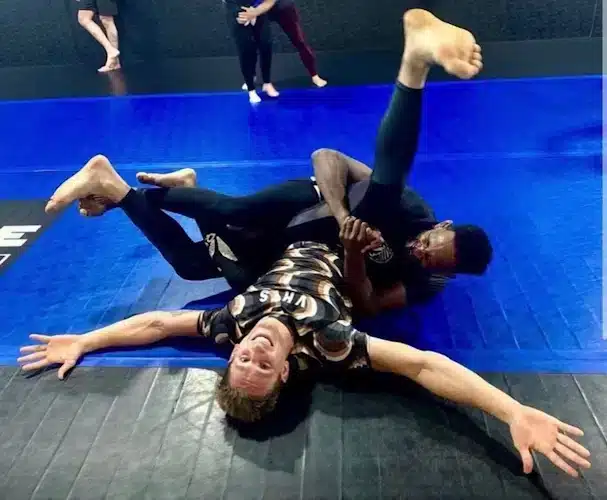
10th Planet and traditional BJJ share the same belt colors and the same fundamental goal of submission grappling, but the two systems differ significantly in training methodology, competition philosophy, technique naming, and promotion structure.
| Feature | 10th Planet | Traditional BJJ (IBJJF) |
|---|---|---|
| Training attire | No-gi only (rashguard and shorts) | Gi and/or no-gi |
| Stripes | None | Up to 4 stripes per belt |
| Degrees on black belt | None: “we just don’t do degrees” (Eddie Bravo) | Up to 9 degrees; coral and red belts at the highest levels |
| Belt worn in class | No: rank is shown by rashguard color | Yes, tied over the gi |
| Who can promote | Purple/Brown coaches to Blue only; Black belts handle everything above that, with high-level promotions coordinated through Eddie Bravo | Black belt with 2+ stripes can promote to black; lower ranks promote below their own level |
| Competition focus | Submission-only (EBI rules) | Points-based (IBJJF) or submission-only, depending on the event |
| Technique naming | Creative English names (Rubber Guard, Lockdown, Twister, Truck) | Traditional names (De La Riva, Berimbolo, Kimura) |
| Leg locks | Taught from white belt | Traditionally restricted until purple/brown belt under IBJJF rules |
| MMA applicability | Core design philosophy: every technique built for no-gi combat | Gi-specific techniques (collar chokes, sleeve grips) don’t transfer to MMA |
The Rubber Guard System
The Rubber Guard is the foundation of 10th Planet Jiu-Jitsu and the system’s signature contribution to grappling. Traditional closed guard has a structural problem: once an opponent postures up, they can stack their weight and begin passing while the guard player fights arm strength with arm strength. The Rubber Guard solves this by using a leg, not the arms, to break and hold the opponent’s posture, freeing the hands to work submissions from a position of genuine structural advantage.
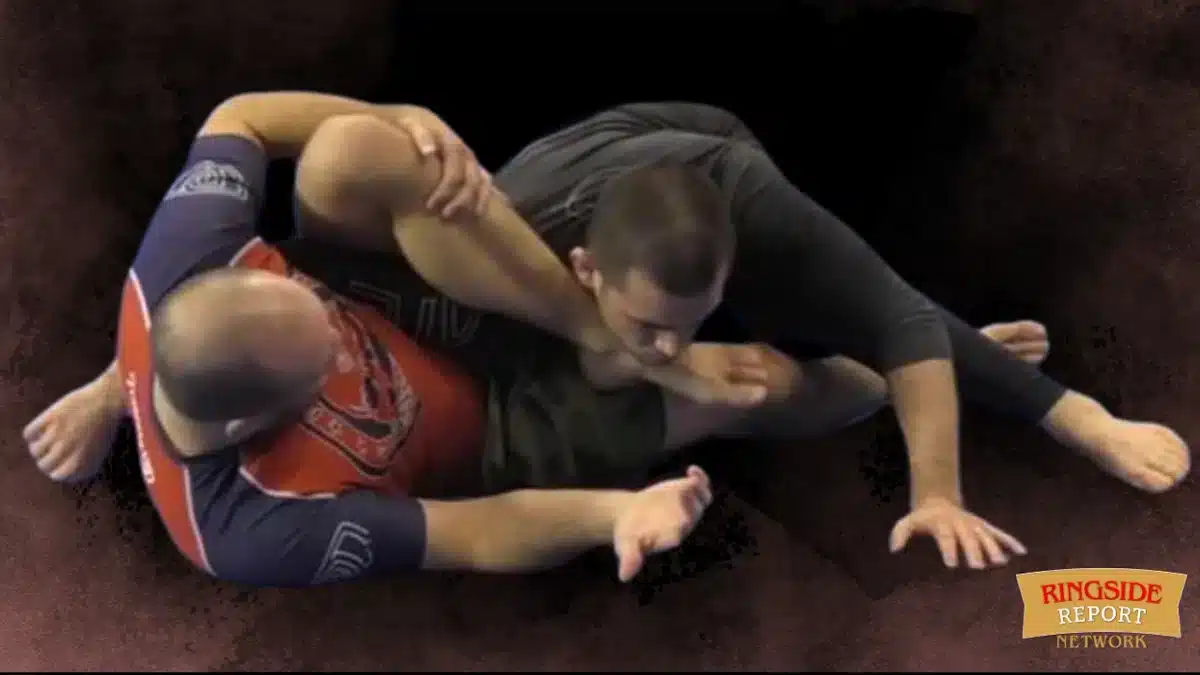
The system is built around a series of connected control checkpoints rather than one single position:
- Mission Control: the system’s home base. The practitioner clears one of the opponent’s arms and brings the same-side leg high over their back, above the shoulder blade, to clamp down their posture while the opposite hand controls the remaining wrist.
- New York: from Mission Control, the practitioner grabs their own ankle and pulls the controlling leg over the opponent’s trapped arm, deepening the posture break and setting up a direct Omoplata.
- Chill Dog: an adjustment position, not a primary control point, used when hip flexibility is insufficient to reach Mission Control cleanly. The free foot posts on the opponent’s hip to create a better entry angle.
- The Gogo Clinch: a deeper control position where the leg travels over the opponent’s head and behind their neck, setting up the Gogoplata, one of the rarest and most visually striking submissions in grappling.
Each checkpoint threatens a specific finish: the Omoplata from New York, the Triangle Choke directly from Mission Control, the Gogoplata from the Gogo Clinch, and an armbar as a secondary option from New York if the opponent defends the Omoplata by hiding the arm or rolling.
The Rubber Guard was engineered specifically for MMA, not adapted from a gi system afterward. In a cage, an opponent postured up in someone’s guard is free to land ground strikes; the Rubber Guard eliminates that sequence structurally by breaking posture with the leg rather than relying on arm strength alone. The most high-profile MMA finish from the system remains Shinya Aoki’s 2009 Gogoplata submission of Mizuto Hirota, proof that the system holds up against elite competition.
The 10th Planet Belt System
The adult ranking system in 10th Planet Jiu-Jitsu uses the same five belt colors as traditional BJJ: White, Blue, Purple, Brown, and Black. The difference is in how rank is displayed and how promotion works. Since 10th Planet trains exclusively no-gi, the physical belt is awarded ceremonially and taken home as a symbol of achievement; on the mat, rank is shown by the color of a practitioner’s rashguard.

| Belt | Approximate Total Time | What It Represents |
|---|---|---|
| White | Day one | Fundamental body mechanics, basic guard positions, positional escapes, and the core warm-up drill sequences. |
| Blue | 1 to 3 years | Working knowledge of Rubber Guard, Lockdown, and the Truck, applied during live rolling; the start of a personal competitive game. |
| Purple | 3 to 6 years total | Fluent transitions between systems based on what the opponent gives up, not just isolated positions. |
| Brown | 5 to 8 years total | Near-mastery: able to teach, troubleshoot for lower belts, and compete at a high level. Many Brown Belts run their own affiliate schools. |
| Black | 8 to 12 years total | Full mastery of the system, without the numbered degrees traditional BJJ uses above black belt. |
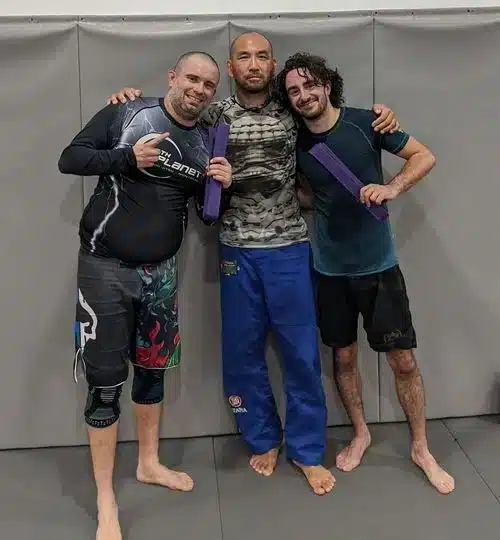
10th Planet deliberately avoids the stripe and degree systems used by IBJJF-affiliated schools: no tape marks between belts, no numbered dans on black belts, no coral or red belt ranks. Promotion is belt-to-belt, at the head coach’s discretion. Purple and Brown Belt affiliate instructors can award belts up to Blue; only Black Belts can promote to Purple, Brown, and Black, and high-level promotions are coordinated through Eddie Bravo to keep standards consistent across the global network.
For practitioners under 16, 10th Planet schools follow the standard BJJ youth belt progression: White, Grey, Yellow, Orange, and Green groups, each with three sub-levels. At age 16, youth practitioners move into the adult system, with skilled Green Belts sometimes promoted directly to adult Blue.
Essential No-Gi Drills to Build the System
Understanding the philosophy behind 10th Planet is one thing. Having it available under pressure, mid-roll, when tired, requires deliberate drilling. These seven drills cover every phase of the system, from guard offense to guard passing to defensive survival.
- The Rubber Guard Flow: a continuous drill cycling through Mission Control, Chill Dog, and New York with a cooperative partner providing light, consistent posture pressure. Builds the hip flexibility and habit of treating each position as a checkpoint rather than a destination.
- The Lockdown and Electric Chair Sweep: secure the Lockdown from half guard, fight for the underhook, then whip the opponent’s upper body down and elevate the trapped leg to finish the sweep. Teaches the half guard as an offensive position rather than a defensive one.
- The Truck Entry and Twister Setup: enter the Truck from half guard, Z-guard, or turtle, threading the legs into a triangle around both of the opponent’s legs. The entry, not the finish, is what gets drilled: it is the gateway to the Twister and a range of leg attacks and back takes.
- The M1 Guard Pass Chain: combine the M1 pass with a knee-slice pass off the same underhook and shoulder pressure, so a defended first attempt flows directly into the second rather than resetting.
- Half Butterfly Guard Sweeps: insert a butterfly hook from half guard alongside an underhook to elevate and off-balance an opponent, creating scrambles even when a clean sweep isn’t available.
- Defensive Guard Retention: recover to any guard from side control or knee-on-belly using forearm frames and hip escapes. The most important drill for beginners, since none of the offensive systems work without it.
- Standing-to-Ground Transitions: chain a takedown directly into a guard pass attempt with no pause between the two, closing the gap between wrestling and jiu-jitsu that leaves many grapplers vulnerable right after a takedown.
These seven drills cover four phases of grappling: guard offense (1, 2, 5), positional transitions and back takes (3, 7), guard passing (4), and defensive survival (6). Fifteen to twenty focused minutes before or after a rolling session, rotating through two or three drills from different phases, beats one long drilling day per week with nothing in between.
Beyond these seven, every 10th Planet school also runs a standardized warm-up system: eight lettered scenarios (A through H), each with four drill sequences, for a total of 32 combinations that function more like cooperative shadow grappling than a traditional warm-up. A practitioner can walk into any affiliate school worldwide and know exactly what “Warm-up C, Sequence 3” means.
Notable 10th Planet Practitioners
The system’s effectiveness shows up at the highest levels of MMA and submission grappling.
- Tony Ferguson: former UFC Interim Lightweight Champion and one of the most prominent 10th Planet black belts in MMA history. Ferguson used Rubber Guard and D’Arce chokes throughout his UFC career and landed a Twister submission during a training-camp showcase of the system’s applicability in the cage.
- Geo “Freakazoid” Martinez: a multiple-time Eddie Bravo Invitational champion whose creative use of the Truck and Twister in high-level competition has made him one of the most exciting grapplers in the sport.
- Grace Gundrum: the youngest 10th Planet black belt ever promoted, with an impressive competitive record that shows the system works across age groups and genders.
- Bryce Mitchell: only the second fighter in UFC history to land a Twister in competition, submitting Matt Sayles at UFC Fight Night 162 in 2019 and bringing the system’s signature finish into the global spotlight.
No discussion of the system is complete without the Eddie Bravo Invitational (EBI), the submission-only tournament that serves as both a proving ground and a showcase for 10th Planet’s philosophy. Matches are decided by submission only during regulation; if none occurs, competitors alternate starting from a dominant position in overtime rounds, and the fastest escape or submission wins. The format rewards finishing ability over positional control, which is exactly what the belt system is built to recognize.
Best 10th Planet Gyms to Train At
With more than 100 affiliated academies worldwide, quality and focus vary by location. These are among the standout schools in North America, each with a distinct flavor of the system.

- 10th Planet HQ (Los Angeles, CA) under Eddie Bravo himself. This is where the system is still being actively developed; classes are often deep dives into a single position rather than broad drilling. Best for purists who want the philosophy straight from the source.
- 10th Planet San Diego / South Bay (California) under Richie Martinez, Geo Martinez, and PJ Barch, known as “The Freaks.” Arguably the most competitive branch in the affiliation, with an aggressive leg-lock game that has produced multiple competitors at ADCC trials. Best for grapplers who want their game pressure-tested against elite opposition.
- 10th Planet Bethlehem (Pennsylvania), also known as Finishers MMA, under Zach Maslany and JM Holland. Home of the “Finishers Sub Only” tournaments and developer of talents like Grace Gundrum. Best for East Coast grapplers who want world-class instruction without having to fly to California.
- 10th Planet Austin (Texas) under Curtis Hembroff and Ben Eddy, a Rubber Guard specialist. The flagship for the pure Bravo system in Texas’s crowded grappling scene. Best for visitors who want the full Austin training experience.
- 10th Planet Montreal (Quebec) under Louis Ho, the first 10th Planet Black Belt in Canada. Known for high-level leg-lock instruction and strong ties to the local MMA scene. Best for Montreal grapplers who want no-gi specialization with an MMA focus.
- 10th Planet Las Vegas (Nevada), under Casey Halstead, who has coached numerous UFC fighters and adapts the system specifically for cage realities such as wall work and ground-and-pound defense. Best for MMA fighters and anyone who wants their grappling to translate directly to fighting.
Whether the goal is competition, MMA, or simply learning the system properly, the throughline across every one of these schools is the same: 10th Planet encourages the kind of creative, unorthodox problem-solving that traditional academies often discourage.
Frequently Asked Questions
Why is it called 10th Planet?
The name comes from the writings of author Zecharia Sitchin, who theorized about a 10th planet in our solar system inhabited by an advanced civilization called the Anunnaki. Eddie Bravo adopted the name to convey that his jiu-jitsu system was from another world entirely: a step beyond conventional martial arts.
What is the difference between 10th Planet and traditional BJJ?
10th Planet trains exclusively without a gi, does not use stripes or degrees on belts, uses creative English technique names instead of traditional Portuguese terminology, teaches leg locks from white belt, and is designed primarily for MMA and submission-only competition rather than points-based gi tournaments. Traditional BJJ under IBJJF rules typically trains with the gi, uses stripes and degrees, and restricts leg locks until higher belts.
How long does it take to get a black belt in 10th Planet?
On average, it takes 8 to 12 years of consistent, dedicated training to earn a Black Belt in the 10th Planet system, a timeline similar to traditional BJJ. It depends heavily on training frequency, competition performance, and the head coach’s assessment of a student’s overall game.
Does 10th Planet use stripes or degrees on belts?
No. Unlike traditional BJJ schools that use up to four stripes per belt and up to nine numbered degrees on black belt, 10th Planet uses neither for adults. Promotion goes directly from one belt color to the next, with high-level promotions coordinated through Eddie Bravo to keep standards consistent worldwide.
Is 10th Planet Jiu-Jitsu good for MMA and self-defense?
Yes. The system was specifically designed to work without relying on clothing grips, which makes it directly transferable to MMA and real-world self-defense, where an opponent is never wearing a gi. The Rubber Guard, in particular, was built to solve the exact problem of an opponent posturing up to strike from inside the guard.
What submissions come from the Rubber Guard?
The primary submissions are the Omoplata (from New York), the Triangle Choke (directly from Mission Control), the Gogoplata (from the Gogo Clinch), and an armbar as a secondary option from New York when an opponent defends the Omoplata by hiding the arm or rolling. The Triangle and Omoplata are the highest-percentage finishes in competitive grappling.
What is the 10th Planet warm-up system?
It is a standardized series of 32 drill sequences organized into eight lettered categories, A through H, that function more like cooperative shadow grappling than a traditional warm-up. The system is identical across all 10th Planet schools worldwide, so a practitioner can walk into any affiliate and know exactly what a given warm-up and sequence mean.
Can a 10th Planet practitioner compete in traditional BJJ tournaments?
Absolutely. The techniques and strategies may differ, but the fundamental principles of grappling are universal. Many 10th Planet practitioners compete successfully in IBJJF no-gi divisions and other traditional BJJ tournaments, which demonstrates the system’s effectiveness across competitive formats.