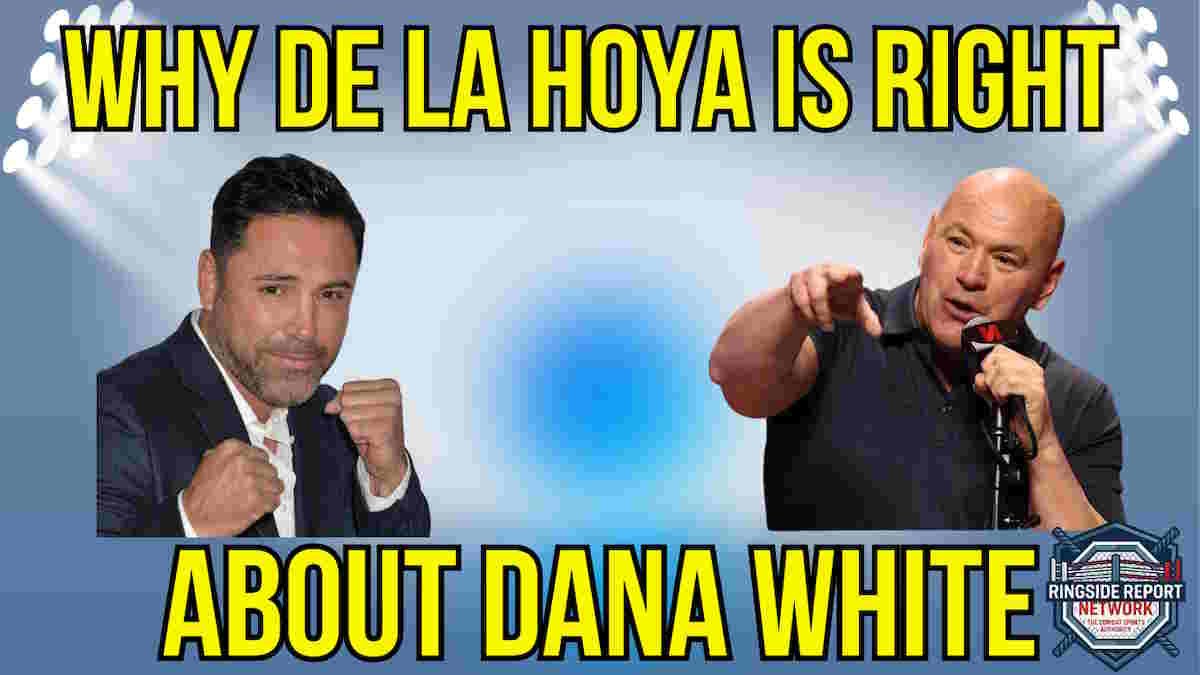

The combat sports world just witnessed something rare: a promoter speaking uncomfortable truths about corporate power grabs in boxing. Oscar De La Hoya’s public war with Dana White isn’t just promotional theater—it’s a fundamental battle over whether boxing’s future belongs to fighters who built the sport or corporations looking to extract maximum value while minimizing payouts.
Here’s what matters: This isn’t about personalities. It’s about whether boxing repeats the mistakes that turned UFC fighters into the lowest-paid athletes in major professional sports.
The Surface Story Misses the Point
Mainstream coverage frames this as sour grapes—De La Hoya is bitter that Dana White’s TKO promotional debut on September 13, 2025, became the most-viewed men’s championship boxing match of the 21st century, according to Netflix data, while his own Golden Boy Promotions struggles for relevance. They point to Canelo Álvarez’s shocking loss to Terence Crawford at Allegiant Stadium as the trigger, with De La Hoya lashing out because his former fighter lost on White’s watch.
That narrative is convenient. It’s also deliberately missing the actual conflict.
The reality is that De La Hoya isn’t ranting about one fight result. He’s calling out TKO‘s push to reform the Muhammad Ali Act—legislation specifically designed to protect boxers from the exact promotional monopoly tactics that UFC perfected. When De La Hoya talks about White’s “fake promises” and “f—ing fighters over,” he’s referencing proposed corporate reforms that critics warn could legally reduce fighter compensation under the guise of “modernizing” boxing.
The Numbers Tell a Different Story
Yes, the Crawford-Canelo fight was a viewership phenomenon. Netflix reported approximately 36.6 million average-minute audience and 41 million total viewers across the weekend—numbers that dwarf typical boxing broadcasts. But here’s what’s often overlooked: Crawford entered as the betting underdog and pulled off an upset that exposed Canelo’s vulnerabilities in a way only Floyd Mayweather and Dmitry Bivol had managed before. That’s a massive moment for Crawford’s legacy.
Yet the conversation immediately shifted to TKO’s promotional muscle rather than the fighter’s achievement. That’s the problem De La Hoya is identifying—when corporate entities with UFC-scale resources enter boxing, the fighter becomes secondary to the promotional narrative. The sport’s culture, in which fighters historically held more leverage than in other combat sports, is facing systematic erosion.
The FBI Investigation Changes Everything
What’s complicated is the timing. De La Hoya launched his most aggressive attacks on White while an FBI investigation into suspicious betting patterns and potentially fixed UFC bouts is actively ongoing. Dana White himself confirmed FBI involvement and described meetings with federal agents. De La Hoya is openly celebrating this probe as vindication: “I was right about Dana White.” Social media sentiment among hardcore fans echoes this rage, with Reddit and Twitter communities blasting White for “abandoning UFC”—literally watching UFC on his phone during his own boxing main event—while simultaneously trying to import UFC’s fighter-unfriendly business model into boxing.
The investigation centers on specific suspect bouts and broader concerns about betting integrity. De La Hoya has seized on this moment, using social media tirades to suggest UFC’s problems run deeper than isolated incidents. Whether that’s opportunistic timing or genuine concern depends on your view of Golden Boy’s motivations.
Ali Act Reforms: The Real Battleground
There is documented reporting that TKO-linked boxing entities have been pushing a “Muhammad Ali Revival Act” or related reforms, pitched as modernizing or improving existing fighter protections. Critics—including former UFC executives like Nakisa Bidarian and boxing legends like Evander Holyfield—have warned these reforms could lead to more restrictive contracts, lower pay relative to revenue, and a UFC-like structure in boxing.
This isn’t speculation about intent. It’s a documented concern from people who understand how promotional consolidation affects fighter leverage. The reforms may be framed as “safety” and “modernization,” but the practical effect could mirror what happened in MMA.
Historical Precedent We Can’t Ignore
Boxing has always been corrupt, exploitative, and broken in its own ways. Don King. Bob Arum’s promotional tactics. The alphabet soup of sanctioning bodies. De La Hoya himself faced criticism for how Golden Boy handled certain fighter contracts. Nobody’s claiming boxing’s traditional promotional system was perfect.
But here’s the thing: boxing’s dysfunction at least allowed elite fighters to eventually secure massive paydays and maintain some control over their careers. Floyd Mayweather became boxing’s first billionaire athlete precisely because the sport’s fragmented promotional landscape let him build leverage. Canelo negotiated the richest contract in boxing history. Even mid-tier champions could secure seven-figure purses.
UFC’s consolidated promotional monopoly eliminated that path for MMA fighters. Fighters who generate millions in pay-per-view revenue receive fixed show/win purses that would embarrass boxing’s B-side fighters. When Francis Ngannou, the heavyweight champion, couldn’t negotiate fair pay, he left for boxing and immediately earned more in one fight than his entire UFC career. That’s the system critics warn TKO could import.
My Prediction: This Gets Uglier Before It Gets Better
Here’s my bold call: De La Hoya wins this fight in the court of public opinion, but TKO wins where it matters—in legislative lobbying and corporate consolidation. Within two years, we’ll see modified Ali Act provisions that give promotional entities more control over fighter contracts, justified through “safety” and “modernization” language that sounds reasonable to casual observers.
Boxing’s old guard—De La Hoya, Bob Arum, Eddie Hearn—will continue making noise, but they lack the corporate resources to match TKO’s lobbying power. The UFC parent company didn’t become a multi-billion-dollar entity by losing regulatory battles. They’ve spent two decades perfecting the art of shaping combat sports legislation in their favor.
Where This Could Go Wrong
I could be completely wrong about the timeline. The FBI investigation into UFC betting practices might produce findings serious enough to stall TKO’s boxing expansion entirely. Public sentiment against corporate consolidation in sports is genuinely shifting—fans are tired of seeing athletes exploited while executives collect record bonuses. If enough fighters publicly align with De La Hoya’s position, it could create political pressure that even TKO’s lobbying can’t overcome.
There’s also the possibility that I’m giving De La Hoya too much credit. His motivations aren’t purely altruistic—Golden Boy Promotions directly competes with TKO for fighter signings and broadcast deals. This could simply be a savvy business move disguised as fighter advocacy, much like how understanding what a split decision means in MMA helps fans recognize when judges’ scorecards reflect genuine disagreement versus potential corruption.
What Happens Next
The Crawford-Canelo result on September 13, 2025, will be remembered as a turning point—not just for those fighters, but for boxing’s corporate future. De La Hoya’s public war with Dana White forces uncomfortable conversations about fighter compensation, promotional tactics, and whether “modernizing” boxing actually means protecting athletes or maximizing corporate profit extraction.
Boxing fans need to pay attention to the legislative details, not just the promotional theater. The real fight isn’t happening in press conferences or on social media. It’s happening in meetings with state athletic commissions, in proposed amendments to the Muhammad Ali Act, and in how promotional contracts get structured for the next generation of fighters.
De La Hoya might be an imperfect messenger—his own promotional history includes questionable decisions. But that doesn’t make him wrong about the threat TKO represents to boxing’s culture. Sometimes the sport needs someone willing to be loud, messy, and brutally honest about corporate power grabs, even if their motivations aren’t entirely pure.
The question isn’t whether Dana White can successfully promote boxing events. The Crawford-Canelo viewership numbers prove he can. The question is whether boxing allows itself to become UFC 2.0, where fighters sacrifice leverage and compensation for corporate efficiency and consolidated promotional control. That’s the real fight boxing fans need to watch—and it’s just getting started.