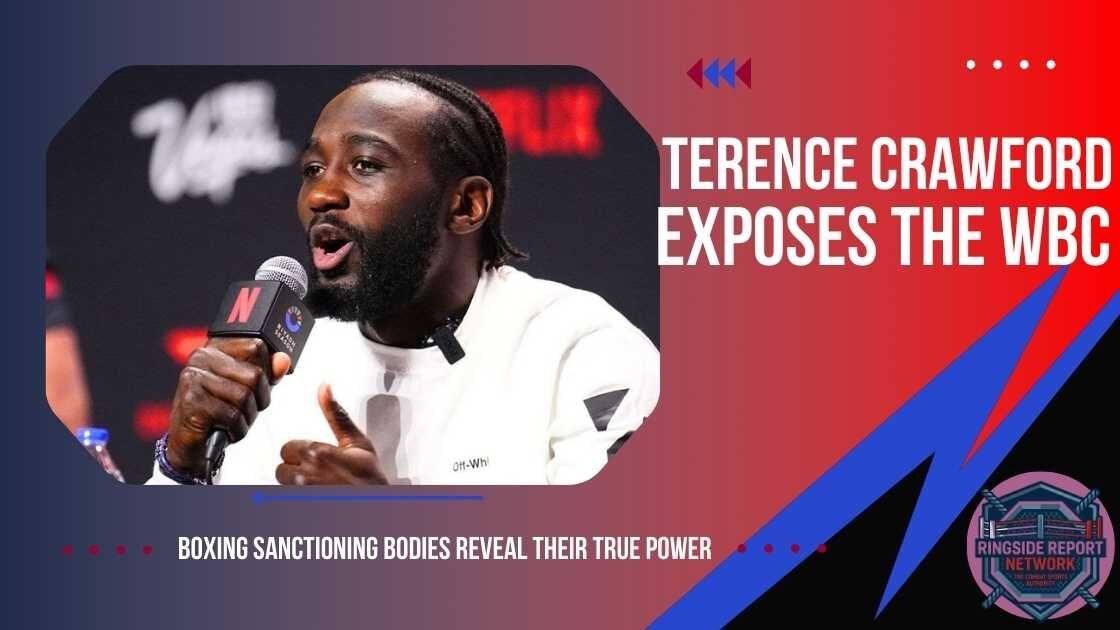

Terence Crawford just went scorched earth on boxing sanctioning bodies, and honestly? It’s about damn time somebody said it out loud.
The pound-for-pound king didn’t mince words when he called out the WBC for what he sees as systematic corruption and fighter exploitation. “The WBC is a joke,” Crawford stated bluntly, pointing to mandatory challenger requirements and sanctioning fees that drain fighters’ purses while offering nothing in return except a belt that’s supposed to mean something.
Look, this isn’t some hot-headed rant from a journeyman with an axe to grind. This is Terence Crawford — a three-division world champion, arguably the best fighter on the planet, someone who’s played by the rules his entire career. When a guy like that goes nuclear on boxing sanctioning bodies, you need to pay attention to what he’s actually saying.
The Obvious Take Everyone’s Missing
Most casual fans hear Crawford’s comments and think it’s just another fighter complaining about not getting paid enough. That’s not what this is about. That’s the thing — Crawford’s already made his money. He’s had his big Saudi payday. This is about something more fundamental: the entire power structure of professional boxing and who actually controls fighters’ careers.
The WBC, along with the WBA, IBF, and WBO, serves as a gatekeeper for championship opportunities. They determine who fights for titles, who gets mandatory shots, and crucially, they collect sanctioning fees from every title fight. We’re talking hundreds of thousands of dollars per fight that comes directly out of fighters’ purses. And what do fighters get in return? A belt. That’s it. A physical belt and the supposed prestige of being called a “world champion.”
But here’s the reality: there are currently four “world champions” in every weight class. Sometimes, more when you count interim titles, franchise champions, and whatever other designation these organizations dream up to justify another sanctioning fee.
How Sanctioning Bodies Actually Control Boxing
The Mandatory Challenger Racket
The real power boxing sanctioning bodies hold isn’t in the belts themselves — it’s in mandatory challengers. Once you win a title, the organization immediately starts the clock on when you must defend against their ranked contender. Miss that deadline or refuse the fight? They strip your title.
This is where boxing sanctioning bodies reveal their true power. On paper, mandatory challengers ensure that champions face legitimate competition rather than handpicked opponents. In practice? These rankings are notoriously political. Fighters with the right connections, the right promoters, or who pay the right “fees” mysteriously climb rankings faster than their résumés justify.
Crawford is specifically calling out this system because he’s lived it. He’s seen fighters ranked ahead of more deserving contenders. He’s watched promotional politics influence who gets title shots. And he’s paid those sanctioning fees fight after fight, watching money that should go to fighters instead line the pockets of organizations that contribute nothing to the actual sport.
The Financial Stranglehold
Let’s talk numbers for a second. A typical WBC sanctioning fee is 3% of a fighter’s purse, capped at around $300,000. Doesn’t sound terrible until you realize that’s per fight, for both fighters. That’s $600,000 minimum, leaving the sport for every major title fight. When you examine the revenue streams of boxing sanctioning bodies across multiple organizations and weight classes, tens of millions of dollars could go to fighters annually instead.
What do sanctioning bodies do with this money? Great question. They claim it funds rankings committees, administrative costs, and boxing development programs. Crawford’s argument — and he’s not wrong — is that the return on investment for fighters is essentially zero.
Let’s Be Honest About Why This System Exists
Boxing sanctioning bodies aren’t going anywhere because they serve a crucial purpose for everyone except fighters. Promoters need sanctioning bodies to create the illusion of legitimacy and importance around their events. “World Championship Fight” sells better than “Really Good Fight Between Top Contenders.” Networks and streaming platforms want that championship branding. Casinos and venues can charge more for title fights.
The entire ecosystem benefits from these organizations’ existence — except the people actually getting punched in the face.
Here’s what nobody wants to admit: boxing could function perfectly fine without sanctioning bodies. The sport did it for decades. The real champions were determined by who beat whom, not by who paid the right fees to the proper organization. But we’ve built an entire industry around these belts, and dismantling that system would require cooperation between promoters, networks, and fighters that frankly doesn’t exist.
Crawford’s Real Motivation: Creating Leverage
Why Now?
Crawford isn’t making these comments randomly. He’s at a specific point in his career where he has maximum leverage and minimal need for sanctioning-body approval. He’s already unified the welterweight division. He’s already proven himself to be a pound-for-pound elite. He’s already secured financial freedom.
This is a fighter who can afford to burn bridges because he doesn’t need to cross them anymore. And brother, that’s precisely when the most honest assessments of boxing politics emerge — when fighters no longer need to play the political game.
The Bigger Picture
Crawford’s also positioning himself as a leader for the next generation of fighters. He’s saying publicly what dozens of champions think privately. By going nuclear on the WBC specifically — boxing sanctioning bodies’ most prestigious organization — he’s forcing a conversation the sport desperately needs.
Come on, we’ve been covering boxing long enough at Ringside Report to know that nothing changes without public pressure. Behind-closed-doors complaints accomplish nothing. Crawford’s making this a public issue, and that matters.
My Bold Prediction: This Changes Nothing (But It Should)
Here’s my honest assessment: Crawford’s comments will generate headlines for a week, maybe spark some Twitter debates, and then boxing will continue exactly as it has. The system built by boxing sanctioning bodies benefits too many influential people to change based on one fighter’s complaints, even when that fighter is Terence Crawford. The WBC won’t reform its sanctioning fee structure. Mandatory challengers will still be politically influenced. Fighters will keep paying these fees because they need those belts to secure big-money fights.
What do you expect? The system benefits too many powerful people to change based on one fighter’s complaints, even when that fighter is Terence Crawford.
Where I Could Be Wrong
That said, there’s a scenario where this actually matters. If Crawford’s comments inspire other elite fighters — Canelo, Usyk, Beterbiev, whoever holds major titles — to align with his position publicly, you could see a legitimate fighter-led movement to reform or bypass sanctioning bodies. The Saudi money entering boxing creates an alternative power structure that doesn’t need approval from traditional sanctioning bodies to stage “legitimate” super fights.
Maybe, just maybe, Crawford’s timing is better than it appears. Perhaps he sees the leverage shifting away from these organizations, and he’s accelerating that process.
What Happens Next
The WBC will issue a diplomatic statement about respecting Crawford’s opinions while defending their role in boxing. Crawford will continue his career, probably still paying sanctioning fees because that’s how the system works. And boxing fans will keep debating whether these organizations serve any legitimate purpose beyond creating artificial scarcity around championship opportunities.
But here’s the thing: conversations like this matter. Every time a fighter with Crawford’s stature publicly challenges boxing’s power structure, it chips away at the perception that this system is inevitable or necessary. It plants seeds that might grow into actual reform years down the line.
Will Crawford’s comments change boxing tomorrow? No. But they’re part of a more extended conversation about who boxing actually serves — the fighters risking their health in the ring, or the organizations profiting from their labor while contributing little in return. And that’s a conversation worth having, even if the answers aren’t coming anytime soon.