
Book Recommendation: Understanding the Beast: Dive into the Life of Brock Lesnar
Editor’s Note: The following book review was originally written by Johnny North in 2010. With Brock Lesnar featured prominently in tonight’s War Games match, we thought it was worth revisiting – along with a look at everything that’s happened in Brock’s career since this book was published. Spoiler: A LOT has happened.
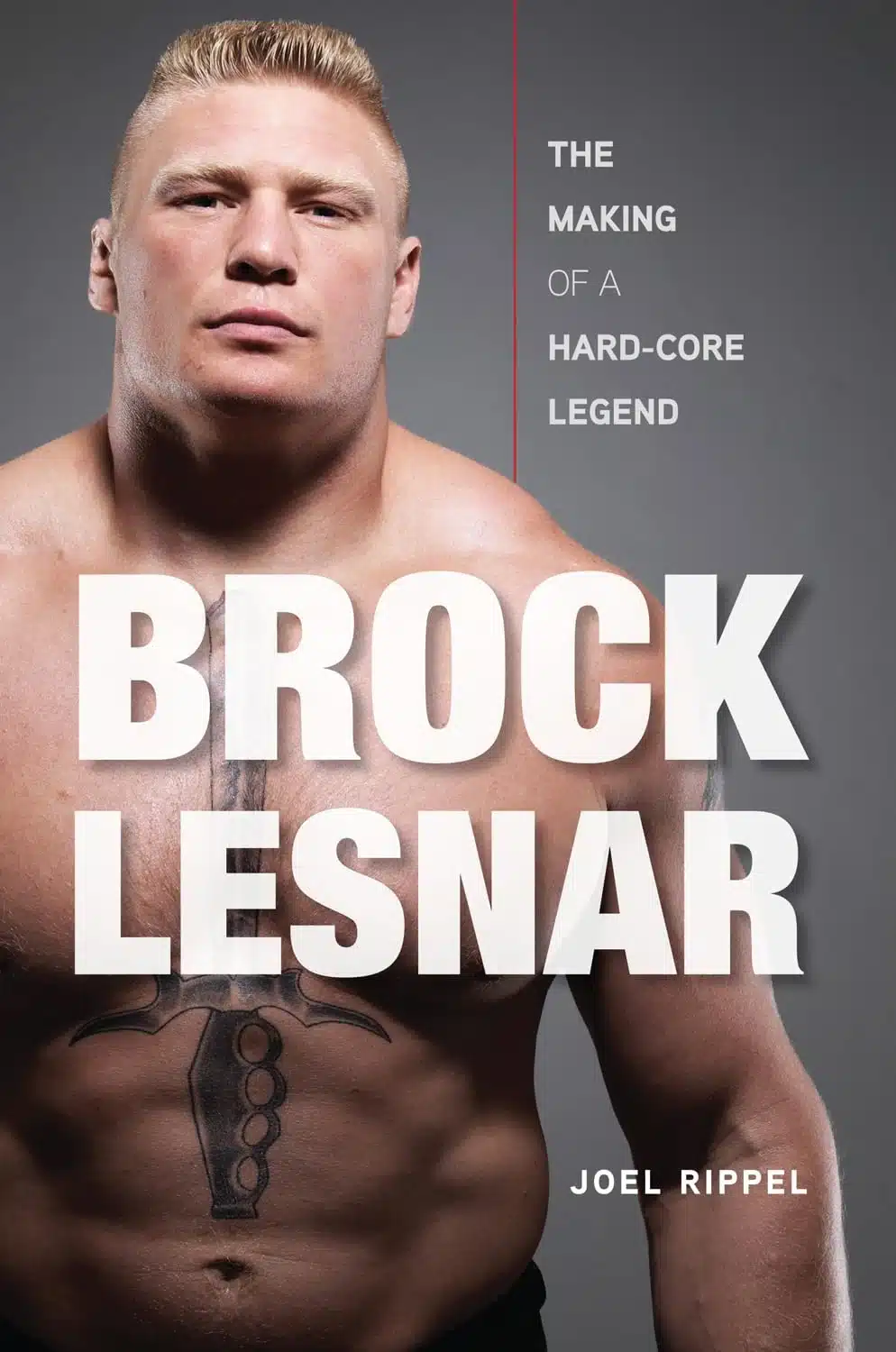
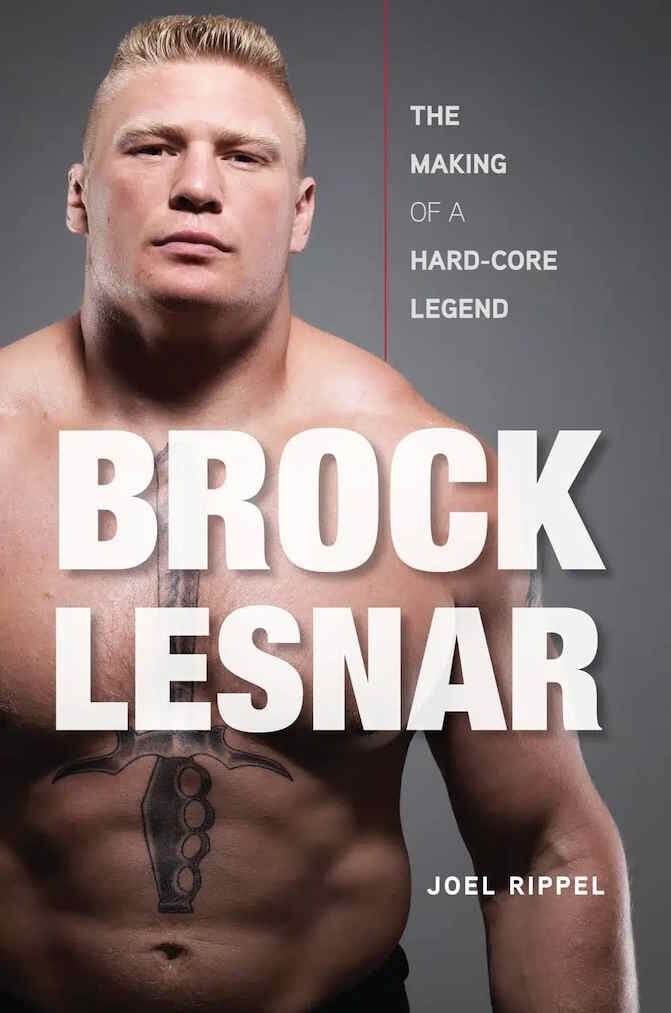
If you want to understand what makes Brock Lesnar tick – and trust me, that’s valuable knowledge heading into tonight’s Survivor Series – you need to read “Brock Lesnar: The Making of a Hard-Core Legend” by sportswriter Joel Rippel.
Triumph Books published this back in 2009, and it’s the definitive look at how a farm kid from Webster, South Dakota, became a legitimate force in both WWE and UFC. Not just a guy who crossed over, but someone who actually dominated in both worlds. That’s basically unheard of.
From Dairy Farm to WWE Dominance
What I appreciate about Rippel’s approach is he doesn’t start with the pyro and the entrance music. He begins with Brock working on his family’s dairy farm, doing legitimate physical labor that most of us can’t even imagine. That background matters. It explains the freakish combination of size, strength, and work ethic that made Brock different from day one.
The book walks through his high school wrestling career, then his time at Bismarck State College, before transferring to the University of Minnesota. The 2000 NCAA Division I heavyweight championship run gets proper attention – and it should, because that’s where you see the foundation of everything that came later. Brock wasn’t just big and strong; he had legitimate technical wrestling ability.
The WWE Years (2002-2004)
The section on Brock’s initial WWE run is where wrestling fans will spend most of their time. Rippel covers the rapid push, the “Next Big Thing” branding, and how WWE positioned him differently than almost anyone before. They saw what they had and didn’t waste time getting him to the top.
What’s interesting is reading about those early title runs and storylines, knowing what we know now – that Brock would walk away from all of it to try the NFL and then actually succeed in MMA. At the time, his WWE departure seemed insane. Looking back, it makes more sense.
The NFL Attempt and Early UFC Run
Rippel doesn’t shy away from the Minnesota Vikings tryout, which many people forget about. Brock came legitimately close to making an NFL roster as a defensive tackle with zero college football experience. That’s not a publicity stunt – that’s athletic ability at a level most people can’t comprehend.
Then comes the transition to MMA and the early run in the UFC heavyweight division. This book came out in 2009, so it covers his championship period, but obviously doesn’t include anything after that. Still, it captures that moment when many people were questioning whether Brock was “real” or just a WWE creation getting favorable matchmaking. Those questions got answered pretty definitively.
What This Book Is (And Isn’t)
Rippel writes like a sportswriter, not like someone trying to get you hyped for WrestleMania. It’s chronological, focuses on results and milestones, and is accessible to fans who want to understand the career arc without an insider’s perspective.
This isn’t a tell-all. You’re not getting dirt on backstage politics or personal drama. What you’re getting is a solid, journalistic look at how someone goes from amateur wrestling to WWE to UFC and succeeds at every level.
The 2010 Perspective
Writing this in 2010, I can tell you this book is essential reading for anyone who wants to understand modern combat sports. Brock proved you can crossover between wrestling and MMA if you have the right combination of ability, work ethic, and a legitimate athletic background.
The book is available in trade paperback (ISBN 9781600783814) and Kindle edition. While there hasn’t been a revised edition covering everything after 2009, the foundation is what matters, and Rippel nails it. For a complete look at Brock’s post-2009 career – including his WWE return, ending The Undertaker’s streak, UFC 200, and the “Cowboy Brock” era – see Dave’s updated analysis below.
Recommended for: Wrestling fans who want context, MMA fans curious about Brock’s pre-UFC background, and anyone interested in how legitimate athletic ability translates across different combat sports.
2025 Update: What a Revised Edition Would Need to Cover
Here’s the thing about that 2009 book Johnny reviewed: it ends right when Brock’s story was about to get even more insane. If Joel Rippel wanted to do a revised edition today, he’d need to add at least another 200 pages covering what’s arguably the more important half of Brock’s career.
The 2012 WWE Return: “Beast Incarnate” Era Begins
After nearly eight years away, Brock came back to WWE the night after WrestleMania 28 in 2012. But this wasn’t the same Brock who left in 2004. This was a UFC heavyweight champion returning to pro wrestling with Paul Heyman as his advocate, and WWE immediately positioned him differently than anyone on the roster.
The “Beast Incarnate” branding wasn’t just marketing – it was acknowledging that Brock had done something nobody else could claim. He’d actually left WWE, become a legitimate MMA world champion, and come back on his own terms with a part-time schedule that would define the next decade-plus of his career.
High-profile feuds with John Cena, Triple H, and CM Punk established the pattern: Brock shows up for major programs, works a limited schedule, and gets paid more per appearance than probably anyone in wrestling history. That’s not criticism – that’s innovative business from someone who understood his value.
WrestleMania 30: Ending The Streak
A revised edition would have to dedicate an entire chapter to April 6, 2014. Brock Lesnar defeated The Undertaker at WrestleMania 30, ending the legendary 21-0 streak. This wasn’t just another win – this was one of the most shocking moments in WWE history.
The crowd sat in stunned silence. Nobody believed it was happening. And whether you loved it or hated it, you can’t tell Brock’s story without acknowledging that WWE trusted him with arguably the most significant moment they could give anyone. That’s the level he was operating at.
From there, Brock became WWE’s ultimate final boss. Multiple WWE Championship and Universal Championship reigns followed, but they were different than his early 2000s title runs. These weren’t about weekly appearances and building storylines – these were about Brock as a rarely-seen champion who showed up for significant events and demolished people.
Suplex City and Dominant Squash Matches
“Suplex City” became part of the wrestling lexicon during this era. The extreme dominance, the repetitive suplexes, the squash matches – it was polarizing, but it was effective. When Brock destroyed Kofi Kingston in seconds to win the WWE Championship on the debut episode of SmackDown on FOX in 2019, it reinforced exactly what Brock represented: unpredictable violence that could end anyone’s night instantly.
UFC 200 Return (2016)
A revised book would need to cover Brock’s 2016 UFC return at UFC 200 to face Mark Hunt after nearly five years away from MMA. The build was massive, the pay-per-view did huge numbers, and Brock won via unanimous decision.
The subsequent drug test failure and the result being overturned to a no-contest would need to be addressed honestly. It’s part of the story, controversial as it was. But what matters for Brock’s legacy is that he could still compete at the highest level of MMA after years of pro wrestling, even if the aftermath got complicated.
The Cowboy Brock Era (2021-2023)
Here’s where it gets exciting: late-career Brock became a babyface. Not just any babyface, but a talking, smiling, cowboy-themed fan favorite opposite Roman Reigns. This was completely different than anything we’d seen from Brock before.
He cut promos. He smiled. He wore cowboy hats and did a yeehaw gimmick. And somehow it worked, because Brock Lesnar doing anything literally is more interesting than most wrestlers doing their best work. The Royal Rumble 2022 performance, entering at #30 and dominating, showed he could still pop a crowd like almost nobody else.
The Special Attraction Business Model
What a modern biography needs to explain is how Brock essentially created – or at least perfected – the modern special attraction model in WWE. He proved you don’t need to be on TV every week to be valuable. In fact, his limited schedule made his appearances feel bigger.
He negotiated unique deals that let him live on his ranch in Saskatchewan, work a handful of dates per year, and still be positioned as WWE’s biggest star when he showed up. That’s a business model other wrestlers have tried to replicate, but nobody’s done it quite like Brock.
Legacy as a Crossover Star
A revised edition would need to frame Brock’s complete legacy: NCAA Division I heavyweight champion, WWE Champion (multiple times across two different eras), UFC heavyweight champion, and one of the biggest box-office draws in both wrestling and MMA history.
That’s not hype. That’s a documented fact. Very few athletes in any sport can claim legitimate world-class success in multiple disciplines. Brock did it in two of the most demanding combat sports on the planet.
What’s Still Missing
Even with all that, there’s a personal life context a revised book could explore: his preference for rural living in Saskatchewan, his family life away from the spotlight, and how he’s managed to stay relatively private despite being one of the most recognizable figures in combat sports.
The controversies would need honest treatment too – the drug test issues, the contract negotiations that sometimes got messy, and the criticism about his part-time status affecting full-time wrestlers. A good biography doesn’t skip the complicated parts.
Why This Matters for Tonight’s War Games
Understanding all of this – the UFC success, the WrestleMania moments, the unique business model, the evolution from silent destroyer to talking cowboy – helps explain why Brock in War Games is such a big deal.
He doesn’t usually do these matches. He doesn’t work well with others. He’s built his entire modern career on being different, on being special, on being worth whatever premium WWE pays him. War Games forces him into a team environment, into a match structure he can’t control, into a situation where he has to participate in “the match” rather than being “THE match.”
That’s the story. And that’s why a revised edition of Rippel’s book would be worth reading – because the Brock Lesnar story from 2009 to 2025 is arguably more interesting than everything that came before.
The original book review by Johnny North appeared on RingsideReport.net in 2010.
Watch Wrestling Uncensored every Friday at 10 PM ET on YouTube, Rumble, Twitch, DLive, Kick, and Twitter.
Support the show at membership.ringsidereport.net
Follow Dave on Twitter/Instagram: @davesimonmma
Brock Lesnar: The Making of a Hard-Core Legend
By Joel Rippel
208 pp.
Released on Oct. 25, 2010